Collisions, falls, and tipovers are just some of the hazards forklifts introduce to worksites. In this article, we’ll discuss the standards, procedures, and best practices that operators and managers can use to stay safe, efficient, and compliant with OSHA regulations.
OSHA’s Forklift Standards
OSHA’s powered industrial trucks (PITs) standard can be found in 1910.178, which covers a variety of vehicles, including forklifts. Here’s an overview of a few major requirements found within the standard – not to be taken as a comprehensive summary:
Legal Operating Age: Federal law prohibits anyone under 18 years old from operating or riding a forklift. Those over 18 years old are still prohibited from operating the forklift if they lack proper training and certification.
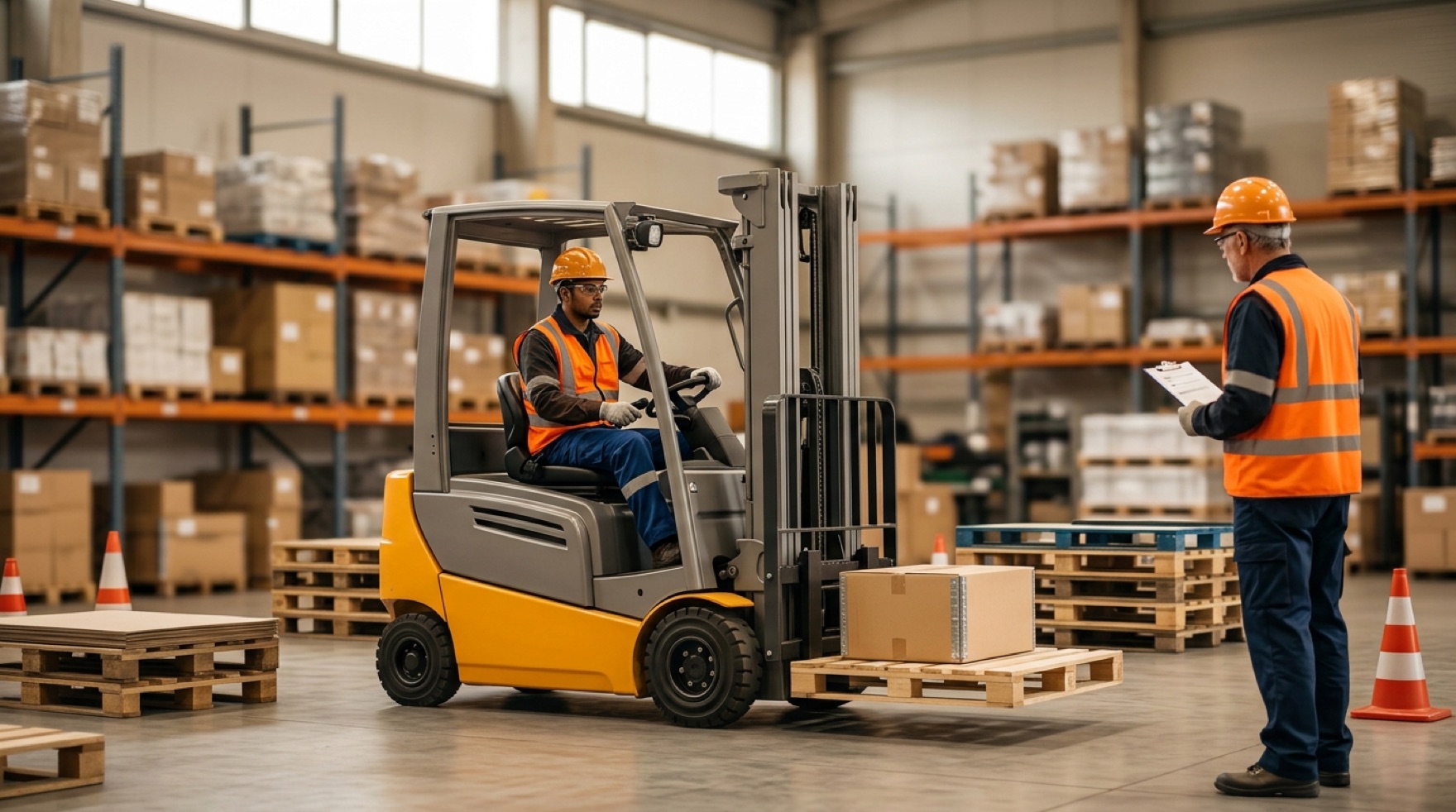
Training Requirements: Operators must undergo training that consists of formal instruction, hands-on training, and then evaluation of vehicle operation in the workplace.
Operator Certification: Once training and evaluation are satisfactorily completed, the employer must provide a certification containing the worker’s name, training date, evaluation date, and the name(s) of trainers and evaluators.
Safe Operation: 1910.178(m) through 1910.178(q) contain a list of safety precautions operators must follow while driving, loading, traveling, and maintaining the vehicle. Some of these will be discussed below.
Designations: There are eleven designations that PITs can fall under. Each vehicle must be physically labeled with its designation. Corresponding to vehicle designations are locations in which they can be safely operated.
Forklift Inspections & Maintenance
Forklifts must be inspected every day before use. If they’re used around the clock, they must be inspected every shift. This includes a pre-operation inspection, which occurs before the engine is turned on, followed by an operational inspection, which occurs after the engine is turned on. Here’s an overview of each process:
Pre-operation inspection should include, at minimum, checking fluid levels, visible defects (such as leaks or cracks), tire conditions, fork conditions, load backrest extension, finger guards, safety decal and nameplate placements, legibility of operator manuals, operating safety devices, and ensuring the operator compartment is free of hazards like grease or debris.
Operational inspection should include, at minimum, checking accelerator linkage, inch control, brakes, steering, controls (drive, tilt, hoist, lower, and attachment), horn, lights, backup alarm, and hour meter.
Additional inspection criteria will also be required depending on the fuel systems powering each forklift. That is, whether the vehicle is electric, uses internal combustion, or uses liquid propane.
If any defects are found, the forklift should be immediately removed from service until maintenance is complete. Beyond fixing known defects, preventative maintenance must be regularly completed according to OSHA’s standards and the manufacturer’s recommendations.
Training & Supervision
Forklift training must consist of formal instruction (such as learning materials that cover truck- and worksite-related safety), practical training (such as trainers supervising trainees as they perform vehicle exercises), and evaluation to ensure the trainee correctly operates the forklift in the workplace. OSHA requires covering major topics, such as:
Surface Conditions: Identify slippery, uneven, obstructed, and load-limited surfaces that create a hazard for forklift operators.
Load Handling: Understand how to secure and center, approach and lift, and lower and stack loads. This includes understanding load capacities and being able to identify damaged loads that may be too hazardous to lift.
Accident Preparation: Know safety procedures to minimize the chance of harm. For instance, in the case of tipover, avoid being crushed by the vehicle by staying inside, holding on to the steering wheel, bracing your feet, and leaning forward and away from the impact.
Additional hazards and best practices can be found in OSHA’s Materials Handling and Storage publication. Supervision is also key to ensuring the safety of pedestrians on foot or operating other vehicles in forklift areas. Beyond active traffic management, hazards can be minimized by creating pedestrian walkways, permanent protective barriers, traffic control signs, mirrors on blind aisle intersections, and by posting speed limits.