Despite being largely preventable, slips, trips, and falls rank among the most common causes of workplace injuries. In this article, we’ll explore what causes these hazards and how following OSHA’s requirements can help employers create safer environments for their workers.
A Common Yet Preventable Hazard
Slips, trips, and falls often occur in the absence of required safety precautions, such as personal protective equipment (PPE), physical barriers, clean-up procedures, or proper storage procedures. For instance,
Slips generally occur when wet, oily, or icy surfaces lead to a loss of traction with a surface — such as grease on a ladder rung or water on a ramp.
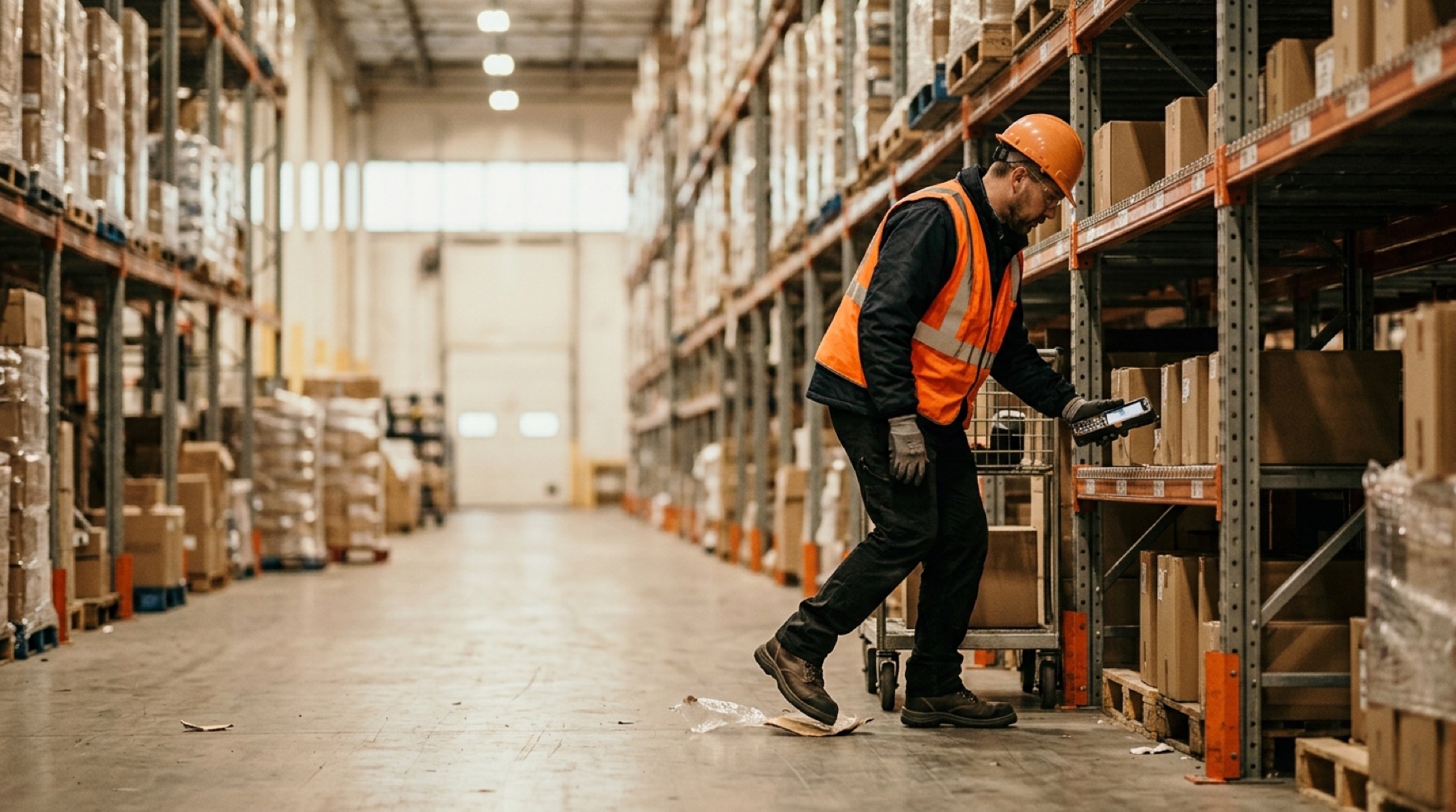
Trips often occur when a worker’s foot hits an object that throws them off balance — such as a misplaced tool, loose wire, or uneven flooring in a walkway.
Falls are typically caused by unguarded hazards — such as open floor holes, edges of raised platforms, or unprotected machinery.
OSHA’s Fall Protection Guidelines
For slips and trips, OSHA’s walking-working standard requires employers to keep floors “clean and, to the extent feasible, in a dry condition” and provide protective equipment when these hazardous conditions cannot be entirely eliminated. For instance, on a commercial fishing vessel, keeping walkways permanently dry may not be possible, so proper anti-slip footwear and walkways must be used. Good housekeeping will also eliminate trip hazards, such as cords and fishing lines on walkways — which requires a well-planned storage system.
As for falls, OSHA requires all employers to provide fall protection wherever dangerous equipment is used (regardless of fall distance), as well as at elevations exceeding safety limits for a jobsite’s industry — four feet in general industry, five feet in shipyards, six feet in construction, and eight feet in longshoring operations. Likewise, any fall hazard, such as an opening on the floor or a workstation that’s elevated, must be guarded or covered.
| Value (ft) | Applies to |
|---|---|
| 4 | General industry |
| 5 | Shipyards |
| 6 | Construction |
| 8 | Longshoring |
Fall protection is also required wherever dangerous equipment is used, regardless of fall distance.
In some jobs, this will require additional protection like safety harnesses and fall nets, while in others it will require stair railings, handrails, toeboards, guardrails, and floor hole covers. In all cases, wherever trip, slip, or fall hazards cannot be eliminated by administrative or engineering controls, proper protective equipment must be provided.
For instance, in workplaces where slippery substances are found, such as grease and oil, providing workers with anti-slip soles, slip-resistant walkways, and an efficient clean-up procedure with warning signage can make a significant difference. To that end, training workers to recognize and report slip, trip, and fall hazards, as well as use PPE, is also crucial to ensuring their safety.