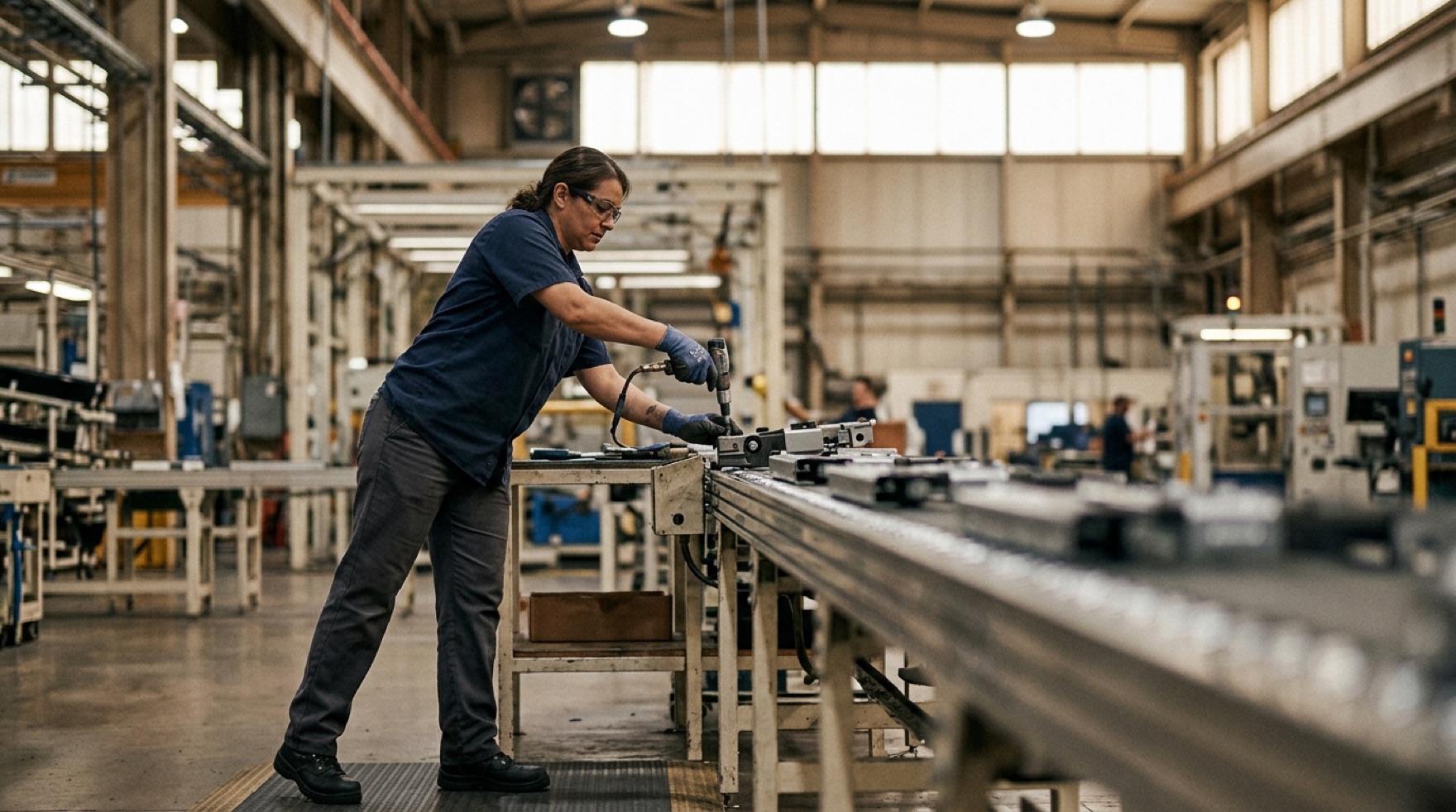
Whether you’re overseeing the safety of an office, construction site, or factory, one workplace danger is always looming nearby: musculoskeletal disorders (MSDs) due to how workers sit, stand, and move on the job. In this article, we’ll take a look at how EHS professionals can identify and address MSD risk factors to keep their workplaces as safe, comfortable, and efficient as possible.
Identify Risk Factors
According to OSHA, common risk factors for work-related MSDs include lifting, pushing, or pulling heavy items, localizing pressure on specific body parts, maintaining awkward postures, performing repetitive tasks, and working in cold temperatures or with vibrating equipment.
To identify problem areas in your workplace, assess processes, workstations, and environments from an ergonomic perspective. In some cases, the problem can be easy to spot. For instance, imagine workers have to bend down to reach into a crate so they can lift and move materials to their workstations. Introducing a mechanical device that lifts and tilts crates to an ergonomic height can reduce unnecessary physical strain and improve efficiency.
But there are also many problems that aren’t so easy to spot. To this end, asking workers about discomfort, redundant movements, and early-stage injuries is key to identifying other high-priority risk factors.
With this information, you can then perform an ergonomic analysis of a specific task, paying special attention to interventions that could minimize immediate bodily stress and long-term damage. For instance, in one ergonomic success story highlighted by OSHA, a wood beam production facility dropped its injury rate from 4.2 to 2.1 and greatly improved morale.
How did they do it? First, by having employees evaluate their workstations for the source of aches and injuries. And second, by implementing solutions to address them, as we’ll see next.
Implement Ergonomic Solutions
After requesting discomfort and injury reports from workers at the wood beam production facility, the safety manager learned that repetitive motions, unergonomic workstation heights, hard surfaces, and unnecessary movements were to blame.
To address these problems, worktables were raised or lowered as needed for each employee, anti-fatigue matting was placed over hard surfaces, and redesigns and automation were used to streamline material handling and reduce redundant and repetitive movements.
This is a great example of how safety professionals can collaborate with workers to identify and minimize MSD risk factors through a mix of…
Engineering Controls, which include physical changes made to the workplace, like repositioning workstations or redesigning tools to allow for less fatiguing use;
Administrative & Work Practice Controls, which include procedural changes in the workplace, like rotating workers through tasks to minimize the duration of repetitive tasks;
Personal Protective Equipment, which includes introducing personal and environmental gear to address ergonomic risk factors, such as using anti-fatigue mats or anti-vibration gloves.
Train and Iterate
When it comes to workplace safety, the job is never quite done. Implementing solutions also introduces new spaces for procedural and physical concerns to arise (though hopefully less discomforting ones) – and knowledge about MSD risk factors and interventions is always evolving.
That’s why it’s so important to continually supervise and iterate your workplace’s ergonomic practices. This involves deepening your communication with workers, as well as training them to identify and report early signs of MSDs, use ergonomic practices that minimize injuries, and recognize the essential role they play in making their workplaces safer, more efficient, and a lot more comfortable.