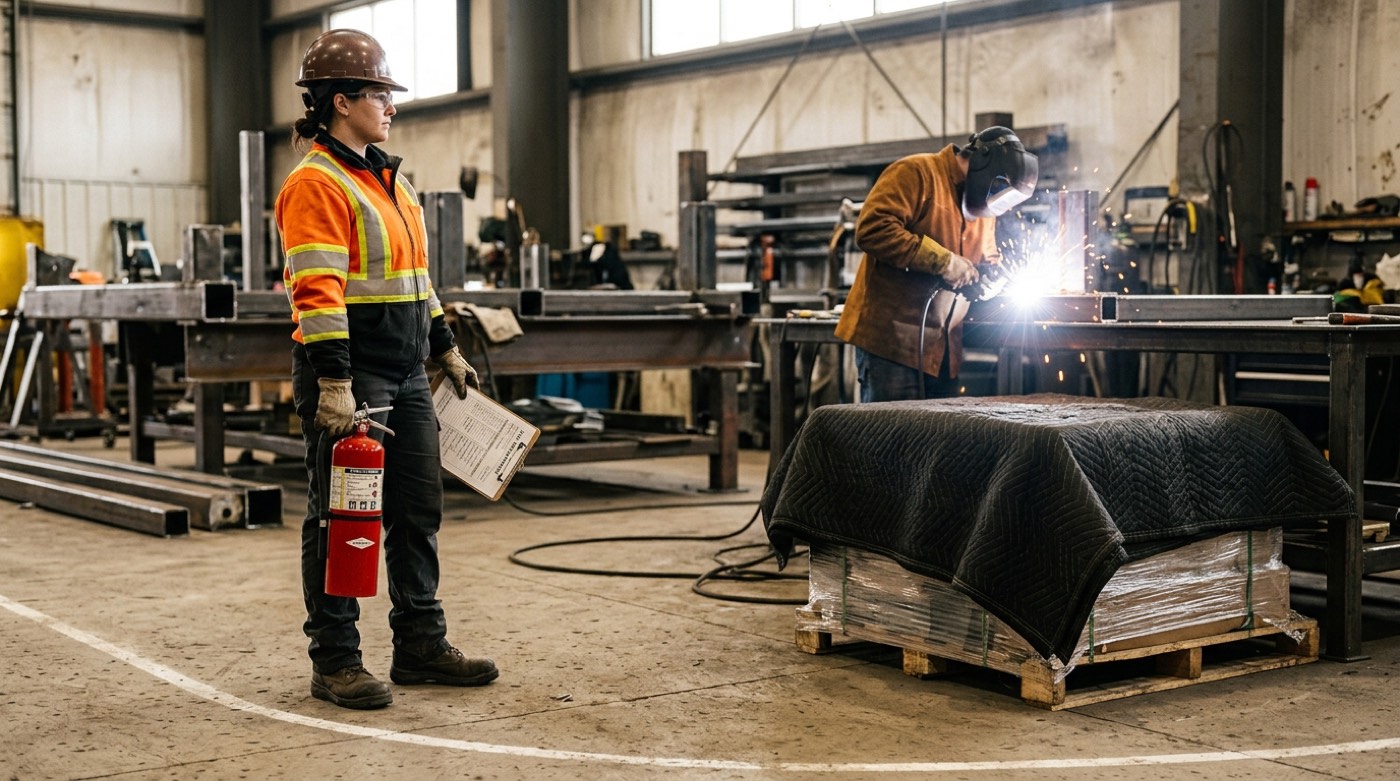
While no workplace expects a fire to occur, safety professionals and employees can work together to be prepared when the unexpected happens. In this article, we’ll explore how OSHA’s fire safety guidelines can help workplaces minimize injuries and damage by preventing fires and responding to them when they occur.
Preventing Fire Hazards
The most important step in fire safety is to prevent fires before they endanger workers. To this end, OSHA’s emergency standards include a fire prevention plan (FPP) that employers can implement to stop fires before they occur. This includes addressing some of the most common fire hazards, which include:
Flammable materials: Certain materials, like cleaning solvents, fuel, paints, and paper products can easily ignite if stored improperly or exposed to heat sources.
Flammable debris: Dust accumulation from wood, metal, garbage, or recycling materials can become fire hazards when accumulated on surfaces or while suspended in the air.
Ignition sources: Defective electrical wiring, overloaded circuits, improperly maintained machinery, incompatible material storage, and open flames can spark fires.
Planning a Fire Response
When a fire occurs, a response plan is needed to minimize damage and protect workers. That’s where an emergency action plan (EAP) comes in, which outlines steps for evacuation, communication, and the use of fire safety equipment. The plan should address evacuation routes, assign roles for emergency responders, and ensure that fire extinguishers, alarms, and sprinklers are in place. A well-structured EAP will include:
Evacuation Plans: The EAP should identify the fastest and safest routes to exits during evacuation, and ensure that those routes remain clearly marked and unobstructed at all times so workers can smoothly evacuate to safety in the event of a fire.
Fire Safety Equipment: It should also identify and acquire fire safety equipment that could quickly mitigate or extinguish fires before they spread. For instance, equipping the jobsite with fire extinguishers, alarms, and sprinkler systems as a second line of defense when prevention fails.
Response: The plan should distinguish between non-emergency responders, such as workers who should evacuate, and emergency responders, such as workers who are trained to contain or mitigate fires or local fire departments.
To ensure the smooth execution of an emergency action plan, workers need to be trained and undergo regular drills. Drills may also test the feasibility of the existing EAP. For instance, it may become clear that during an unexpected fire drill, certain exits are blocked or certain employees don’t know where to go.
These shortcomings revealed in drills can refine procedures — so, when a real emergency comes, everyone knows what to do, equipment is up to the task, and all paths are clear. To this end, training is key. Employees must know their roles in an emergency, how to communicate fire emergencies when they occur, how to use fire extinguishers, and how they should evacuate.