Welding, Cutting & Fabrication
Ignition, fume, arc, and shock inside one arm's length.
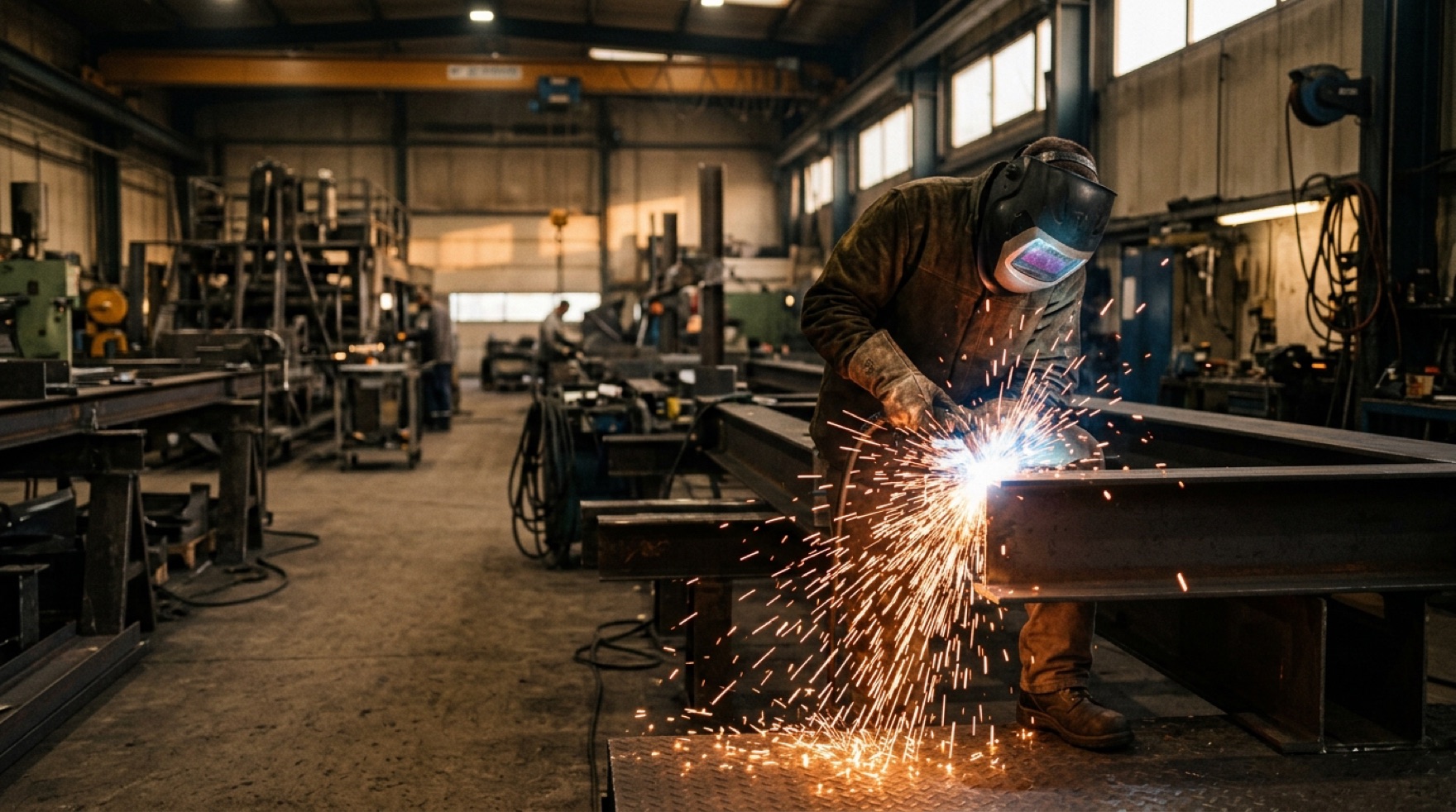
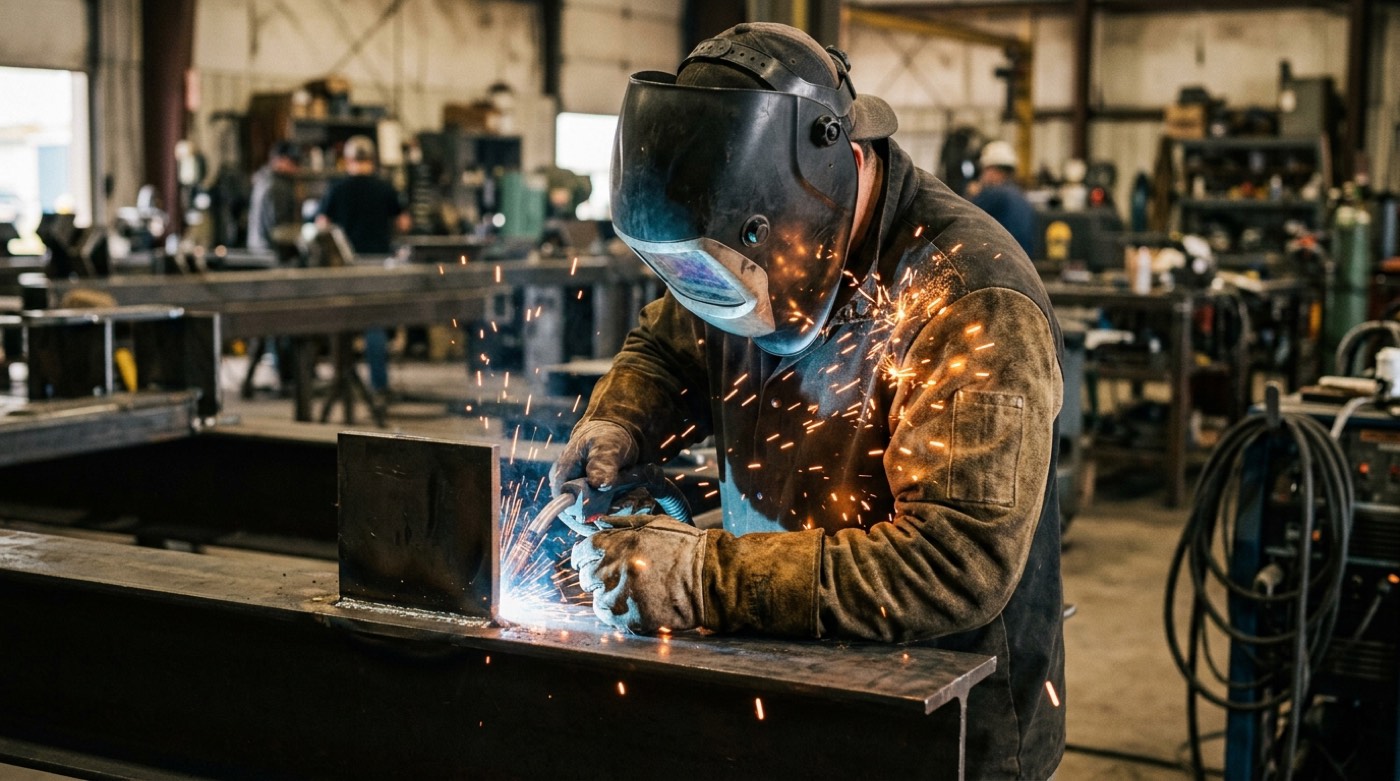
Welding and fabrication concentrate an unusual number of serious hazards into a small space: an ignition source throwing sparks and slag, a fume plume of metal oxides, an arc bright enough to injure a bystander's eyes, and a live electrical circuit the welder is part of. Fire and hot-work control lead because a single spark landing in the wrong place is the event most likely to become a catastrophe.
The defining risk in a fabrication shop is that hot work creates hazards that travel. Sparks and slag can roll well beyond the weld cell and smolder in hidden combustibles for hours after the torch is off, which is why hot-work permits require a fire watch that continues after the job ends. Fume from mild and stainless steel carries manganese and hexavalent chromium into the breathing zone, and the arc emits ultraviolet and infrared that burns unprotected eyes several stations away.
Because these hazards overlap in one workspace, controls have to be chosen as a system. A hot-work permit and fire watch wrap the whole job, source-capture ventilation and a shade-appropriate lens protect the welder, and cylinder discipline keeps stored energy contained. In arc processes the operator is part of a live circuit, a shock risk that rises in damp conditions and against grounded steel, so electrical condition and insulation matter as much as the weld itself.
The hazards, and the controls that move the needle
Ordered by the hierarchy of controls — eliminate and engineer first, then treat matting, footwear, and PPE as the layers that catch what remains.
Hot-work ignition from sparks and slag
Sparks and molten slag travel, bounce, and smolder, and unmanaged hot work is a leading cause of industrial fires. Permits and fire watch exist because the ignition often shows up after the torch is off.
- Move work to a designated welding area where possible
- Clear or protect combustibles within the 35-foot radius
- Issue a hot-work permit for work outside designated areas
- Post a trained fire watch during work and through the monitoring period
- Provide flame-resistant curtains, blankets, and extinguishers
Welding fume and respiratory exposure
Fume from mild and stainless steel carries manganese and hexavalent chromium, exposures that are neurotoxic and carcinogenic. Source-capture ventilation removes fume before it reaches the welder's breathing zone.
- Substitute processes and consumables that generate less fume
- Provide source-capture local exhaust ventilation at the arc
- Position the head out of the plume and use fume guns
- Supply respiratory protection where ventilation is insufficient
- Monitor exposure against the hexavalent chromium standard
Arc radiation and shade selection
The arc's ultraviolet and infrared cause arc eye and skin burns to the welder and to bystanders. The correct filter shade for the process and current is the primary control.
- Select filter shade by process and amperage
- Use auto-darkening helmets that meet the switching standard
- Set up welding screens and curtains to protect bystanders
- Cover skin against ultraviolet and wear a cap under the helmet
- Wear safety glasses under the helmet for chipping and grinding
Electric shock in arc welding
In arc welding the operator is part of a live electrical circuit, and shock risk rises in damp conditions and against grounded steel. Primary-voltage contact during setup and repair is the most dangerous exposure.
- Inspect cables, holders, and connections; remove damaged gear
- Insulate the welder from the work and ground with dry mats and gloves
- Keep the work area and the welder dry
- De-energize and lock out before opening equipment for repair
- Follow the manufacturer's grounding and connection requirements
Compressed-gas cylinder handling
Cylinders store energy as pressure and, for fuel gases, as flammability. A knocked-off valve or an oxygen-fuel storage violation turns a cylinder into a projectile or a fire.
- Secure cylinders upright with caps on when not in use
- Separate oxygen and fuel-gas storage by distance or a rated barrier
- Move cylinders with carts; never lift by the valve or cap
- Leak-test connections and keep acetylene within pressure limits
- Store away from heat, ignition, and electrical circuits
The programs that anchor the floor
Hot-work permit and fire watch
Outside a designated area, no torch strikes without a permit that verifies combustibles are cleared or protected, a fire watch is posted, and monitoring continues after the job ends. The ignition that starts a fire often smolders unseen for hours.
Ventilation-first fume control
Source-capture local exhaust comes before respirators. Respiratory protection covers the residual exposure, and exposure monitoring confirms the controls are working against the hexavalent chromium and manganese in the fume.
Cylinder storage discipline
Upright, secured, capped, and with oxygen separated from fuel gas. Most cylinder incidents trace back to a storage or handling shortcut rather than the welding itself.
In-depth guidance
View all 4 →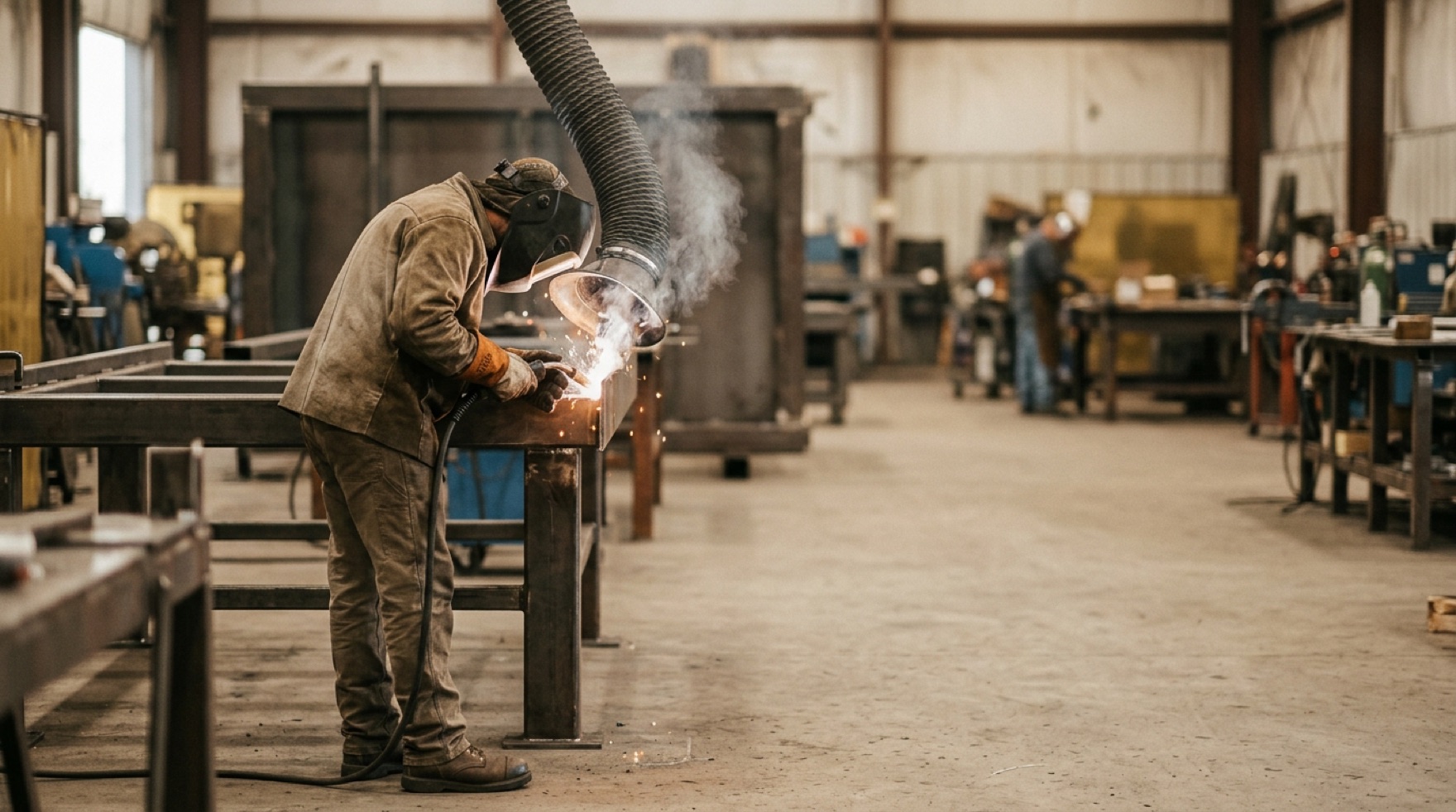
Welding Fume Extraction & Hexavalent Chromium Control
Welding on stainless steel or chrome-bearing alloys puts hexavalent chromium, a lung carcinogen, into the weld fume plume the operator breathes. OSHA regulates it under a substance-specific standard with a permissible exposure limit of 5 micrograms per cubic meter. Here is what the limit means, how source capture controls the plume, and when a respirator becomes mandatory.
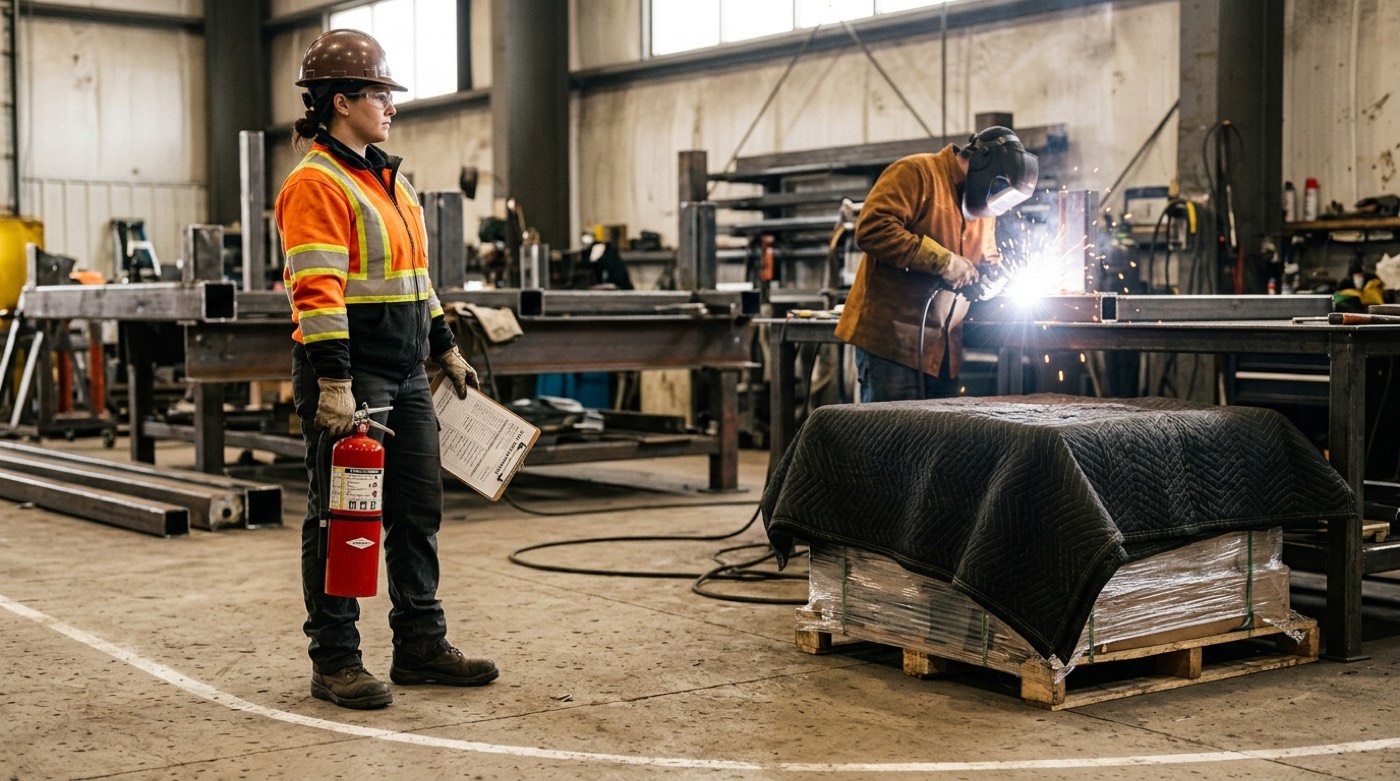
Hot Work Permits & Fire Watch: What OSHA and NFPA 51B Require
Welding, cutting, and grinding outside a designated fire-safe area is hot work, and it starts fires long after the arc goes out. OSHA requires a fire-safe area, a 35-foot combustible clearance, and a fire watch that continues after the job. NFPA 51B, where a local code adopts it, extends that watch. Here is what each requires, and why the permit has to verify more than housekeeping.
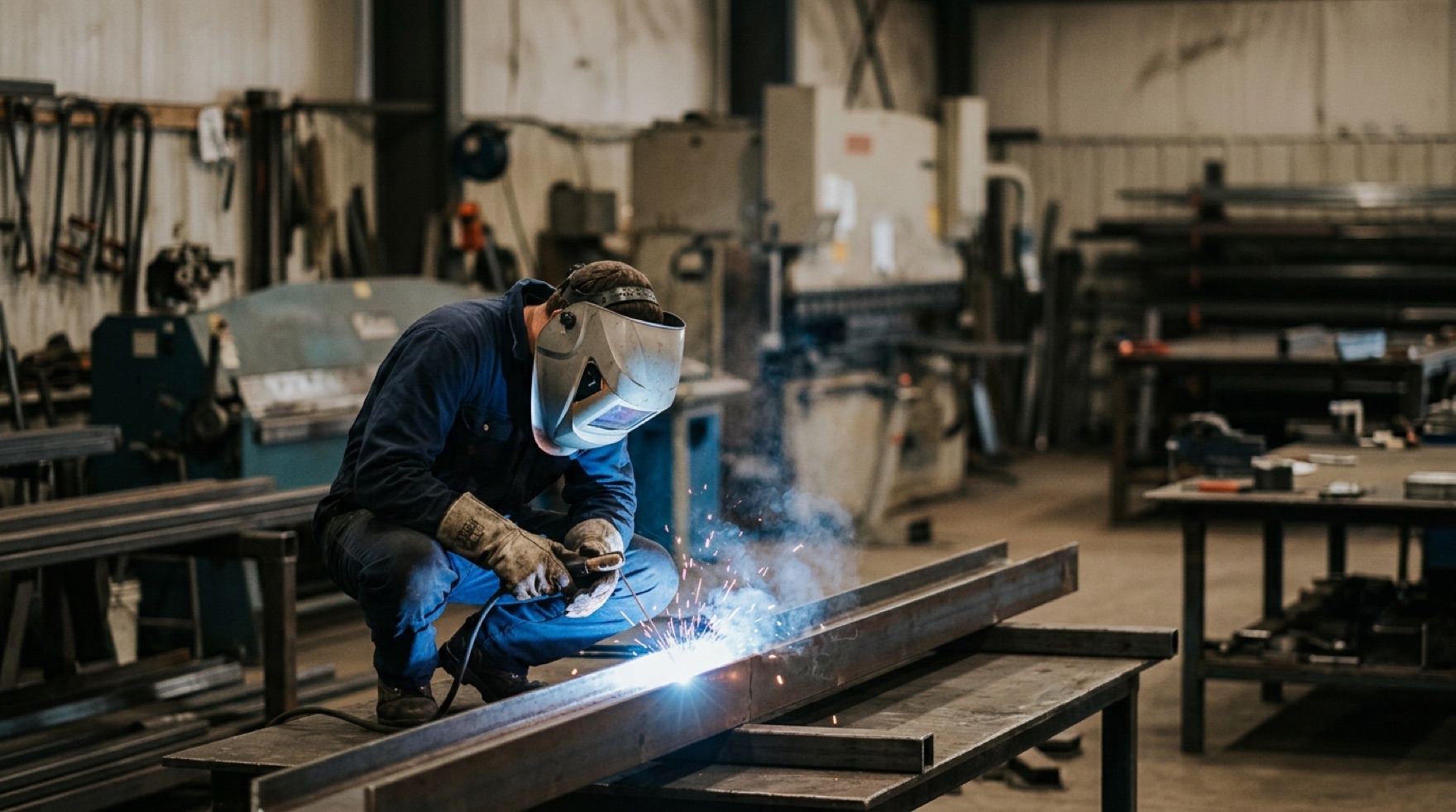
Welding Shade Selection: Arc Radiation & Eye Protection
The welding arc emits intense ultraviolet and infrared radiation that burns the eyes, and the filter shade is what stops it. OSHA requires eye protection meeting a recognized standard, and it publishes the shade numbers by operation and electrode size. This is the shade-selection reference, and the rule for fine-tuning it.
Flame-Resistant vs Arc-Rated Clothing for Welders (NFPA 2112 / ASTM F1506)
Welders' protective clothing gets labeled to two different standards that are easy to confuse: NFPA 2112 for flash fire and ASTM F1506 for electric arc. They certify against different hazards, and only one carries a rating in cal/cm². Here is the difference, what each label proves, and how to match the label to the hazard on the floor.
Weld-cell hazard self-assessment
Check your hot-work permits, fume extraction, shade selection, and cylinder storage against the fabrication hazard pattern.
Start the assessment →Welding safety guides
Practical guidance on hot-work control, fume extraction, and shade selection for the weld cell.
Browse the guides →
Stay ahead of safety.
New articles, free templates, and regulatory updates in your inbox. No spam — unsubscribe anytime.