Dangerous fumes, flying sparks, blinding light, and severe burns are just a few of the hazards that welding, cutting, and brazing introduce to a workplace. But with proper ventilation and protective equipment, these hazards can be mitigated. Here’s what you need to know about keeping workers safe.
Ventilation & Respiratory Protection
The fume released by welding contains by-products that can have serious health effects on welders. For instance, certain fumes could cause metal fume fever, stomach ulcers, kidney damage, and nervous system damage, while certain gases can lead to suffocation or asphyxiation – particularly if used in an enclosed space. As OSHA’s Welding Gases & Fumes FactSheet states:
Acute exposure to fumes and gases can “result in eye, nose, and throat irritation, dizziness, and nausea;”
Prolonged exposure can “result in lung damage and various types of cancer, including lung, larynx, and urinary tract.”
To mitigate these hazards, OSHA requires employers to bring fume and gas concentrations down to safe levels through ventilation and exhaust systems – where this isn’t possible, workers must be provided with necessary respiratory protection. This can be done through:
General ventilation, which is fresh or forced air that reduces fume and gas levels, such as welders positioning themselves upwind from a breeze to avoid exposure or indoor workers positioning themselves upwind of a constructed ventilation system;
Local exhaust ventilation, which uses vacuums, hoods, and extractors to pull gases and fumes away from a welder’s breathing space and displaces the hazardous air away from other workers;
Respiratory protection, such as particulate respirators to filter out contaminants from the air or air-purifying respirators to filter out chemicals and gases.
Personal Protective Equipment
When engineering or administrative controls cannot eliminate hazards while welding, cutting, or brazing, OSHA requires the use of personal protective equipment (PPE) that can. This includes protection of the eyes and face, head and ears, feet, hands, and body. Here’s an overview of how common welding hazards are mitigated with the proper PPE:
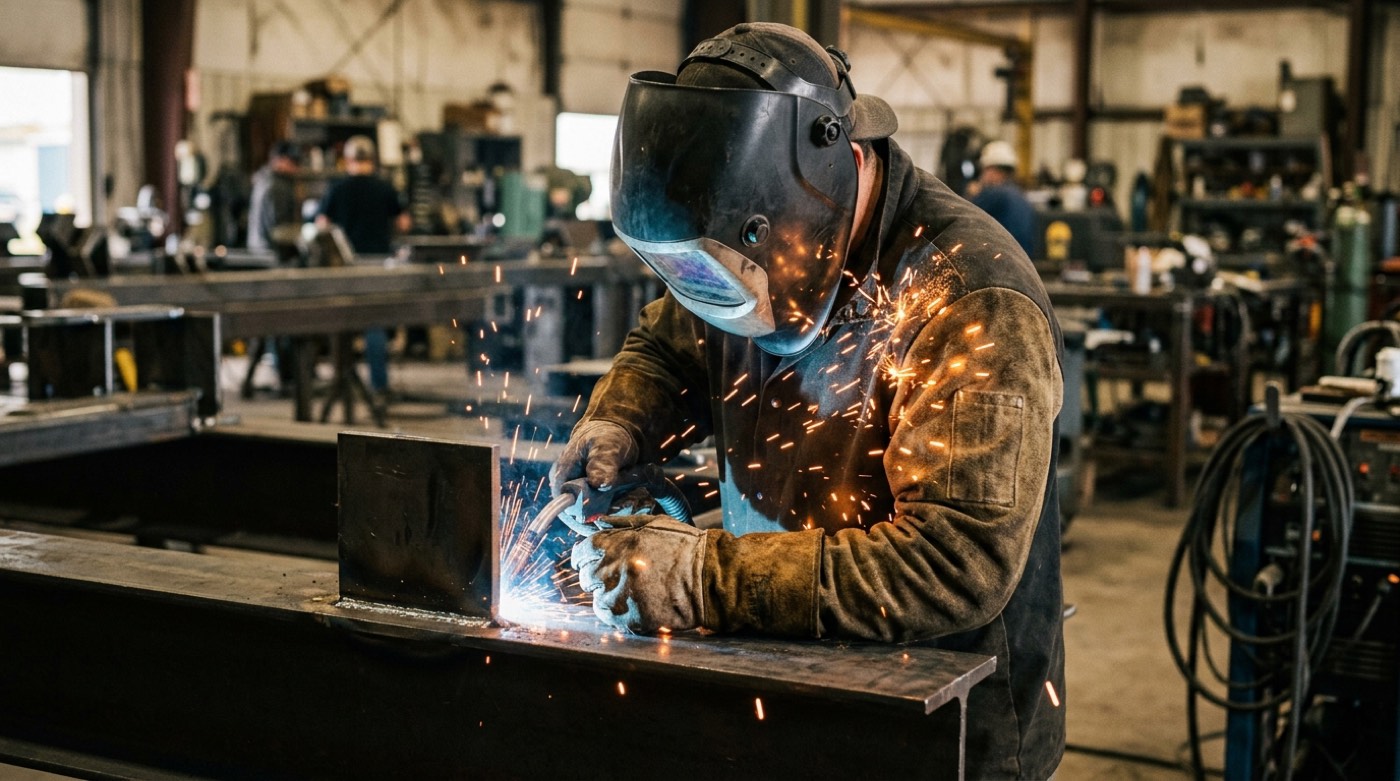
Flying debris, such as metal spatter, sparks, and slag chips, can strike the faces and bodies of workers. This hazard can be mitigated by providing welding shields, safety glasses with side protection, and durable body protection.
Radiant energy, which refers to the electromagnetic energy emitted by an arc or flame (including ultraviolet light), is harmful to workers' eyes. This can be mitigated by providing protective eyewear with appropriately shaded filter lenses beneath a welding shield.
Fire and heat generated by welding tools, sparks, or spatter can burn or ignite clothing, hair, and skin. This hazard can be mitigated by wearing a fire-resistant welder’s cap, insulated welding glove, and heavy protective clothing.
Even the proper PPE may fail to protect workers if it isn’t regularly inspected and maintained. For instance, fire-resistant clothing may lose some of its protective qualities when washed, and small tears or holes in gloves or helmets could expose workers to molten metal and toxic fumes.