Metal & Plastic Machine Operation
Presses, molders, and stamping lines run on energy that does not forgive a reach.
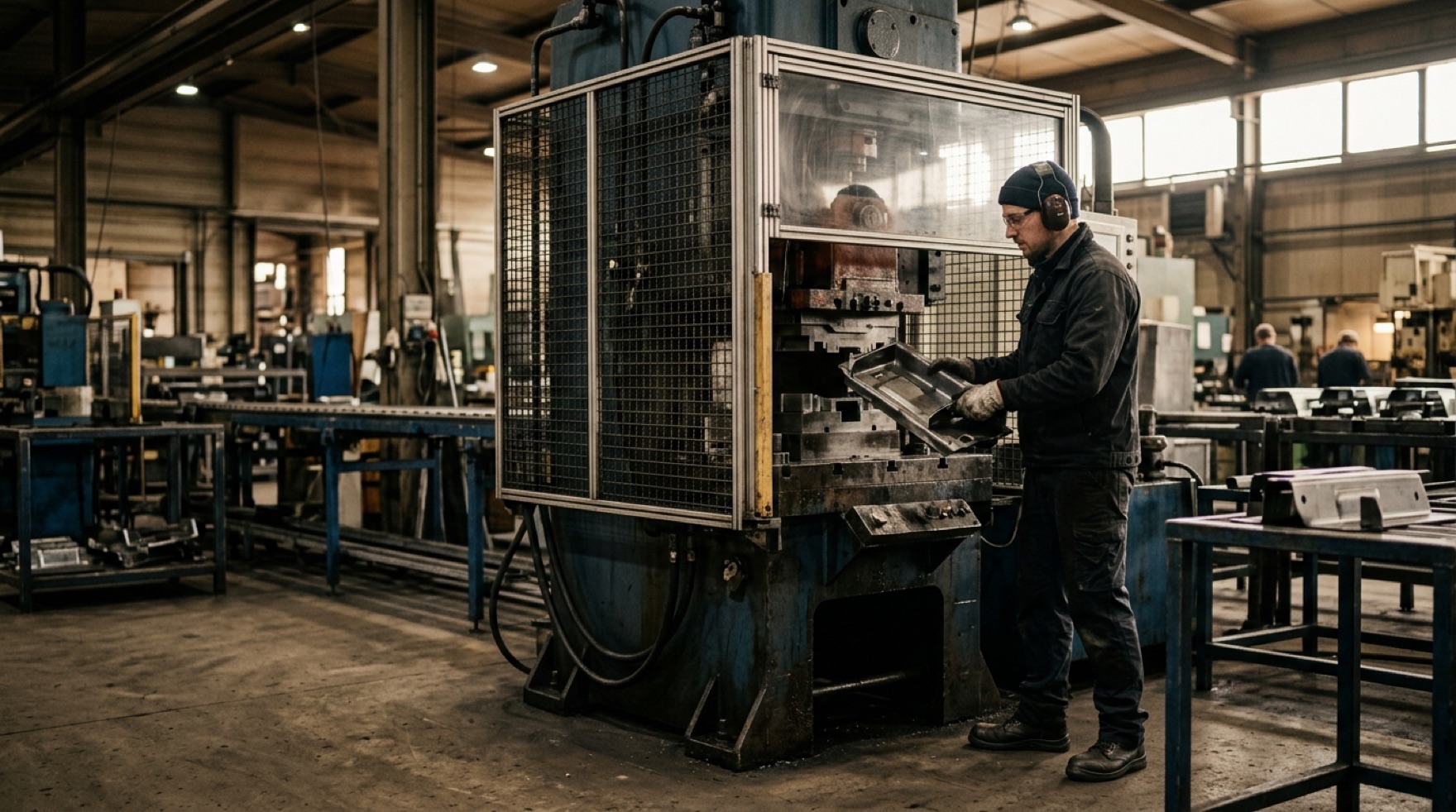
Operating metal and plastic forming machines means working alongside stamping presses, injection molders, and forming lines that carry amputation-level energy at the point of operation. The dominant hazards are machine motion and the release of hazardous energy during jam clearing and setup, with noise and coolant or plastic-fume exposure layered on top.
The point of operation is where these machines injure. A stamping press or injection molder cycles with enough force to amputate, and the injuries cluster around the moments the guard is bypassed: clearing a jam, adjusting a part, or reaching in to speed the cycle. Machine guarding is consistently one of OSHA's most-cited standards for this reason, and it is the control that most directly prevents the amputations these machines are capable of.
The second defining hazard is stored energy. Setup, die changes, and jam clearing expose the operator to mechanical, hydraulic, pneumatic, and electrical energy unless it is isolated and verified first. Around those acute risks sits a chronic layer: sustained noise that drives hearing loss, and coolants, mold-release agents, and plastic fumes that a hazard communication and ventilation program manages. The order of protection is fixed: guard and interlock the machine, control its energy, then use PPE for what remains.
The hazards, and the controls that move the needle
Ordered by the hierarchy of controls — eliminate and engineer first, then treat matting, footwear, and PPE as the layers that catch what remains.
Point-of-operation amputation and crush
Stamping presses and injection molders close with amputation-level force at the point of operation. Reaching in during a cycle, most often to clear a jam or adjust a part, is the mechanism behind the severe injuries.
- Guard the point of operation with fixed and interlocked barriers
- Fit presence-sensing devices or two-hand controls on presses
- Design out manual reaches with automatic feed and ejection
- Prohibit reaching past a guard while the machine can cycle
- Maintain guards and verify function on every shift
Hazardous energy during jams and setup
Die changes, jam clearing, and setup expose the operator to stored mechanical, hydraulic, pneumatic, and electrical energy. Unless that energy is isolated and verified, an unexpected cycle causes crushing and amputation.
- Apply machine-specific lockout/tagout before servicing
- Isolate, lock, tag, and verify a zero-energy state
- Understand the narrow limits of the minor-servicing exception
- Use group lockout and continuity across shift handoffs
- Audit energy-control procedures on a schedule
Noise exposure on the machine floor
Presses, molders, and forming lines generate sustained high noise that causes permanent hearing loss over time. The OSHA action level for a hearing conservation program is 85 dBA as an 8-hour time-weighted average.
- Engineer noise at the source with damping and enclosures
- Isolate noisy operations and limit exposure time
- Run a hearing conservation program at or above the action level
- Provide hearing protection matched to the exposure
- Monitor noise and conduct audiometric testing
Coolant, mold-release, and plastic-fume exposure
Metalworking fluids, mold-release agents, and thermal decomposition products of plastics create skin and inhalation exposures. Dermatitis and respiratory irritation are the routine effects a hazard communication program manages.
- Substitute lower-hazard fluids and release agents
- Provide local exhaust at molding and forming operations
- Maintain fluids to control bacterial growth and mist
- Supply chemical-resistant gloves and skin protection
- Maintain safety data sheets and train under the HazCom standard
The programs that anchor the floor
Machine guarding verification
Guards and interlocks are checked at the point of operation every shift, and no machine runs with a guard defeated to speed the cycle. Machine guarding is a top-cited OSHA standard because the injuries it prevents are severe and permanent.
Lockout/tagout for jams and setup
Every jam clear, die change, and setup starts with isolate, lock, tag, and verify. The minor-servicing exception is narrow, so the default is to lock out before any part of the body enters the machine.
Hearing conservation
Where exposure reaches the action level, a hearing conservation program with monitoring, audiometry, and protection is in place. Engineering controls at the source come before relying on earplugs.
In-depth guidance
View all 2 →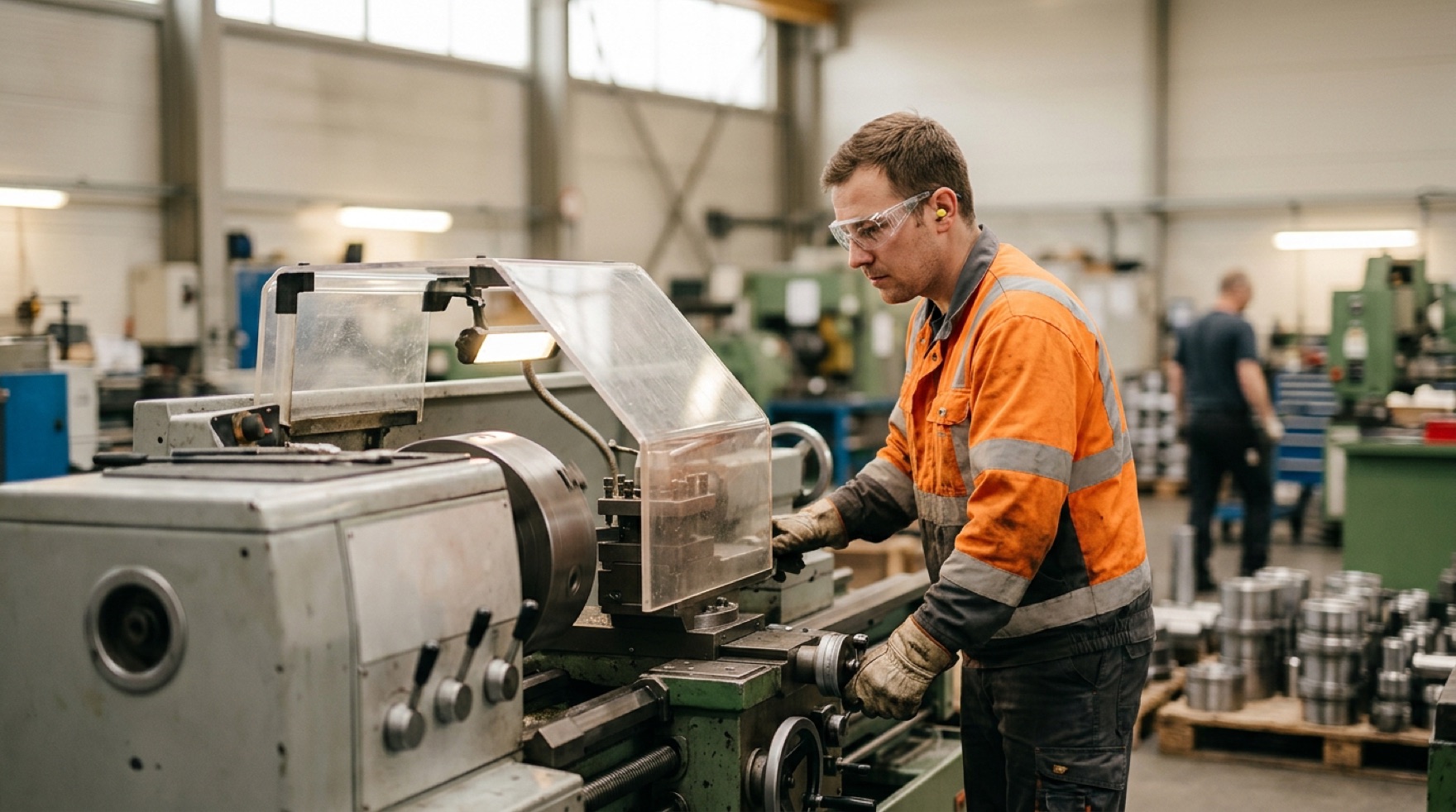
Machine Guarding for Machine Operators (29 CFR 1910.212)
A guard is the control that keeps an operator's hand out of the point of operation while the machine is doing its job. 29 CFR 1910.212 makes that protection an employer duty, and machine guarding sits in OSHA's ten most-cited standards year after year. Here is what the standard requires, which safeguarding methods satisfy it, and why the guard, not operator care, is the thing being audited.
Lockout/Tagout for Machine Operators (29 CFR 1910.147)
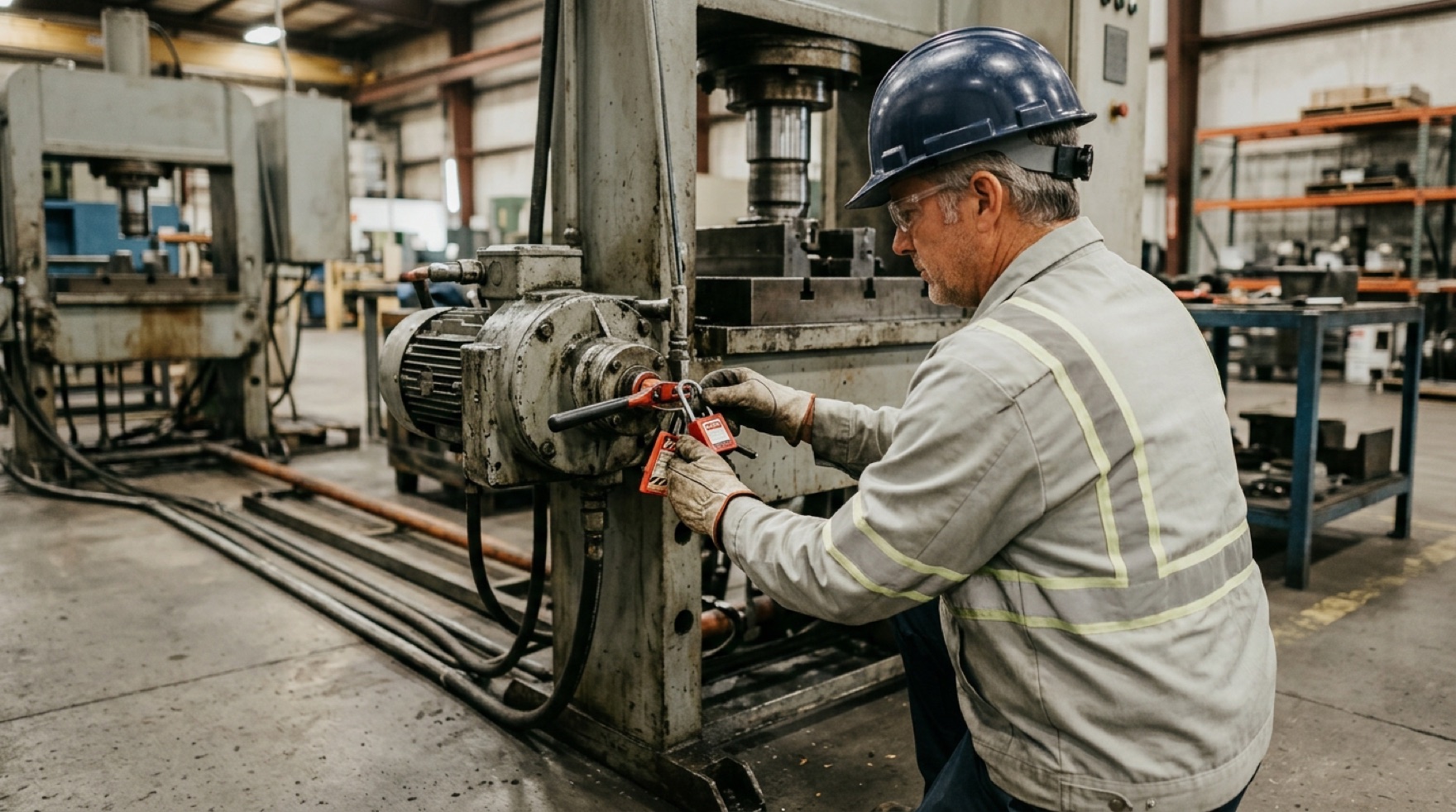
The guard keeps you out of the machine while it runs. Lockout/tagout is what protects you the moment you have to reach inside it. 29 CFR 1910.147 governs the control of hazardous energy during servicing and maintenance, and it is one of OSHA's most-cited standards for a reason: clearing a jam without isolating the energy is how machine operators are crushed. Here is when the standard applies to you and the sequence that makes a machine safe to enter.
Machine safety self-assessment
Check your point-of-operation guarding, energy control, and noise program against the forming-machine hazard pattern.
Start the assessment →Guarding and LOTO guides
Practical guidance on machine guarding, hazardous-energy control, and hearing conservation for machine operators.
Browse the guides →
Stay ahead of safety.
New articles, free templates, and regulatory updates in your inbox. No spam — unsubscribe anytime.