Lifting heavy loads places immense strain on the body — particularly if workers aren’t using a proper lifting technique or if mechanical aids, like dollies, aren’t available. In this article, we’ll explore how OSHA and NIOSH guidelines can keep workers safe while lifting and placing loads.
What’s a Safe Weight Limit?
While OSHA doesn’t specify a maximum weight limit for manual lifting, theNIOSH “lifting equation” can be used to estimate one. This equation is particularly useful because it includes factors beyond load weight, such as lifting frequency, worker posture, lifting height, lifting duration, the quality of gripping or grasping, and more.
As a general guideline, NIOSH suggests any load exceeding 50 pounds should be moved with team lifting or mechanical aids. But it’s important to remember that weight isn’t the whole story. After all, a “safe” lifting weight can immediately become hazardous if the incorrect lifting technique is used or the work environment requires twisting, bending, or straining to move the load. While using the equation can be quite technical, NIOSH has released a mobile app that makes it easier to calculate a safe lifting weight for your situation.
Proper Lifting Techniques
OSHA doesn’t officially recognize any “proper” lifting technique, but workers can significantly reduce strain on their back and avoid injuries by lifting in a way that shifts weight to stronger muscle groups, like the core and legs, to protect vulnerable areas like the back. This is especially important for repetitive lifting tasks, where poor posture combined with fatigue can increase the risk of injury over time.
Here are a few lifting techniques that can reduce strain and the chance of long-term injury:
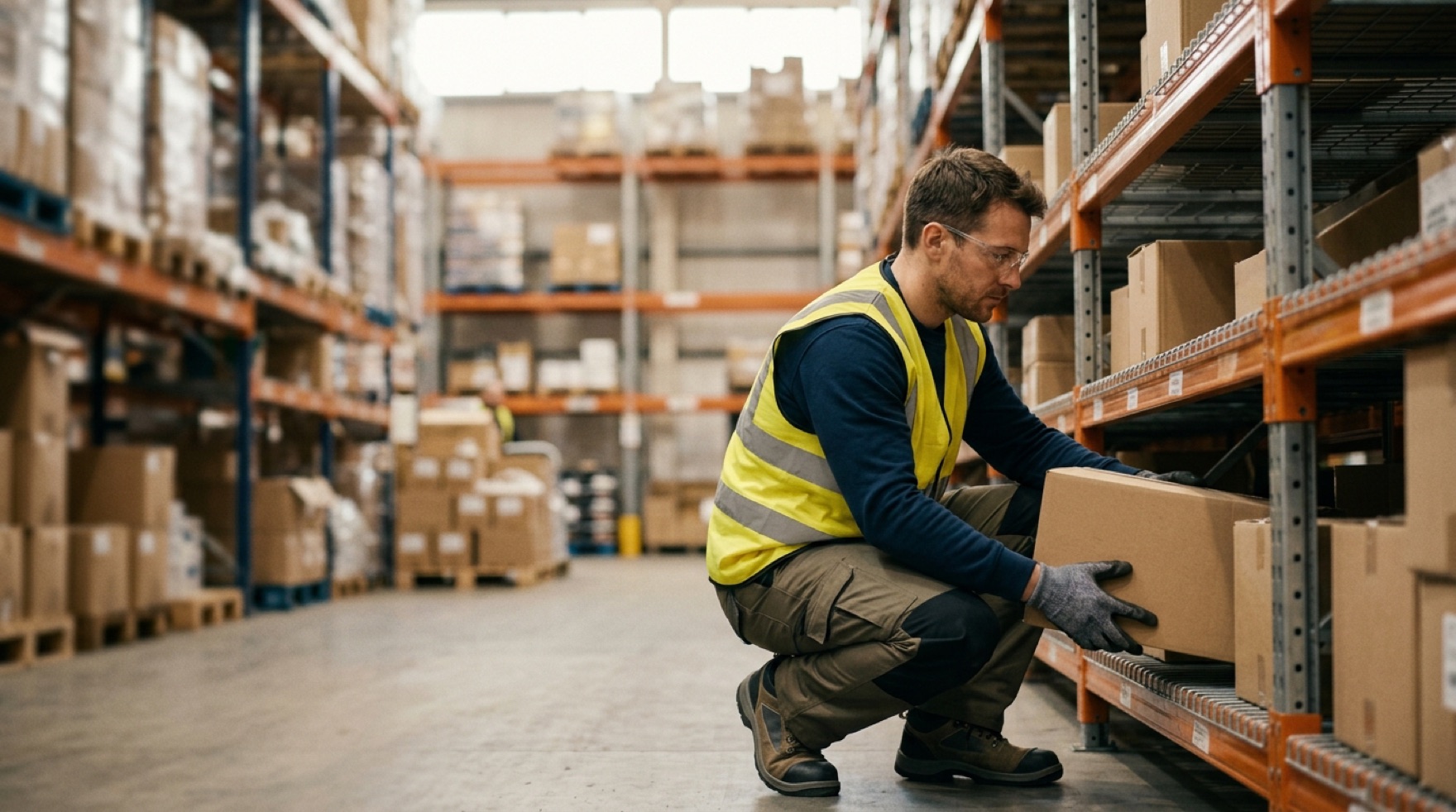
Lift with (mostly) your legs: By lowering into a squat position and then lifting, the weight can be shifted to the legs and core rather than the back. It’s important to keep the back straight and to avoid sudden jerking motions to reduce stress on the spine.
Hold the load close to your body: The farther a load is away from a worker’s body, the more strain it puts on the spine. By keeping loads close, this strain is minimized.
Avoid twisting: Twisting while holding a load can cause uneven pressure on the spine, increasing the risk of injury. Instead of twisting the back, workers should turn by moving their feet, always keeping their shoulders aligned with their hips.
Lift in the “power zone:” Lifting within the zone above the mid-thigh and below shoulder height is the safest and most efficient method. OSHA calls this the “power zone.” Lifting that requires bending or reaching outside this range, such as lifting off the floor or placing items overhead, places much more strain on the body.
Use of mechanical aids
As mentioned above, when the weight of a load exceeds the calculated safe limit, NIOSH suggests workers team lift or use a mechanical aid. For instance, the weight of a load might be below 50 pounds, but the circumstances require lifting it overhead. As a result, this might be considered unsafe. Instead, workers could use a mechanical aid, such as…
Dollies and pallet jacks to transport heavy or bulky items across flat surfaces, reducing the need for lifting and preventing back strain;
Hoists and forklifts to lift heavy loads to high places, especially in high-risk areas like warehouses which may otherwise require lifting outside of the powerzone.