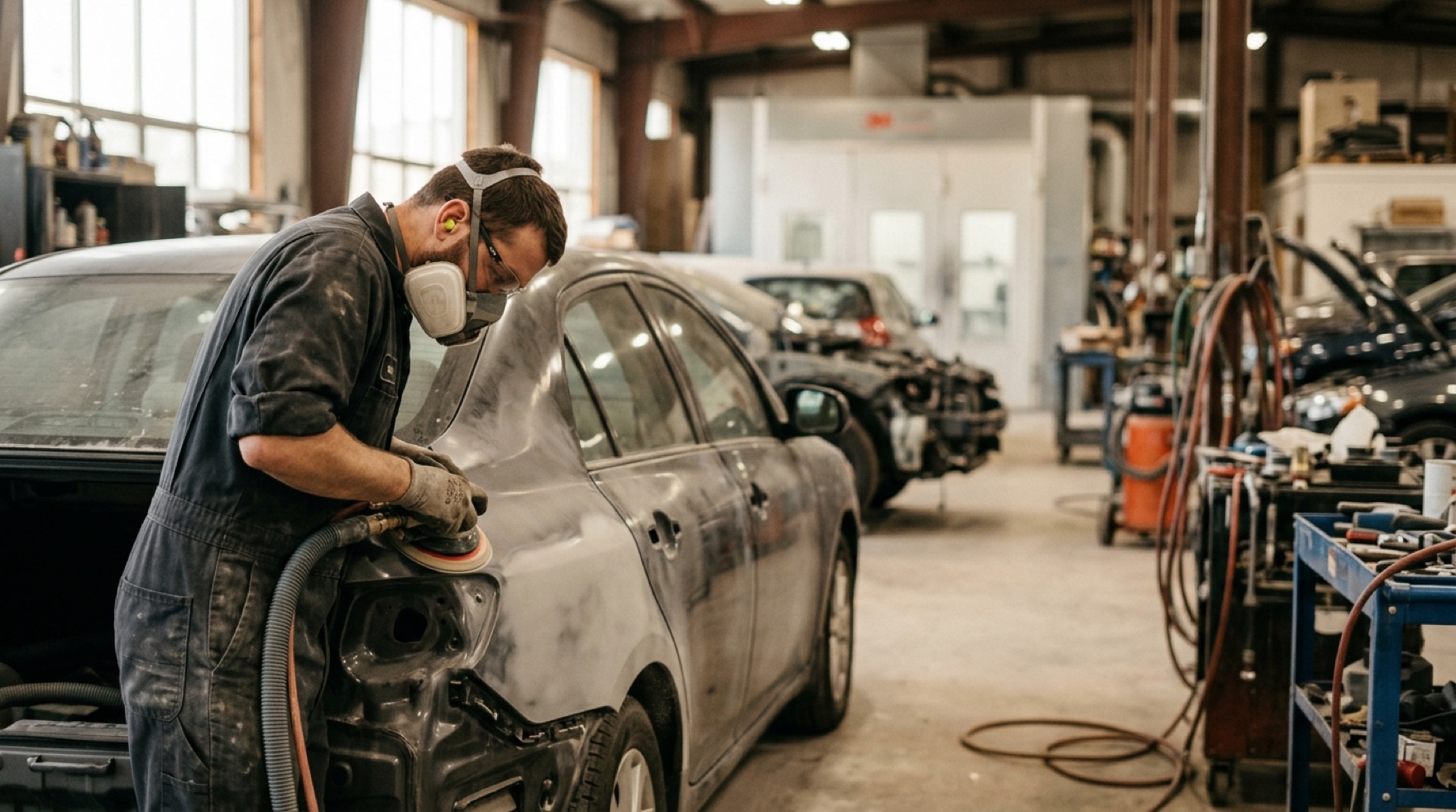
Collision & Auto Body
Isocyanate paint, sanding dust, and a spray booth full of flammable vapor.
Collision and auto-body work centers on refinishing, which brings isocyanate paints and clearcoats that sensitize the airway, alongside the sanding dust of body preparation, the flammable atmosphere of the spray booth, and the fume of welding and cutting during structural repair. Respiratory protection and booth fire control lead the program.
Refinishing is the defining exposure of the body shop. Two-component automotive paints and clearcoats cure with isocyanates, potent respiratory sensitizers that can trigger occupational asthma at very low levels once a worker is sensitized. Because spraying produces a fine aerosol, a supplied-air respirator and a properly functioning downdraft booth carry the protection, not a particulate mask, and skin protection matters because isocyanates sensitize through the skin as well.
The preparation and structural work add their own hazards. Sanding body filler and primer generates fine dust that must be captured, the spray booth holds a flammable atmosphere that spray-finishing standards manage, and welding and cutting on vehicle steel produce fume and hot-work fire risk. Noise from sanders and grinders and the ergonomics of prolonged awkward positions round out an injury profile that runs from the lungs to the back. The order of protection is ventilation and booth control first, with respiratory and skin PPE sized to the residual exposure.
The hazards, and the controls that move the needle
Ordered by the hierarchy of controls — eliminate and engineer first, then treat matting, footwear, and PPE as the layers that catch what remains.
Isocyanate paint sensitization and asthma
Automotive paints and clearcoats cure with isocyanates, among the leading causes of occupational asthma. A sensitized worker reacts to exposures far below any general limit, so prevention is the only reliable protection.
- Substitute lower-hazard coatings where feasible
- Spray only in a functioning downdraft booth with overspray capture
- Provide supplied-air respiratory protection for spraying
- Protect skin, which is also a sensitization route
- Run medical surveillance for respiratory sensitization
Spray-booth flammable atmosphere
Atomized paint and solvent vapor form a flammable atmosphere in and around the booth. An ignition source there causes flash fire or explosion.
- Confine spraying to a compliant booth with adequate airflow
- Control ignition sources and bond and ground equipment
- Maintain booth ventilation, filters, and interlocks
- Store and handle flammable coatings to limit vapor
- Provide fire suppression appropriate to the operation
Sanding dust from filler and primer
Sanding body filler and primer generates fine dust in the breathing zone during preparation. Repeated inhalation irritates the airway and adds to the shop's overall respiratory load.
- Use dust-extraction sanders and local capture
- Substitute lower-dust products and wet methods where possible
- Provide respiratory protection during heavy sanding
- Maintain housekeeping to limit resuspended dust
- Maintain safety data sheets for filler and primer products
Welding and cutting fume
Structural repair welds and cuts vehicle steel, producing metal-oxide fume in the breathing zone. Modern high-strength steels and coatings add specific exposures.
- Provide source-capture ventilation at welding and cutting
- Position the head out of the fume plume
- Provide respiratory protection where ventilation is insufficient
- Follow hot-work fire precautions for welding and cutting
- Follow vehicle-maker procedures for high-strength steel repair
The programs that anchor the floor
Ventilation-first respiratory protection
Booth ventilation and overspray capture come first, and supplied-air respiratory protection covers the residual exposure during spraying. With isocyanates, preventing sensitization is the goal, because a sensitized worker reacts below any limit.
Spray-booth fire safety
The booth keeps the flammable atmosphere within limits and free of ignition sources, with filters, airflow, and interlocks maintained. The fire risk depends entirely on that equipment working as designed.
Hot-work and welding control
Welding and cutting during structural repair follow hot-work fire precautions and fume control. Vehicle-maker procedures govern high-strength steel and battery-vehicle repair, where the wrong method creates new hazards.
In-depth guidance
View all 2 →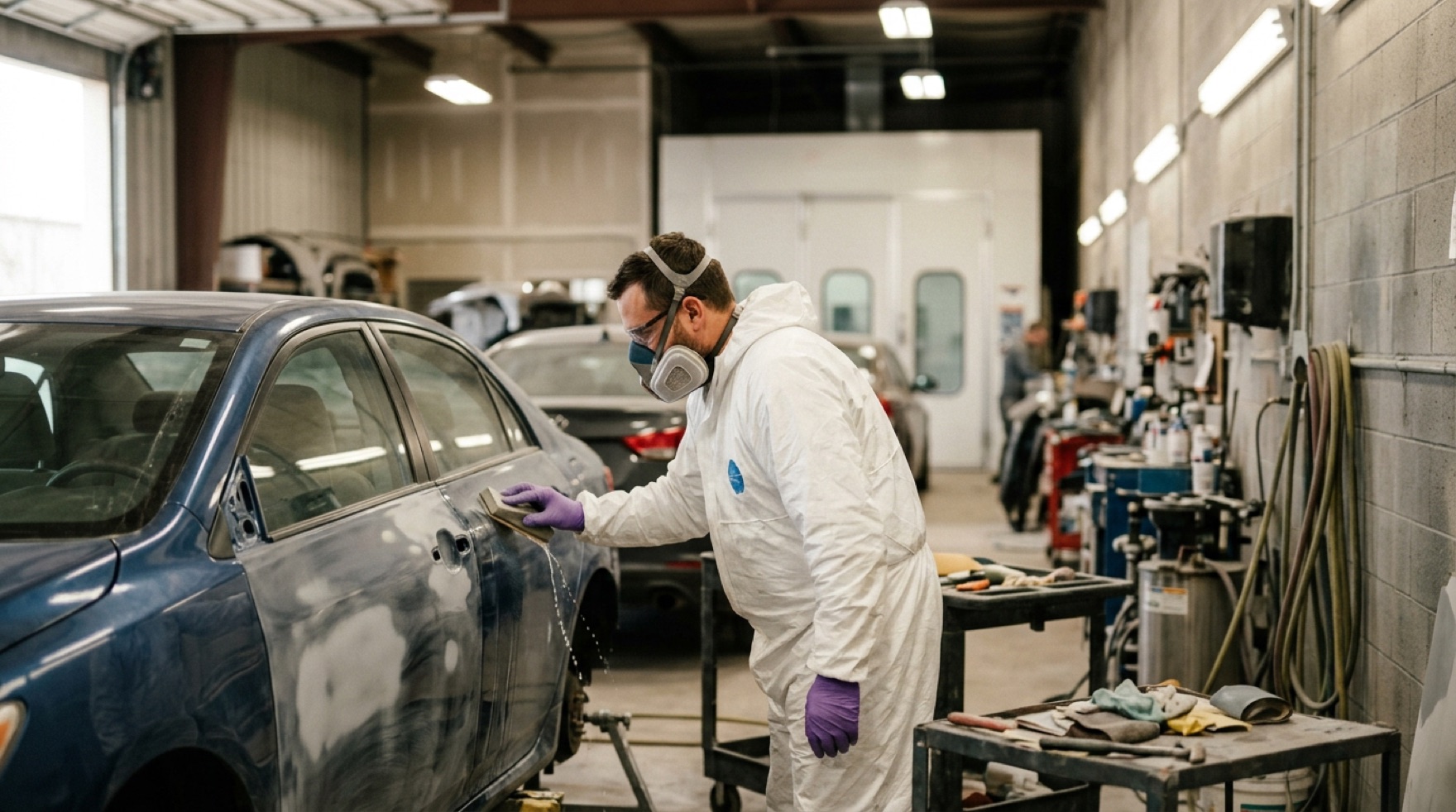
Isocyanate Control in Auto-Body Refinishing
The hardener that makes a two-part urethane clearcoat cure hard is an isocyanate, and isocyanates are respiratory sensitizers: once a painter is sensitized, exposures that others tolerate can trigger a severe asthma attack. That is why spraying two-part paint is not a job for a cartridge respirator and a cracked booth door. Here is what OSHA and NIOSH require, and why the control has to hold every single spray.
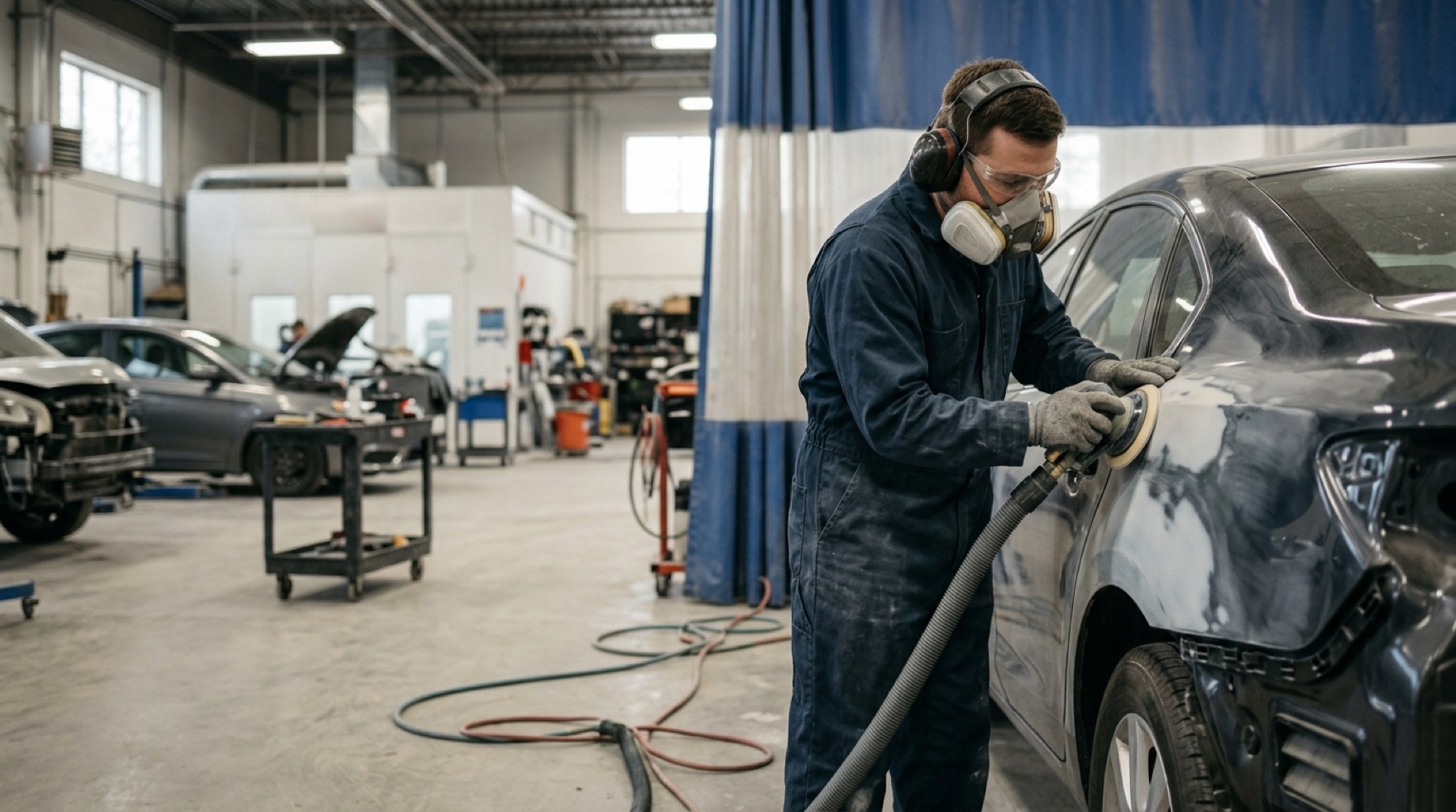
Sanding Dust & Noise in Collision Repair: Two Limits, One Bay
The prep bay hits a collision tech with two exposures at once: the fine dust off body filler and primer, and the near-constant whine of DA sanders, grinders, and air tools. They are governed by two different OSHA standards with two different triggers. Here is how the dust limit under 1910.1000 and the noise limits under 1910.95 compare, and how a handful of controls cover both.
Body-shop hazard self-assessment
Check your respiratory protection, booth fire controls, dust capture, and welding practices against the collision-repair hazard pattern.
Start the assessment →Collision-repair safety guides
Practical guidance on isocyanate control, spray-booth fire safety, and welding-fume capture for body shops.
Browse the guides →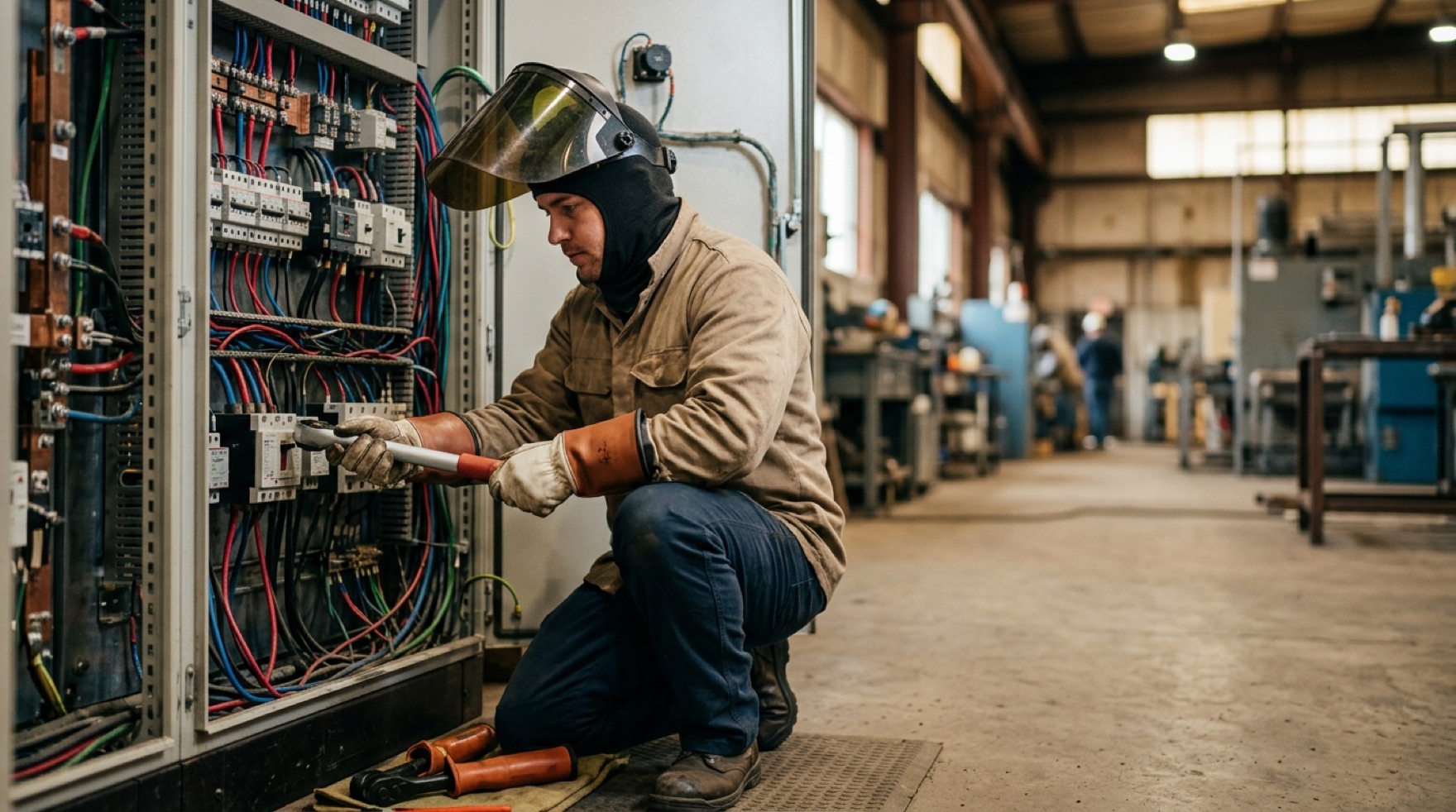
Stay ahead of safety.
New articles, free templates, and regulatory updates in your inbox. No spam — unsubscribe anytime.