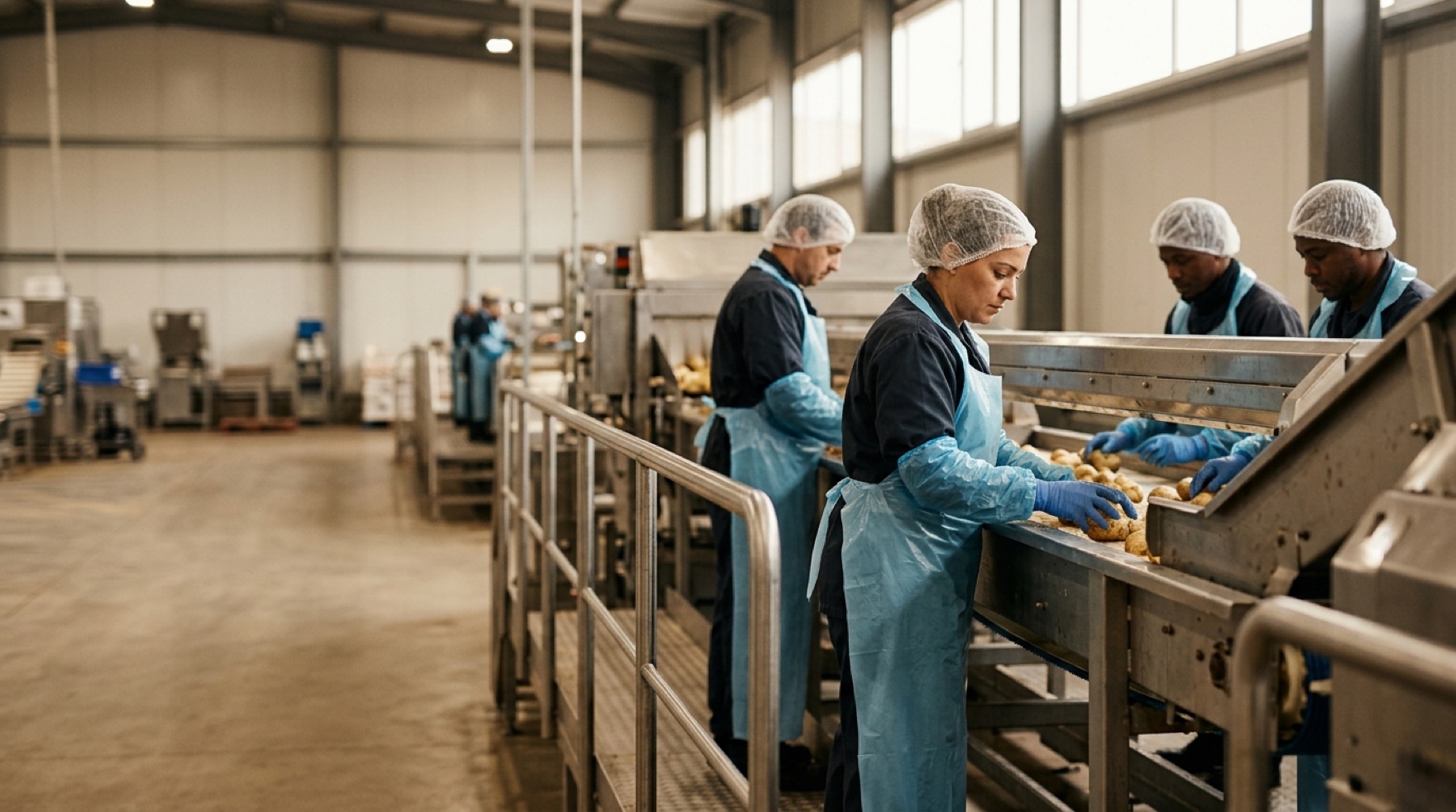
Food & Beverage Processing
Blades, wet floors, and ammonia refrigeration under one sanitation regime.
Food and beverage processing runs powered blades, augers, mixers, and conveyors through a plant that is deliberately wet for sanitation. The result is a combination of machine amputation hazards, same-level falls on continuously wet floors, ammonia refrigeration exposure, and the caustic chemistry of sanitation, often on cold, fast-paced lines.
Processing equipment is built to cut, grind, and move product continuously, and the same energy injures people. Grinders, slicers, augers, and conveyors carry amputation and caught-in hazards, and the injuries cluster around cleaning and unjamming, when guards come off and the machine may still hold energy. Machine guarding and lockout during sanitation are the controls that most directly prevent the severe injuries.
The plant environment adds its own hazards. Floors are wet by design for sanitation, making same-level falls a constant risk, and large refrigeration systems often use anhydrous ammonia, which is toxic and, above threshold quantities, subject to process safety management. Sanitation chemistry is caustic, and cold rooms and fast lines add ergonomic and thermal strain. The practical program treats the machine, the floor, the refrigeration system, and the chemistry as distinct problems, each with its own control.
The hazards, and the controls that move the needle
Ordered by the hierarchy of controls — eliminate and engineer first, then treat matting, footwear, and PPE as the layers that catch what remains.
Machine amputation on blades, augers, and conveyors
Grinders, slicers, augers, and conveyors carry amputation and caught-in energy through the whole line. The severe injuries concentrate during cleaning and unjamming, when guards are removed.
- Guard the point of operation and in-running nips
- Design equipment for tool-free cleaning without reaching into hazards
- Lock out energy before cleaning, clearing, or servicing
- Fit emergency stops within reach along conveyor lines
- Train sanitation crews on machine-specific hazards
Same-level falls on wet floors
Sanitation keeps processing floors wet through the shift, so same-level falls are a constant hazard. Product, fat, and cleaning residue lower traction further.
- Design drainage and slope to clear water quickly
- Specify slip-resistant flooring measured against the wet DCOF threshold
- Use drainage matting and duckboards at wet stations
- Maintain cleaning cycles and prompt spill response
- Provide slip-resistant footwear rated for wet, greasy floors
Anhydrous ammonia refrigeration release
Industrial refrigeration commonly uses anhydrous ammonia, which is toxic and corrosive to the respiratory tract. Systems holding 10,000 pounds or more fall under OSHA process safety management.
- Apply process safety management at or above the threshold quantity
- Maintain detection, ventilation, and emergency shutoff
- Restrict machinery-room access and require specific training
- Provide ammonia-rated respiratory protection for response
- Maintain a written emergency response plan and drills
Caustic sanitation chemistry
Sanitation uses strong caustics, acids, and sanitizers that burn skin and eyes and can release gas when mixed. Chemical burns and respiratory irritation are the routine exposures a hazard communication program manages.
- Substitute lower-hazard sanitation chemistries where possible
- Automate dosing and dilution to limit contact
- Provide eyewash, chemical PPE, and never mix incompatible products
- Ventilate closed rooms during chemical sanitation
- Maintain safety data sheets and train under the HazCom standard
The programs that anchor the floor
Sanitation lockout
Cleaning and unjamming are the highest-risk tasks on the line because guards come off and energy may remain. Lockout and verification before any reach into equipment is the control that prevents the amputations tied to sanitation.
Wet-floor and drainage management
Drainage, slip-resistant flooring, and prompt cleaning keep a deliberately wet plant from becoming a fall hazard. Footwear and matting are surface-level layers, chosen against the actual floor condition.
Ammonia refrigeration safety
Where refrigeration crosses the threshold quantity, process safety management governs mechanical integrity, procedures, and emergency response. Detection and machinery-room controls protect workers who are rarely near the system until something fails.
In-depth guidance
View all 2 →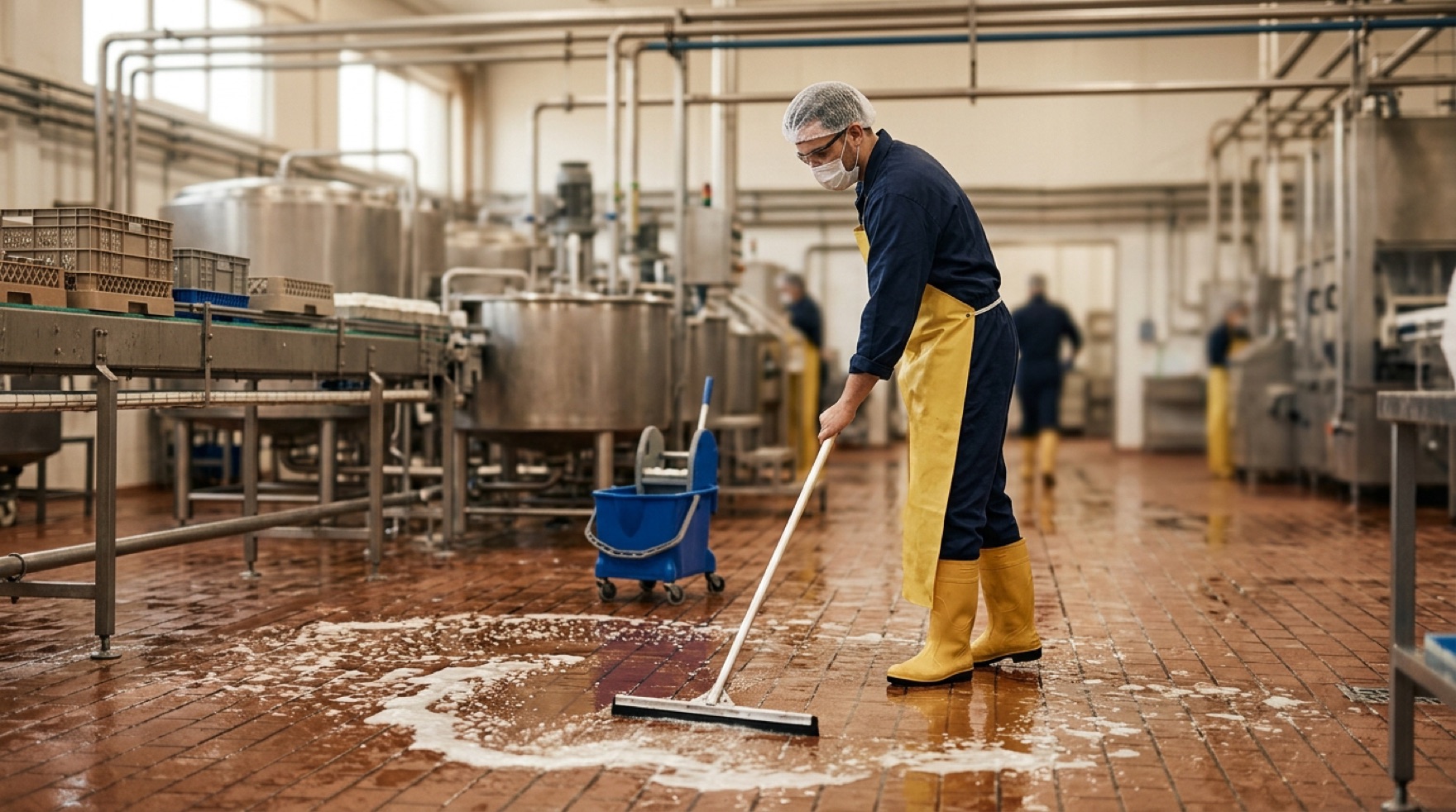
Slips & Falls on Wet Food-Processing Floors
Food-processing floors are wet, greasy, and washed down on a schedule, which makes the same-level fall the most reliable injury on the plant. OSHA's 29 CFR 1910.22 sets what the floor and the housekeeping have to achieve, and ANSI A326.3 gives the slip-resistance number the floor surface should meet. Here is how the two fit together, and the order in which controls actually reduce the risk.
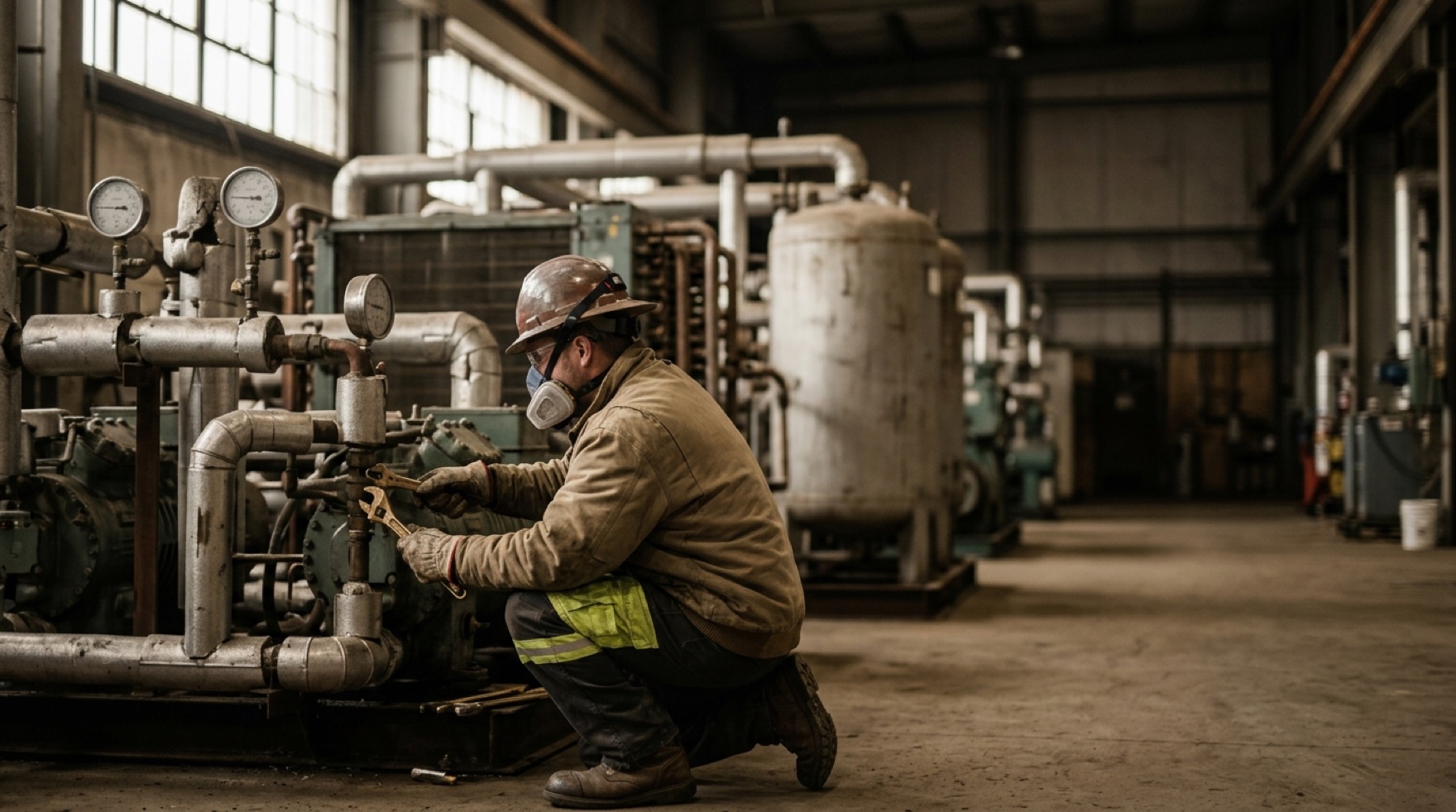
Ammonia Refrigeration & PSM: What a Catastrophic Release Teaches
Anhydrous ammonia is the workhorse refrigerant of food processing, and above 10,000 pounds in a process it puts a plant under OSHA's Process Safety Management standard. The 2010 Millard Refrigerated Services release, investigated by the CSB, shows what each PSM element is for: a restart, a pressure surge called hydraulic shock, a roof evaporator that failed, and 32,000 pounds of ammonia over a worksite. Here is the standard read through the incident.
Processing-plant self-assessment
Check your machine guarding, sanitation lockout, wet-floor controls, and ammonia program against the processing hazard pattern.
Start the assessment →Processing safety guides
Practical guidance on sanitation lockout, wet-floor control, and refrigeration safety for food and beverage plants.
Browse the guides →
Stay ahead of safety.
New articles, free templates, and regulatory updates in your inbox. No spam — unsubscribe anytime.