Bar Service
Wet mats, broken glass, and a keg to change before the rush.
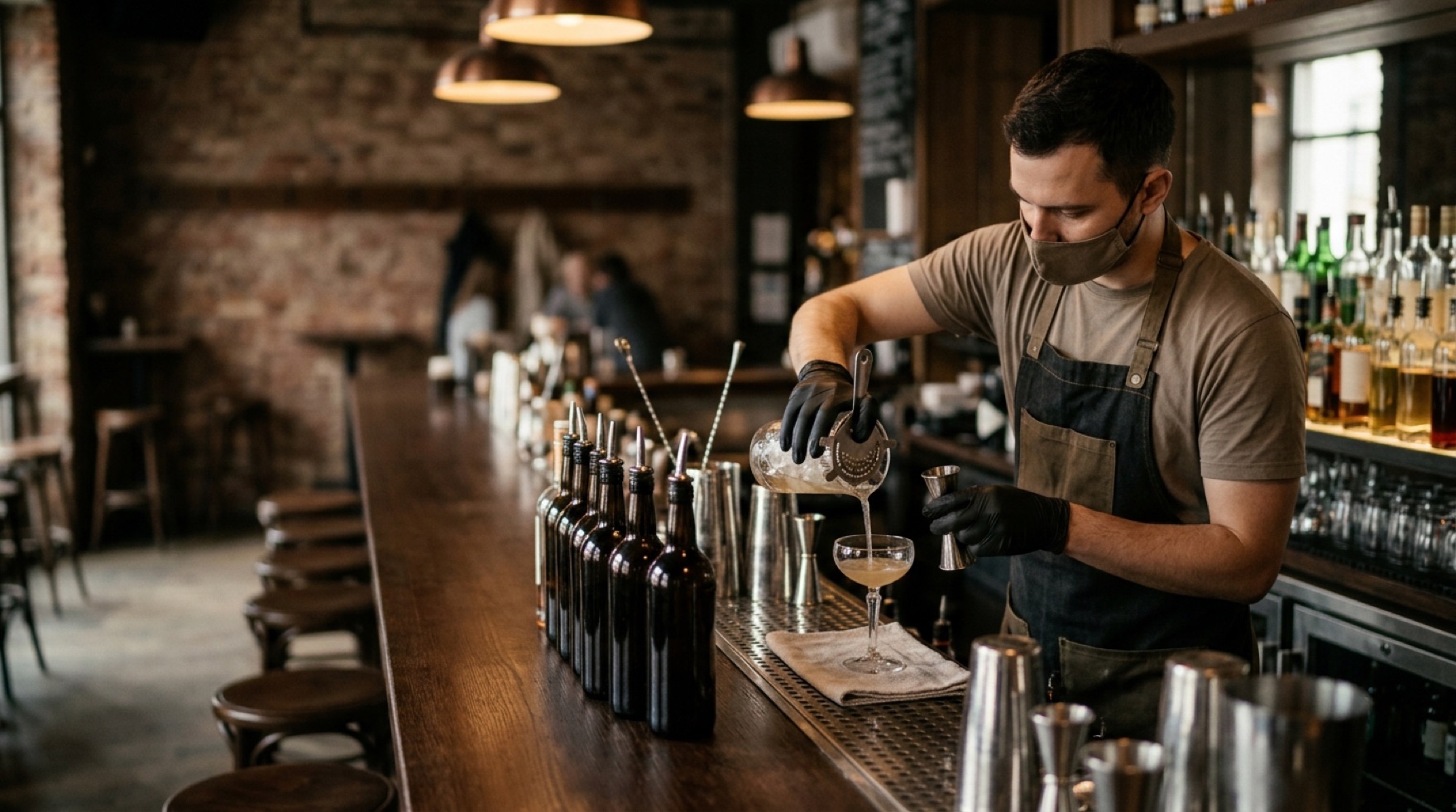
Bar service concentrates its hazards into the tight, wet space behind the bar: floors kept wet by ice, drinks, and washing, glassware that breaks and cuts, and the heavy lifting of kegs and cases. Late hours and intoxicated patrons add a workplace-violence dimension the trade has to plan for.
Behind the bar, the floor is wet by default. Ice, spilled drinks, and constant glass washing keep the space slippery, and bartenders move quickly in a confined area, so same-level falls are the most frequent injury. Bar mats and slip-resistant flooring exist precisely because the wetness cannot be eliminated, and footwear matched to the surface is part of the control.
Glass and weight add the rest. Broken glassware causes lacerations during service and cleanup, and reaching into cloudy wash water or an ice well hides the sharp edge until it cuts. Changing kegs and carrying cases is heavy, awkward lifting, often in a cramped cellar or behind the bar. Late hours and alcohol bring a real risk of customer aggression, so de-escalation and a violence-prevention approach belong in the safety program. The practical response keeps the floor slip-resistant, controls glass handling, cuts the lifting load, and prepares staff for difficult patrons.
The hazards, and the controls that move the needle
Ordered by the hierarchy of controls — eliminate and engineer first, then treat matting, footwear, and PPE as the layers that catch what remains.
Slips on wet floors behind the bar
Ice, spilled drinks, and glass washing keep the floor behind the bar wet, and bartenders move fast in a confined space. Same-level falls are the most frequent bar-service injury.
- Specify slip-resistant flooring measured against the wet DCOF threshold
- Use bar mats and drainage matting at wet points
- Clean spills immediately and manage ice and water
- Provide slip-resistant footwear for staff
- Keep the bar-back area uncluttered and well drained
Glass lacerations during service and cleanup
Broken glassware cuts hands during service and cleanup, and reaching into cloudy wash water or an ice well hides the sharp edge. Lacerations are among the most frequent bar injuries.
- Never put hands into an ice well or cloudy wash water
- Use a scoop for ice, never a glass
- Clean up broken glass with a brush and dustpan, not hands
- Provide cut-resistant gloves for glass cleanup
- Remove chipped and cracked glassware from service
Keg and case lifting overexertion
Changing kegs and carrying cases is heavy, awkward lifting, often in a cramped cellar or behind the bar. Overexertion and back strain follow from repeated handling.
- Use carts, ramps, and keg-handling aids
- Store heavy stock at accessible height to cut lifting
- Team-lift kegs and heavy cases
- Plan cellar and delivery layout to shorten carries
- Train handling technique as a supporting layer
Late-hour customer aggression
Late hours and alcohol raise the risk of customer aggression and violence toward bar staff. This is a recognized workplace-violence hazard that a prevention approach addresses.
- Build a workplace-violence prevention approach for the venue
- Train de-escalation and safe refusal of service
- Set staffing, visibility, and closing procedures for high-risk hours
- Provide clear response and support procedures
- Support reporting and post-incident care for staff
The programs that anchor the floor
Floor traction and drainage
Slip-resistant flooring, bar mats, and immediate spill cleanup keep a permanently wet space from becoming a fall hazard. The wetness cannot be removed, so the traction control has to be built in.
Safe glass and ice handling
Hands never go into an ice well or cloudy wash water, ice is scooped rather than glassed, and broken glass is cleaned with tools. These simple rules prevent the lacerations that dominate the bar injury log.
Violence prevention and de-escalation
A workplace-violence approach with de-escalation training, safe refusal of service, and closing procedures prepares staff for the reality of late-hour work. This is a core safety element in bar service, not an afterthought.
In-depth guidance
View all 1 →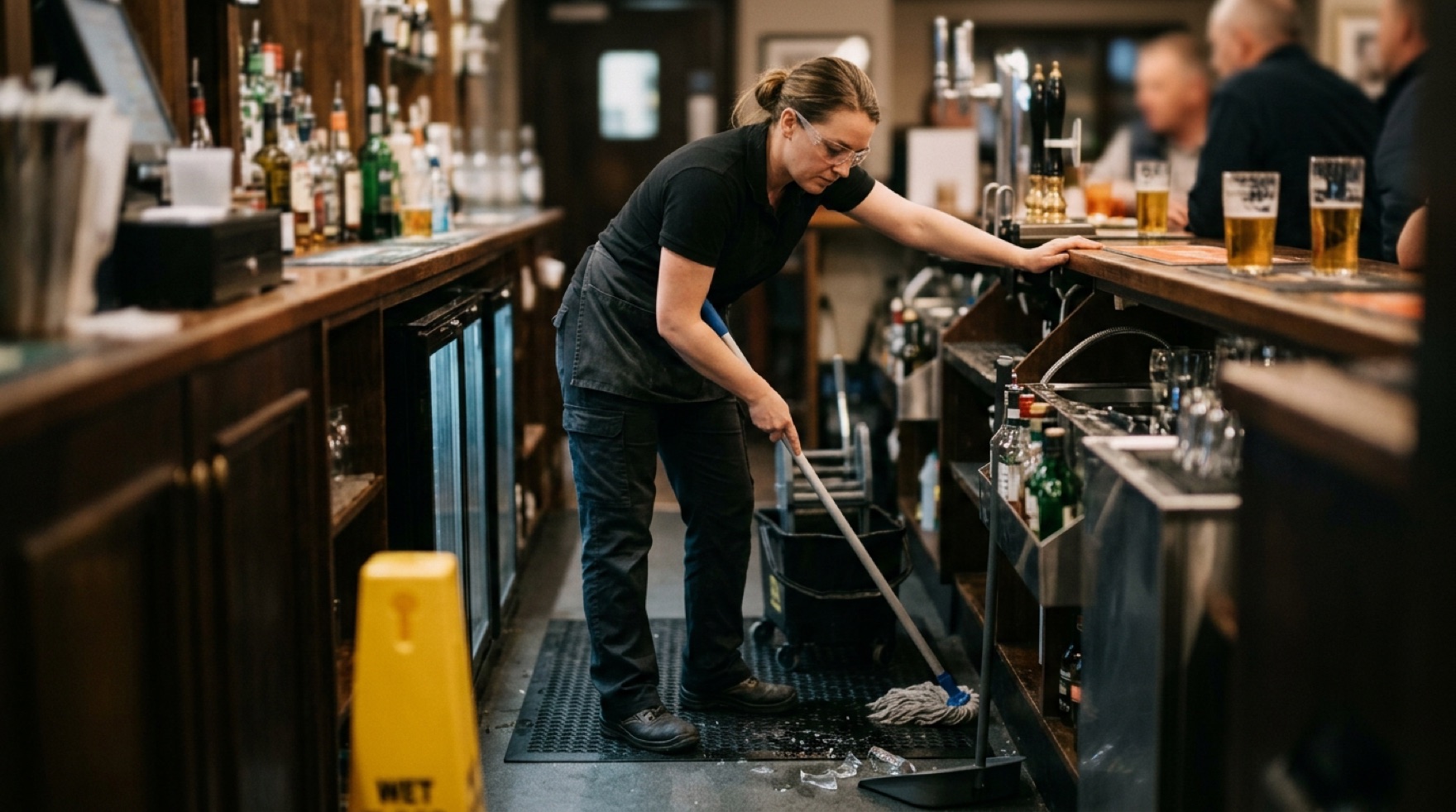
Bar-service self-assessment
Check your floor traction, glass handling, lifting practices, and violence-prevention approach against the bar-service hazard pattern.
Start the assessment →Bar safety guides
Practical guidance on slip-resistant flooring, safe glass handling, and de-escalation for bar staff.
Browse the guides →
Stay ahead of safety.
New articles, free templates, and regulatory updates in your inbox. No spam — unsubscribe anytime.