Janitorial & Cleaning
The chemicals that clean the building are the ones that reach the worker first.
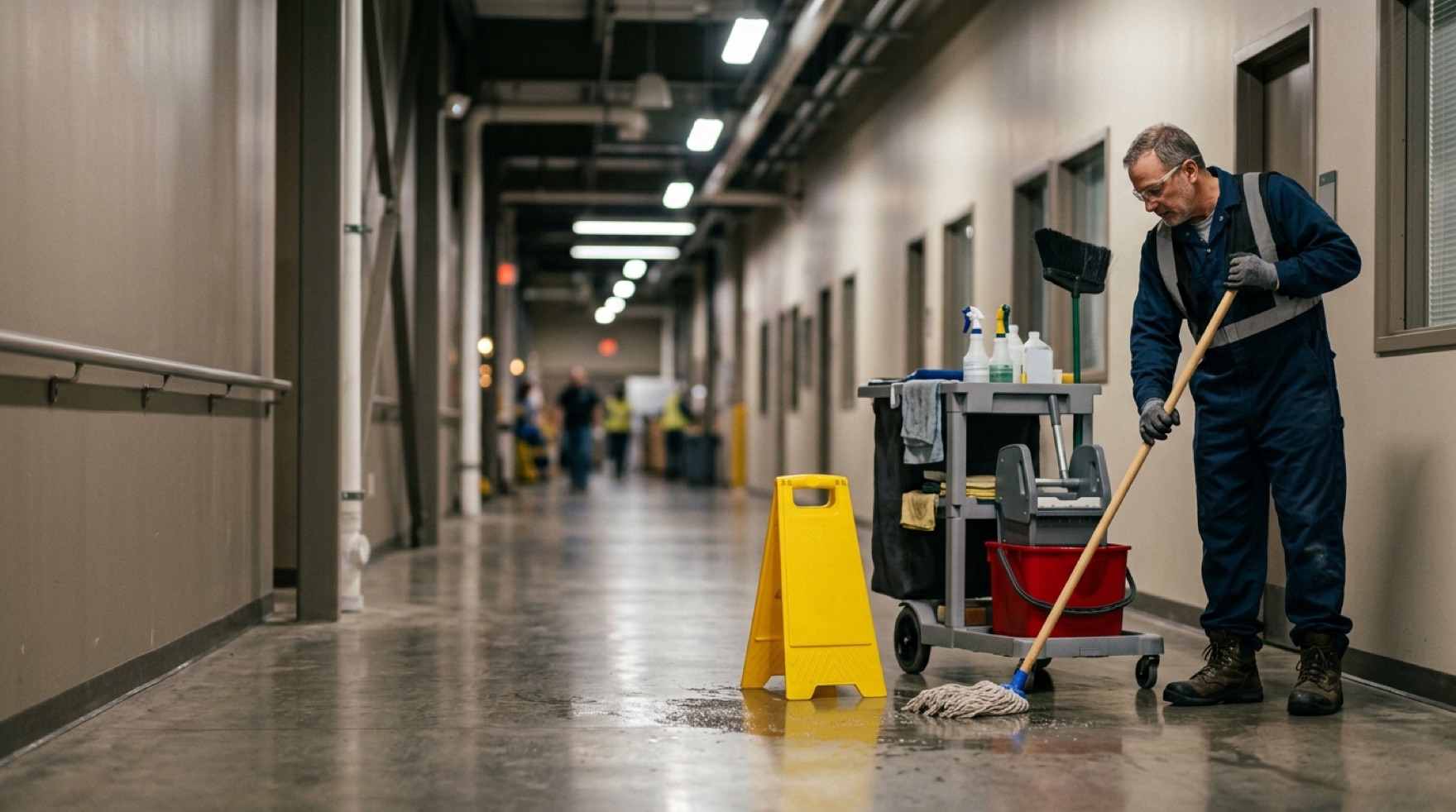
Janitorial and cleaning work is built around chemicals that irritate, burn, and, when mixed wrong, release toxic gas. Chemical exposure leads the risk, alongside the wet floors the work creates, the repetitive strain of cleaning motions, and the bloodborne-pathogen exposure of handling waste and cleaning up spills.
Cleaning chemistry is the exposure people take least seriously and should take more. Disinfectants, degreasers, and acids irritate skin and airways, and mixing incompatible products, most infamously bleach and ammonia, releases toxic gas in an enclosed room. Because cleaning happens in every space in a building, the hazard communication program and safe dilution and storage practices are the frontline controls, not an afterthought.
The physical hazards follow the work. Cleaning wets floors, so the janitor creates and then walks the slip hazard, and the repetitive motions of mopping, vacuuming, and wiping load the shoulders and wrists. Handling trash and cleaning up spills brings potential contact with sharps and bloodborne pathogens, which the bloodborne pathogens standard addresses. Often working alone and after hours, the cleaner benefits most from a program that controls the chemistry, manages wet floors, designs the motions, and plans for biohazard contact.
The hazards, and the controls that move the needle
Ordered by the hierarchy of controls — eliminate and engineer first, then treat matting, footwear, and PPE as the layers that catch what remains.
Chemical irritation, burns, and toxic gas
Disinfectants, degreasers, and acids irritate and burn skin and airways, and mixing incompatible products such as bleach and ammonia releases toxic gas. Enclosed spaces concentrate the exposure.
- Substitute lower-hazard, ready-to-use cleaning products
- Never mix products; use automated dilution where possible
- Ventilate enclosed spaces during chemical cleaning
- Provide chemical-resistant gloves, eye protection, and skin protection
- Maintain safety data sheets and train under the HazCom standard
Slips on freshly cleaned wet floors
Mopping, stripping, and washing leave floors wet, so the cleaner creates and then walks the slip hazard. Same-level falls are a frequent injury for cleaning staff and passers-by.
- Section off and sign wet-floor areas during cleaning
- Clean in stages to leave a dry path
- Use appropriate dilution and squeegee to speed drying
- Provide slip-resistant footwear
- Maintain lighting in areas cleaned after hours
Repetitive strain from cleaning motions
Mopping, vacuuming, wiping, and pushing carts repeat the same motions and postures through the shift. Shoulder, wrist, and back strain accumulate as cumulative trauma.
- Provide ergonomic tools with adjustable handles and light equipment
- Use wheeled carts and equipment to cut carrying and lifting
- Vary tasks and alternate leading hand and posture
- Set realistic area loads to avoid rushed, forceful motions
- Train neutral technique and provide recovery time
Bloodborne-pathogen and sharps contact
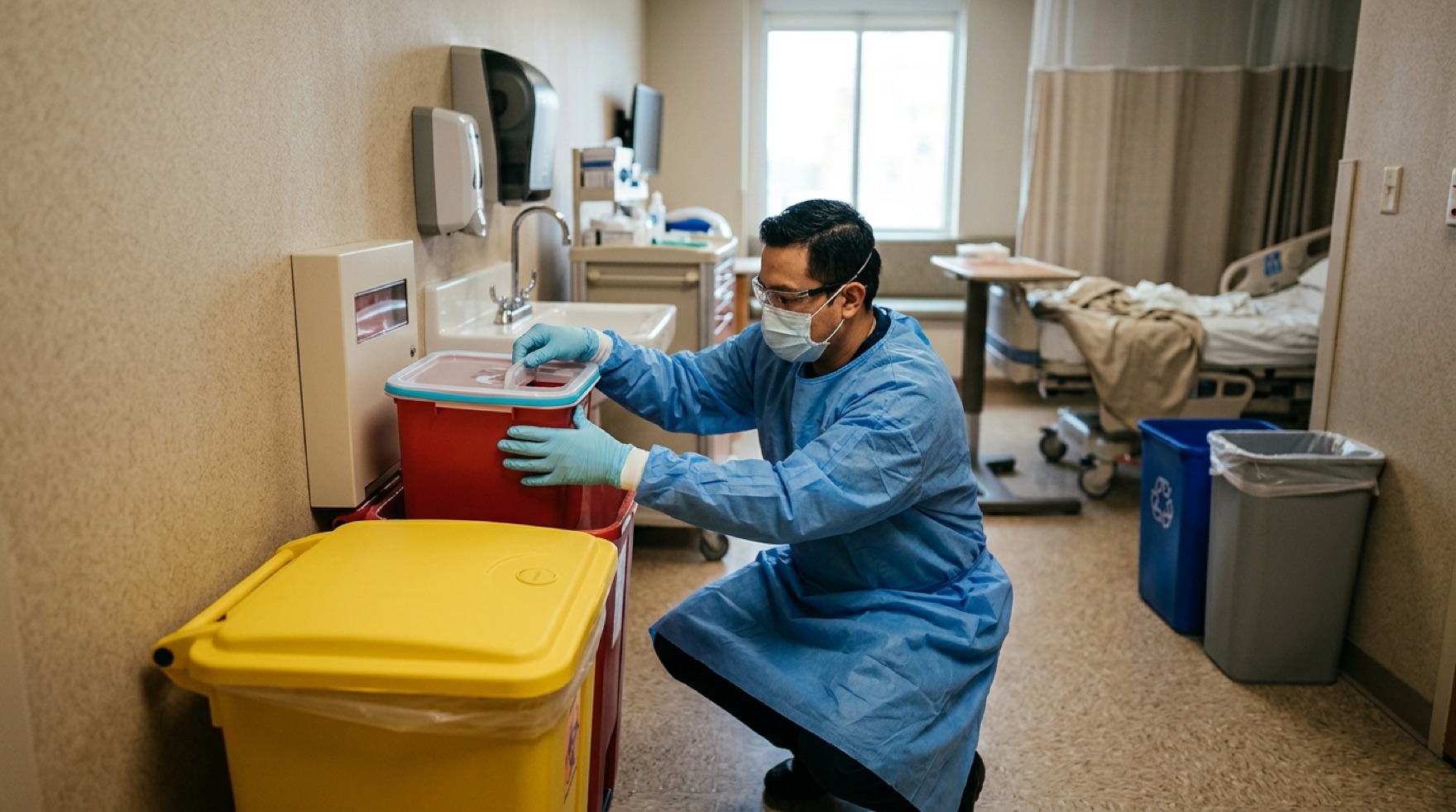
Handling trash and cleaning spills can bring contact with sharps, blood, and other potentially infectious materials. The bloodborne pathogens standard governs the exposure where it is reasonably anticipated.
- Assess where bloodborne-pathogen exposure is reasonably anticipated
- Provide sharps-resistant gloves and safe handling procedures
- Never reach blindly into trash; use tools for unknown contents
- Provide an exposure control plan and hepatitis B vaccination
- Train spill cleanup and post-exposure reporting
The programs that anchor the floor
Chemical safety and no-mix rule
Products are used at proper dilution, never mixed, and stored to prevent accidental combination, with ventilation in enclosed spaces. The bleach-and-ammonia gas incident is entirely preventable, and it starts with the hazard communication program.
Wet-floor management
Cleaning is planned to leave a dry path, wet areas are signed and sectioned off, and footwear is slip-resistant. The cleaner creates the slip hazard, so managing it is part of the task, not a separate concern.
Bloodborne-pathogen program
Where exposure to blood and sharps is reasonably anticipated, an exposure control plan, PPE, vaccination, and training are in place. Tools rather than bare hands go into unknown trash and spills.
In-depth guidance
View all 2 →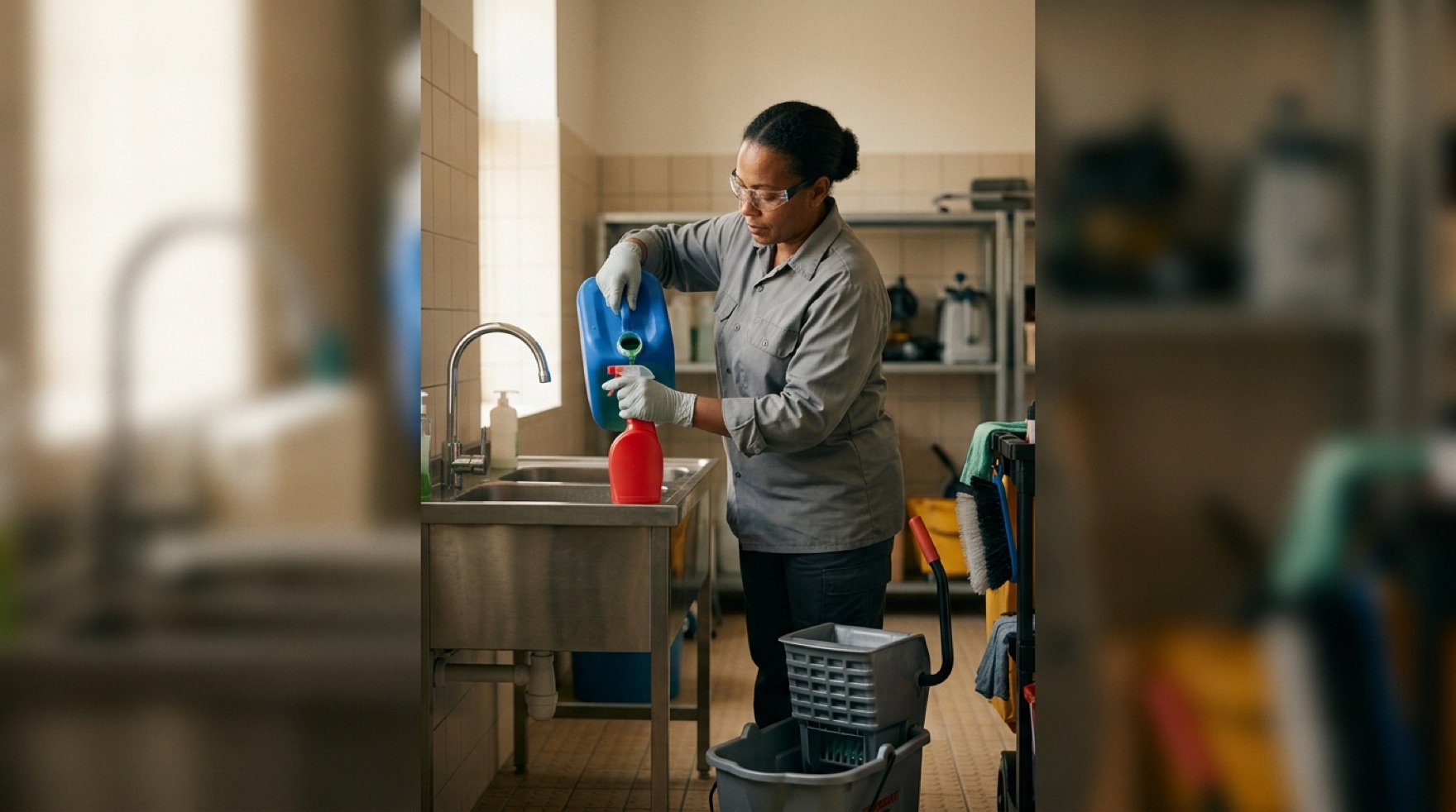
Cleaning Chemical Safety & HazCom for Janitorial Staff
The disinfectants, degreasers, and descalers on a janitor's cart are hazardous chemicals under OSHA's Hazard Communication Standard, and the deadliest thing a cleaner can do with them is mix two together. 29 CFR 1910.1200 is what turns a warning label into a program: a written plan, accessible safety data sheets, labeled containers, and training before the first spray. Here is what the standard requires, and the mistake it exists to prevent.
Bloodborne Pathogens & Sharps for Cleaning Crews (1910.1030)
Custodial and cleaning crews meet blood and needles that were never meant for them: a syringe hidden in a restroom trash can, a blood spill in a hallway, a biohazard bag that leaked. If your crew can reasonably expect that contact, OSHA's Bloodborne Pathogens Standard covers you. This is the checklist version: what your employer owes you before the shift, and exactly what to do when you find a sharp, clean a spill, or get stuck.
Cleaning hazard self-assessment
Check your chemical handling, wet-floor practices, ergonomics, and bloodborne-pathogen program against the janitorial hazard pattern.
Start the assessment →Cleaning safety guides
Practical guidance on chemical safety, wet-floor management, and bloodborne-pathogen control for custodial teams.
Browse the guides →
Stay ahead of safety.
New articles, free templates, and regulatory updates in your inbox. No spam — unsubscribe anytime.