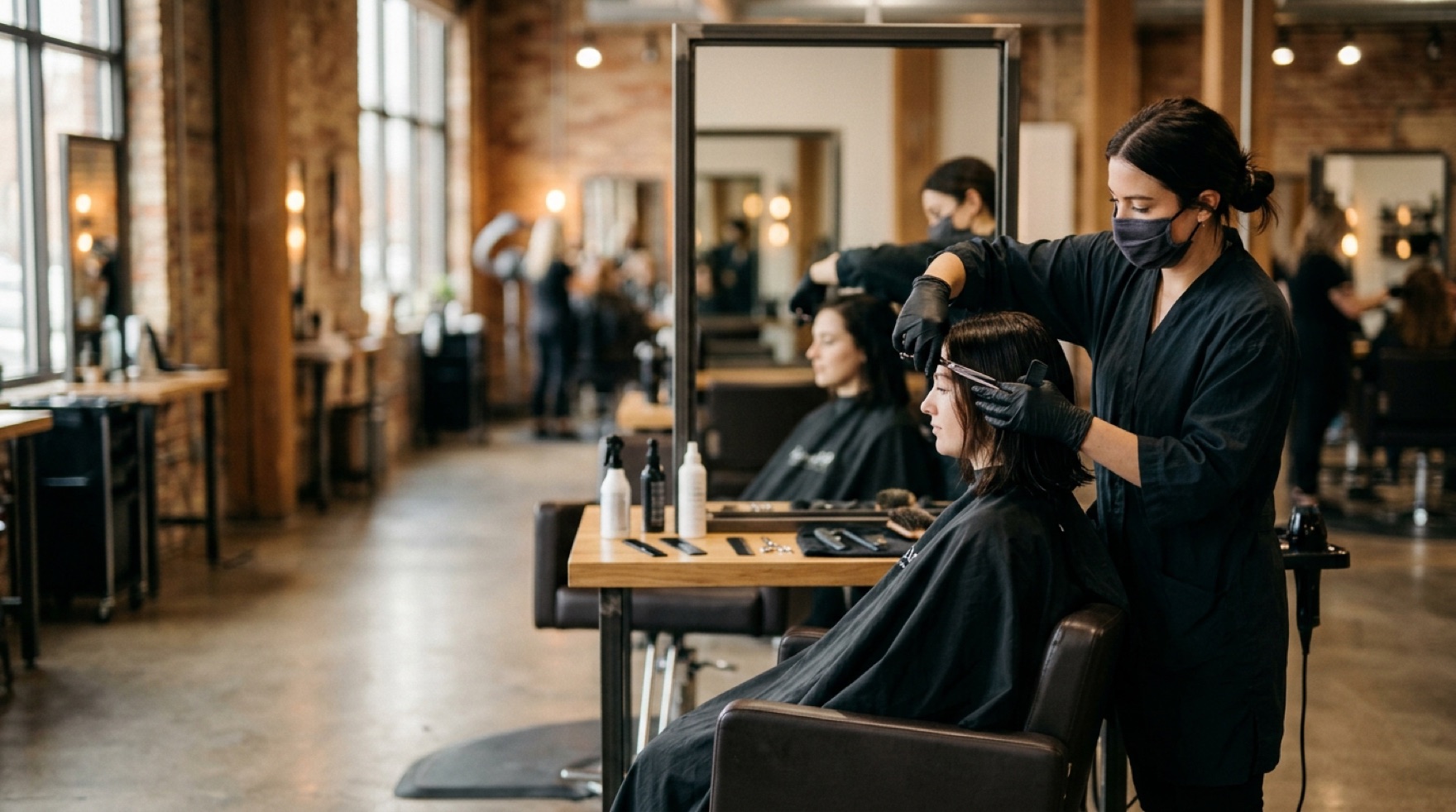
Salon & Personal Care
Formaldehyde in the smoothing treatment, and a whole day on your feet with arms raised.
Salon and personal-care work exposes stylists and technicians to formaldehyde released by some smoothing treatments, alongside hair dyes, nail solvents, and disinfectants, while the job itself demands standing all day with the arms raised and the hands repeating fine, forceful motions. Chemical exposure and cumulative ergonomic strain define the risk.
The chemical hazard people underestimate is formaldehyde. Some hair-smoothing and keratin treatments release formaldehyde gas when heated with a blow dryer or flat iron, exposing the stylist and the client, and OSHA has issued specific hazard alerts on these products. The OSHA permissible exposure limit for formaldehyde is 0.75 ppm as an 8-hour time-weighted average with a short-term limit of 2 ppm, and ventilation and product selection are the practical controls. Hair color, nail solvents, and disinfectants add sensitization and irritation exposures on top.
The ergonomics are the other half of the job. Stylists stand for the whole shift, often on hard floors, with the arms raised to cut and style and the hands gripping shears and repeating fine motions, which drives lower-limb fatigue, shoulder strain, and hand and wrist disorders. Anti-fatigue matting at the chair, adjustable stations, and shear and tool selection ease the load, though they do not remove it. The program controls the chemistry with ventilation and product choice, and designs the station and the schedule to spread the physical load.
The hazards, and the controls that move the needle
Ordered by the hierarchy of controls — eliminate and engineer first, then treat matting, footwear, and PPE as the layers that catch what remains.
Formaldehyde from smoothing treatments
Some hair-smoothing and keratin products release formaldehyde gas when heated, exposing the stylist and client. The OSHA permissible exposure limit is 0.75 ppm as an 8-hour time-weighted average, with a 2 ppm short-term limit.
- Choose formaldehyde-free products where possible
- Provide local exhaust ventilation at the styling station
- Follow the product safety data sheet and OSHA hazard alert
- Monitor exposure where formaldehyde-releasing products are used
- Provide respiratory and eye protection where limits can be exceeded
Hair dye, solvent, and disinfectant exposure
Hair color, developers, nail solvents, and disinfectants expose the skin and airway repeatedly. Sensitization, dermatitis, and irritation are the routine effects.
- Substitute lower-hazard products and low-odor formulations
- Ventilate nail and color stations and mixing areas
- Provide chemical-resistant gloves and change them between clients
- Keep containers closed and manage chemical waste
- Maintain safety data sheets and train under the HazCom standard
Standing, overhead reach, and hand strain
Stylists stand all day with arms raised to cut and style, gripping shears and repeating fine motions. Lower-limb fatigue, shoulder strain, and hand and wrist disorders accumulate over a career.
- Adjust chair and station height to reduce overhead reach
- Provide anti-fatigue matting at the chair
- Select balanced, low-force shears and tools
- Schedule to vary tasks and allow recovery between clients
- Train neutral posture and grip technique
The programs that anchor the floor
Formaldehyde and chemical control
Formaldehyde-releasing products are avoided where possible and used only with ventilation and product-specific precautions, measured against the OSHA limit. Color, solvent, and disinfectant exposure is controlled with ventilation, gloves, and hazard communication.
Station ergonomics
Adjustable chairs, matting at the chair, and balanced tools reduce the standing, reaching, and gripping load. The strain is cumulative and career-long, so the station and schedule are the controls that matter.
Skin protection and hygiene
Gloves changed between clients, skin protection, and good hygiene reduce the sensitization and dermatitis that end careers in the trade. Once a stylist is sensitized to a product, avoidance becomes the only option.
In-depth guidance
View all 2 →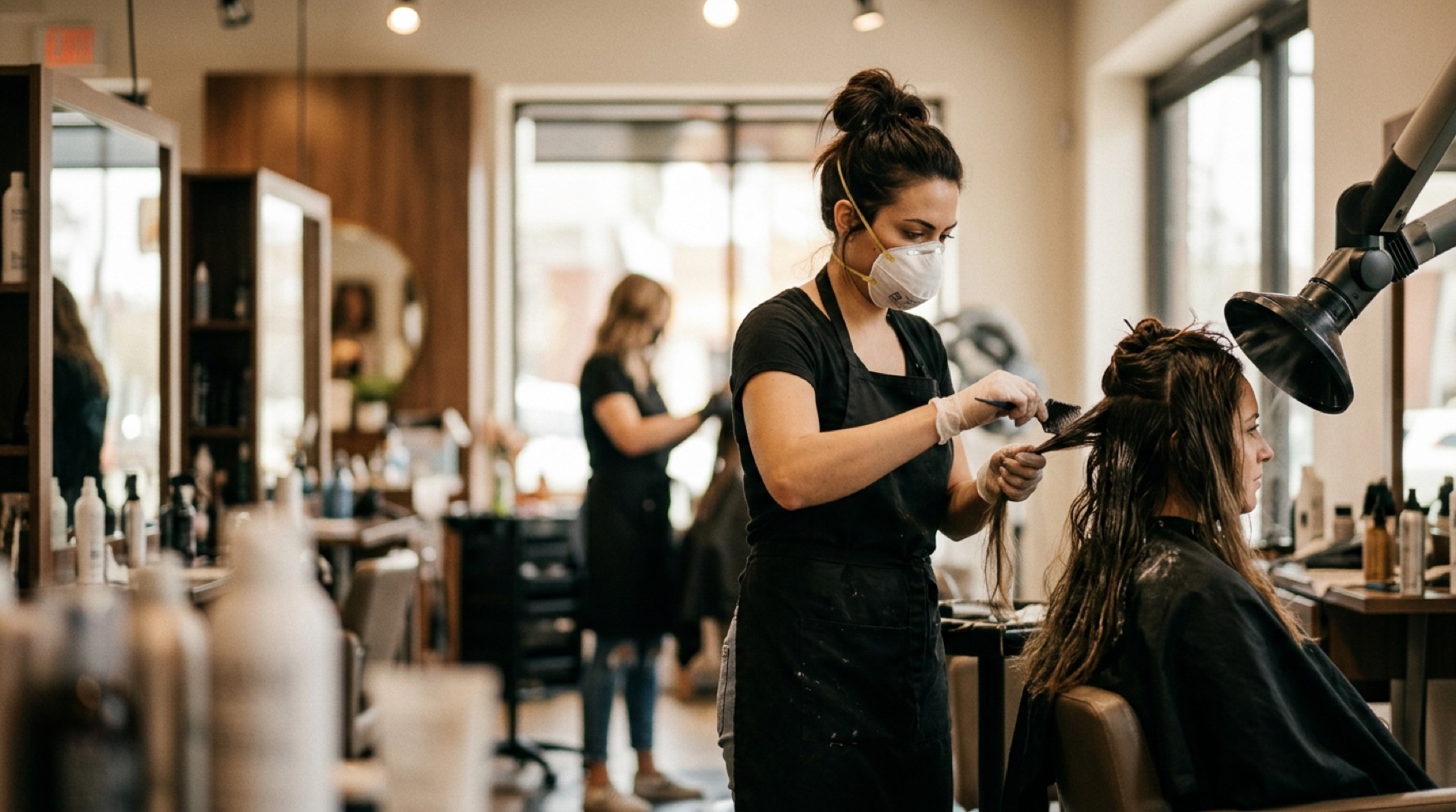
Formaldehyde in Hair-Smoothing Treatments
Many keratin and Brazilian-style smoothing products labeled formaldehyde-free still release formaldehyde gas the moment a stylist runs a hot flat iron over the treated hair. That gas is a chemical OSHA regulates by name, with an enforceable exposure limit, an action level that triggers air monitoring, and a hazard communication duty. Here is what 29 CFR 1910.1048 requires of a salon that uses these products, and why the label on the bottle does not settle the question.
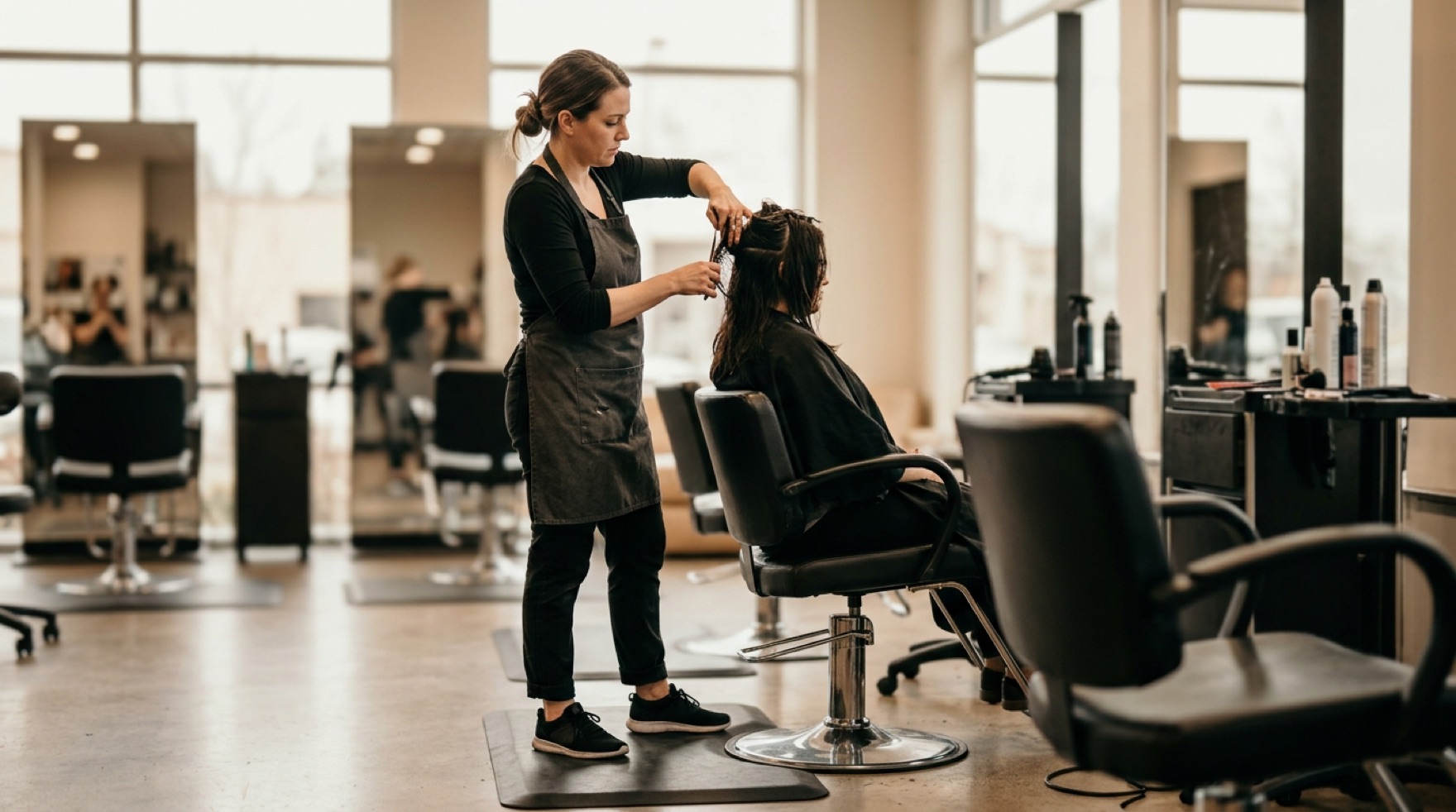
Standing Fatigue & Ergonomics for Salon Stylists: What Actually Helps
A stylist can spend most of a shift on hard floor, leaning over a chair with arms raised, and the sore feet, aching legs and low-back stiffness that follow are not just the price of the job. They are the predictable result of static standing, and an anti-fatigue mat at the chair is one control among several. Here is how the layers compare, and where the mat sits among them.
Salon hazard self-assessment
Check your ventilation, chemical handling, and station ergonomics against the salon and personal-care hazard pattern.
Start the assessment →Salon safety guides
Practical guidance on formaldehyde control, chemical safety, and station ergonomics for salon professionals.
Browse the guides →
Stay ahead of safety.
New articles, free templates, and regulatory updates in your inbox. No spam — unsubscribe anytime.