
Table Service
A loaded tray across a crowded floor, hundreds of times a shift.
Table service means carrying loaded trays and plates across a busy floor between kitchen and table, often at speed and with hands full. Slips and falls while carrying lead the injury pattern, alongside the overexertion of loaded trays, burns from hot plates and dishes, and the stress of a customer-facing role.
Servers spend the shift moving between the kitchen and the floor with their hands full, which combines two hazards that are dangerous together. Spills, dropped food, and the wet transition at the kitchen door create slip hazards, and a server carrying a loaded tray cannot see the floor or catch a fall, so a slip becomes a fall with something hot or heavy in hand. Same-level falls are the most frequent injury, and their severity rises with what the server is carrying.
The load and the heat add to it. Carrying heavy trays and bus tubs repeatedly loads the shoulder, back, and wrist, and hot plates, dishes, and coffee cause contact burns. The customer-facing role adds time pressure and, at times, difficult interactions. The practical program keeps floors and transitions slip-resistant, cuts the carried load with trays, stands, and trips planned to reduce distance, controls the burns, and supports staff through the pace and the pressure.
The hazards, and the controls that move the needle
Ordered by the hierarchy of controls — eliminate and engineer first, then treat matting, footwear, and PPE as the layers that catch what remains.
Slips and falls while carrying
Servers carry loaded trays across a floor they cannot fully see, past spills and wet kitchen transitions. A slip while carrying becomes a fall with hot or heavy items in hand, so the consequences are worse than a simple trip.
- Specify slip-resistant flooring measured against the wet DCOF threshold
- Keep floors and kitchen transitions clean and dry
- Use mats at wet transitions and clean spills immediately
- Provide slip-resistant footwear for staff
- Keep aisles and service paths clear and well lit
Overexertion from loaded trays and bus tubs
Carrying heavy trays and bus tubs repeatedly loads the shoulder, back, and wrist. Overexertion accumulates across a busy shift of constant carrying.
- Use tray stands and carts to reduce carried loads
- Limit tray weight and encourage more trips over heavier loads
- Plan service paths to shorten carrying distance
- Rotate heavy carrying tasks among staff
- Train balanced carrying technique
Burns from hot plates and dishes
Hot plates, dishes, and beverages cause contact and scald burns during service. Handling hot items at speed is the common mechanism.
- Warn staff of hot plates and use service cloths
- Provide heat-resistant handling where dishes are very hot
- Position hot-item pickup to reduce reaching and crowding
- Set pacing so speed does not force unsafe handling
- Train safe handling of hot plates and beverages
Cuts from glassware and cleanup
Broken glassware and dishes cause cuts during service and cleanup. Reaching into bus tubs and dish areas raises the risk.
- Handle and dispose of broken glass with tools, not hands
- Never place glassware in a sink of cloudy water
- Provide cut-resistant gloves for cleanup where needed
- Bus and sort dishes to avoid blind reaches
- Train safe handling of glassware and breakage
The programs that anchor the floor
Floor traction and clear paths
Slip-resistant flooring, dry kitchen transitions, and clear service paths keep the carried slip from becoming a fall. Because servers cannot see the floor with a loaded tray, keeping the floor safe is the control, not watching where they step.
Load management
Tray stands, carts, and more trips with lighter loads cut the overexertion of constant carrying. Planning service paths to shorten distance reduces both the load and the exposure.
Burn and breakage safety
Hot-plate warnings, service cloths, and safe handling of glassware and breakage address the frequent minor injuries of service. Pacing that does not force unsafe handling keeps the rush from driving injuries.
In-depth guidance
View all 1 →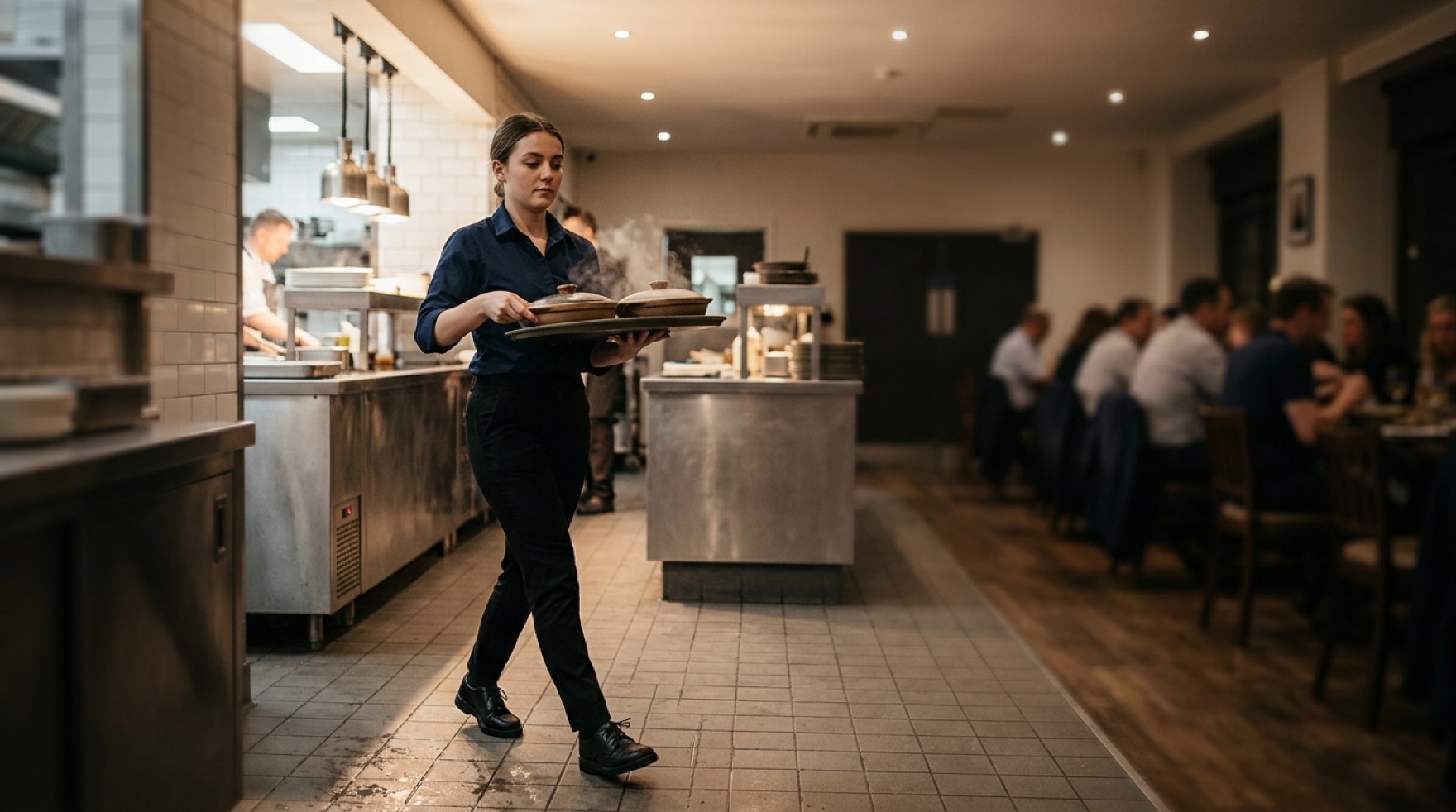

Stay ahead of safety.
New articles, free templates, and regulatory updates in your inbox. No spam — unsubscribe anytime.