The short answer: Anti-fatigue matting can reduce the subjective lower-limb discomfort of prolonged standing, and authoritative guidance from CCOHS lists it among the controls for standing work. But the evidence for hard injury reduction is limited and mixed, and every serious source presents matting as one control among several — below the real engineering fix, which is a sit-stand workstation and job rotation.
The problem matting addresses
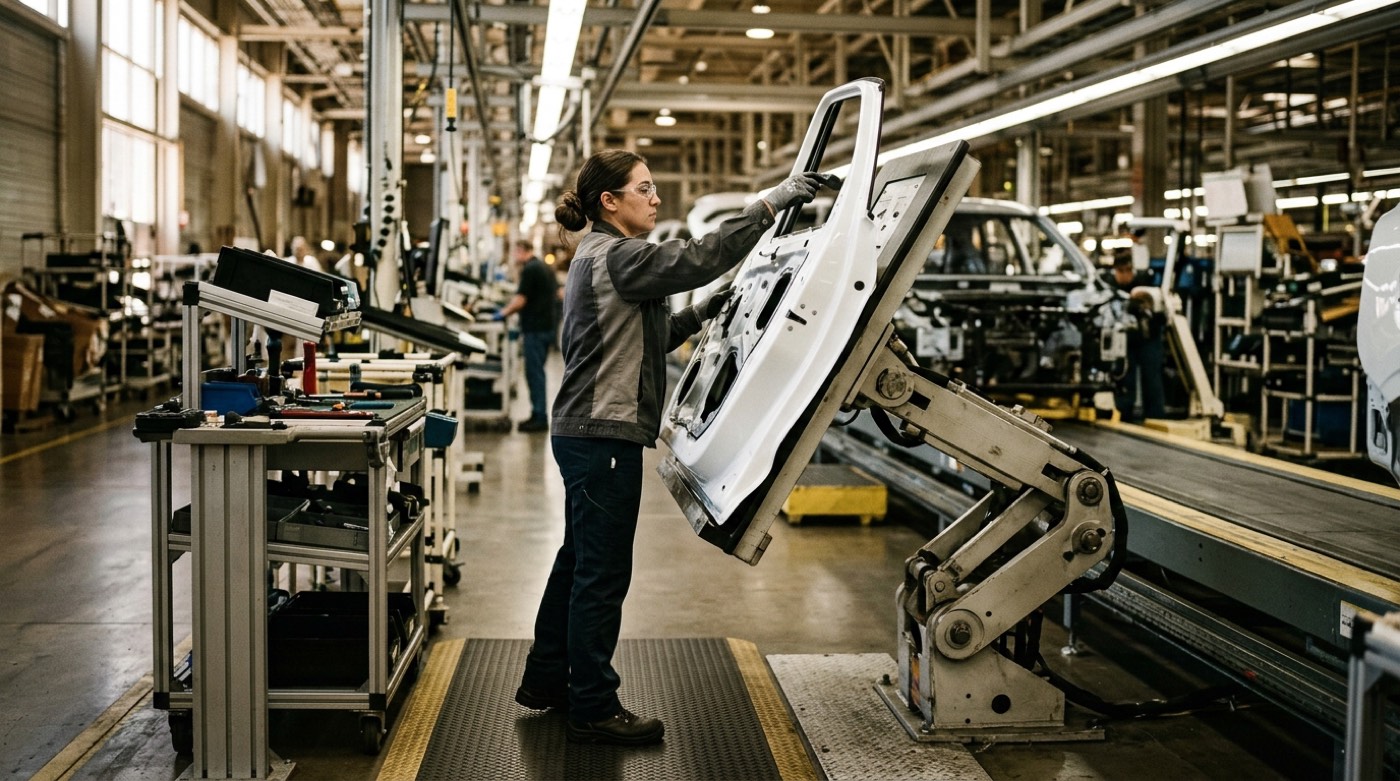
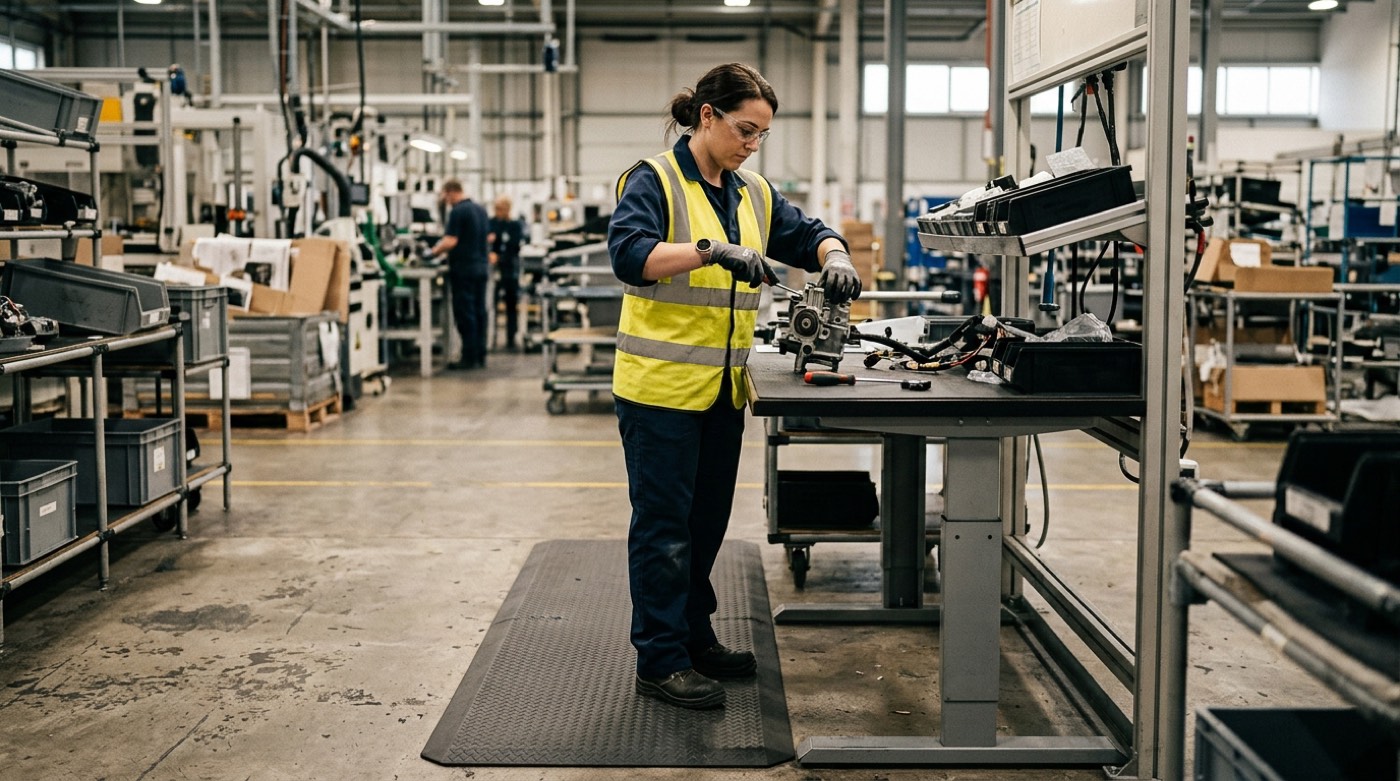
Assembly stations that require standing all shift load the legs, feet, and lower back statically for hours. Over time that contributes to lower-limb fatigue and discomfort and is associated with low-back and lower-extremity disorders. The Canadian Centre for Occupational Health and Safety (CCOHS), in its guidance on working in a standing position, treats prolonged standing as a recognized hazard and recommends a package of controls — changing posture, sit-stand rotation, footwear, rest breaks, and anti-fatigue matting — explicitly as complementary measures rather than a single fix.
What the research actually shows
The honest read of the literature is that matting helps comfort more reliably than it helps hard outcomes. Peer-reviewed work on flooring and standing (for example, studies examining how floor and mat compliance affect standing comfort and fatigue) has found that a mat's stiffness and compliance influence subjective comfort during prolonged standing. Broader reviews of prolonged-standing interventions — mats, footwear, sit-stand schedules — report that while workers often feel better, the higher-quality evidence for reductions in injury or objective fatigue is limited and inconsistent. The practical implication: promise comfort, not a claims reduction, and don't cite a vendor's "reduces fatigue by X%" figure as if it came from a primary source.
Where matting sits in the hierarchy
Matting is an administrative / PPE-adjacent control. Above it sit the controls that change the exposure itself:
- Engineering (first): Give the station a sit-stand option so standing isn't mandatory all shift; set work height and reach correctly; provide a footrest and seating for suitable tasks.
- Administrative: Rotate workers through standing and non-standing tasks; schedule the standing exposure so the body gets recovery; train on posture and early-symptom reporting.
- Surface layer: Anti-fatigue matting and appropriate footwear for the stations that genuinely must remain standing after the above are in place.
Choosing and placing matting honestly
When a station truly must be standing-only, matting is worth having — and worth choosing well. Look for a mat with the right thickness and compliance for standing (too soft destabilizes, too firm does little), beveled edges to prevent trips, and a surface and compound suited to the contamination and cleaning regime of the area. Then be candid with the workforce about what it does: it makes a hard floor more tolerable, as one layer in a standing-work program — not a substitute for the sit-stand redesign the station probably deserved.