Welding & Fabrication
Ignition, fume, arc, and shock — four hazards inside one arm's length.
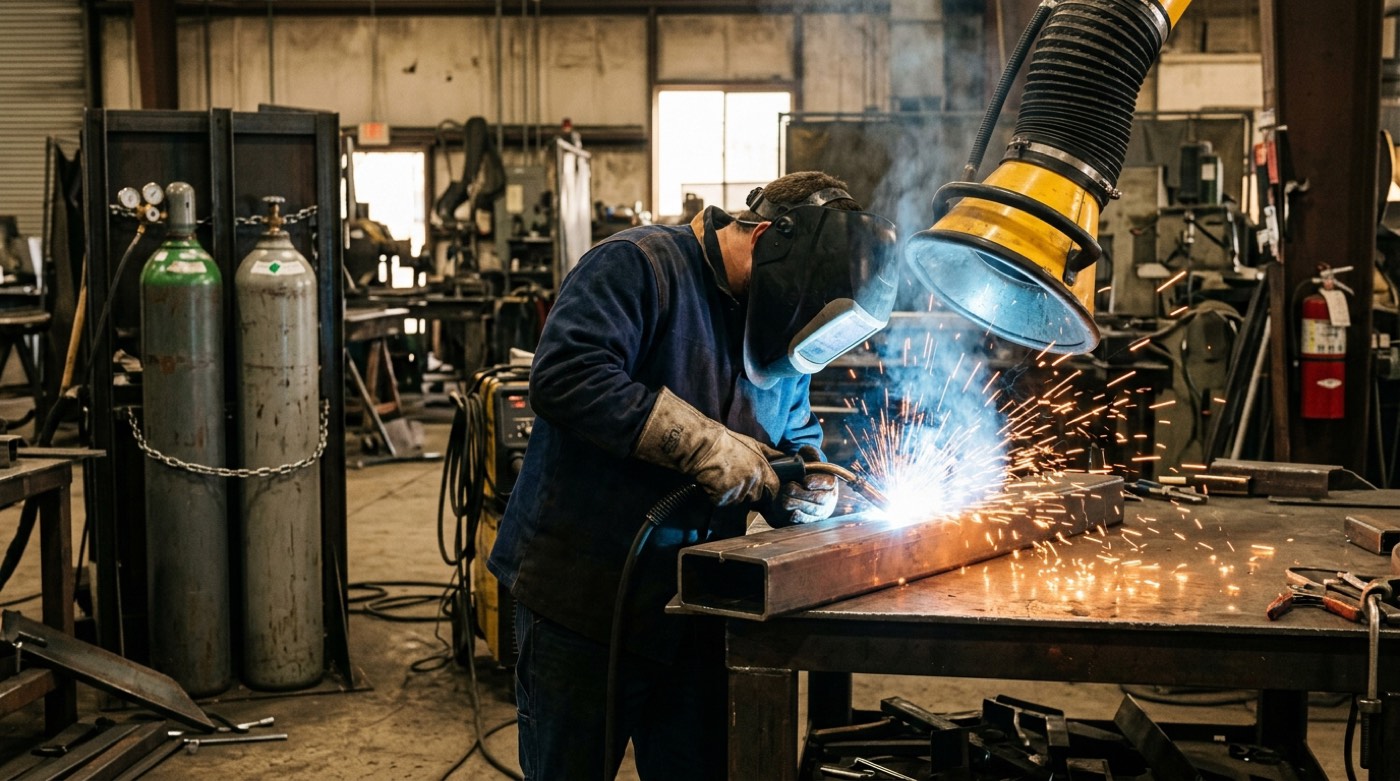
Welding and fabrication concentrate an unusual number of serious hazards into a small space: an ignition source throwing sparks and slag, a fume plume of metal oxides, an arc bright enough to injure the eyes of a bystander, and — in arc processes — a live electrical circuit the welder is part of. Fire resistance and hot-work control lead the list because a single spark landing in the wrong place is the event most likely to become a catastrophe.
The defining risk in a fabrication shop is that hot work creates hazards that travel. Sparks and slag can roll 30+ feet and smoulder in hidden combustibles for hours after the torch is off. Fume from mild and stainless steel carries manganese and hexavalent chromium into the breathing zone. The arc emits UV and infrared that burns unprotected eyes several stations away. And in arc welding the operator is part of a live circuit — a shock risk that rises sharply in damp conditions or against grounded steel.
Because these hazards overlap in one workspace, controls have to be chosen as a system: a hot-work permit and fire watch wrap the whole job, source-capture ventilation and a shade-appropriate lens protect the welder, and the mat underfoot has to do three jobs at once — resist ignition, insulate against shock, and reduce standing fatigue. This section treats each hazard on its own and shows where matting is one deliberate layer inside a larger program.
The hazards, and the controls that move the needle
Ordered by the hierarchy of controls — eliminate and engineer first, then treat matting, footwear, and PPE as the layers that catch what remains.
Hot-work ignition — sparks & slag
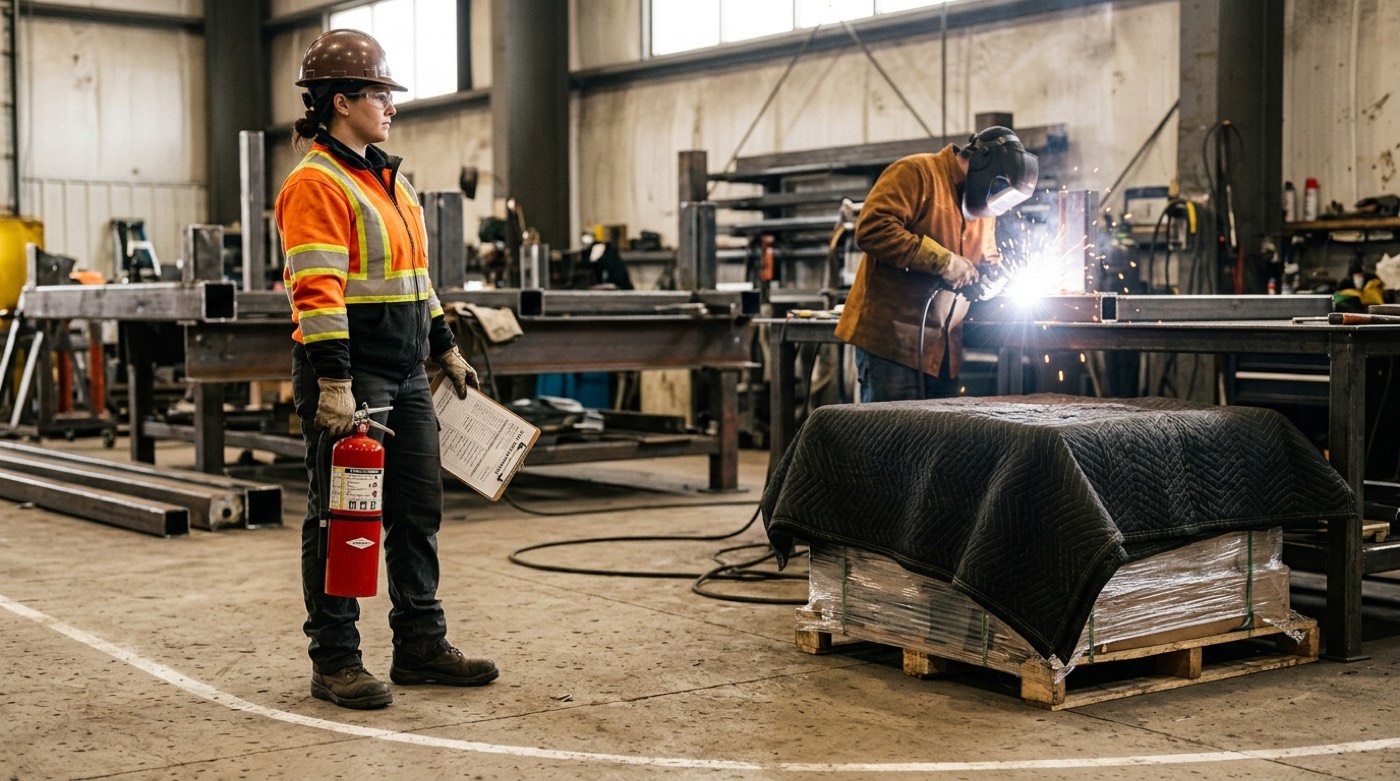
Sparks and molten slag travel, bounce, and smoulder; unmanaged hot work is a leading cause of industrial fires. Permits and fire watch exist because the ignition often shows up late.
- Hot-work permit system (NFPA 51B) for non-designated areas
- Clear or protect combustibles within the 35-ft radius
- Trained fire watch during work and through the post-work monitoring period
- Flame-resistant welding curtains, blankets, and mats
- Housekeeping: no combustible dust, rags, or coverings in the cell
Flame-resistant clothing & PPE
Ordinary workwear can ignite and continue burning against the skin. Flame-resistant clothing to a recognized test standard is the layer between spatter and a burn injury.
- FR clothing meeting a recognized standard (e.g., NFPA 2112 / ASTM F1506)
- Leathers, gauntlets, and a properly rated helmet for the process
- Hazard assessment per OSHA 1910.132 to select the PPE
- No synthetics that melt; managed cuffs, pockets, and openings
- Inspect, maintain, and retire PPE on a schedule
Welding fume & respiratory exposure
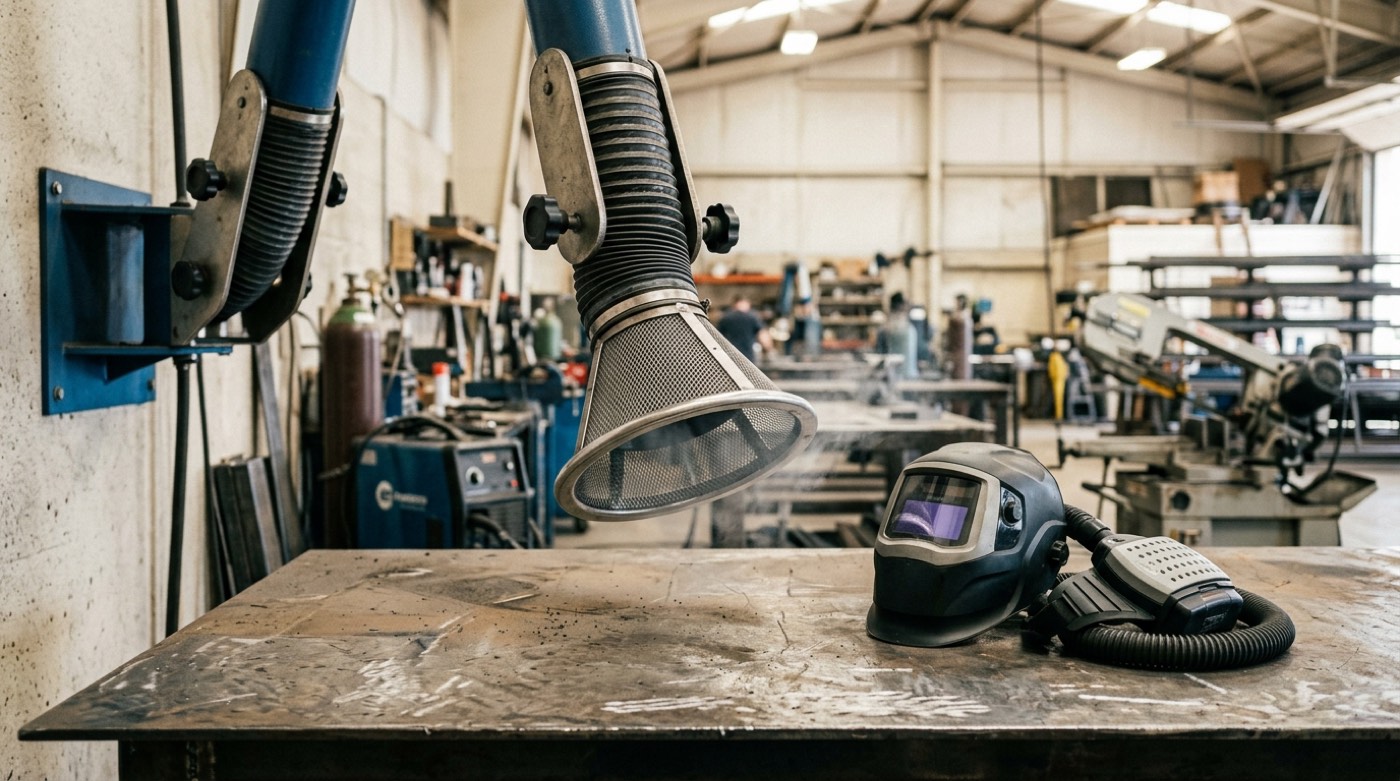
Fume from mild and stainless steel carries manganese and hexavalent chromium — neurotoxic and carcinogenic exposures that source-capture ventilation is designed to remove before they reach the welder.
- Source-capture local exhaust ventilation (AWS F3.2)
- Process/consumable substitution to lower fume generation
- Position work to keep the head out of the plume
- Respiratory protection per OSHA 1910.134 where LEV is insufficient
- Exposure monitoring against OSHA 1910.1026 (Cr(VI)) and TLVs
Arc radiation & shade selection
The arc's UV and infrared cause 'arc eye' and skin burns — to the welder and to bystanders. The right filter shade for the process and amperage is the primary control.
- Select filter shade by process and current (OSHA 1910.252 / AWS F2.2)
- Auto-darkening helmets that meet the switching standard
- Welding screens and curtains to protect bystanders
- Skin cover against UV; cap under the helmet
- Safety glasses under the helmet for chipping and grinding
Compressed-gas cylinder handling
Cylinders store energy as pressure and, for fuel gases, as flammability. A knocked-off valve or an oxygen–fuel storage violation turns a cylinder into a projectile or a fire.
- Secure cylinders upright; caps on when not in use (OSHA 1910.253)
- Separate oxygen and fuel-gas storage (20 ft or a rated barrier)
- Handle with carts; never lift by the valve or cap
- Keep acetylene use within pressure limits; no copper fittings
- Leak-test connections; store away from heat and ignition
Standing fatigue & posture at the bench
Welders hold static postures on hard floors for long stretches; lower-limb fatigue and back load accumulate — an ergonomic problem an anti-fatigue mat can ease but not solve alone.
- Bench and fixture height set to the work and the welder
- Positioners to bring the joint to a neutral posture
- Anti-fatigue matting rated for the weld-cell fire environment
- Micro-breaks and task variation across the shift
- Seating/support for suitable bench tasks
The programs that anchor the floor
Hot-work permit & fire watch
Outside a designated welding area, no torch strikes without a permit that verifies combustibles are cleared or protected, a fire watch is posted, and monitoring continues after the job ends.
Ventilation-first fume control
Source-capture LEV comes before respirators. Respiratory protection covers the residual exposure — it is not the plan on its own.
Shade & bystander protection
The filter shade matches the process and amperage, and screens protect everyone in line of sight of the arc — arc eye does not require you to be the one welding.
Cylinder storage discipline
Upright, secured, capped, and with oxygen separated from fuel gas. Most cylinder incidents trace back to a storage or handling shortcut.
In-depth guidance
View all 8 →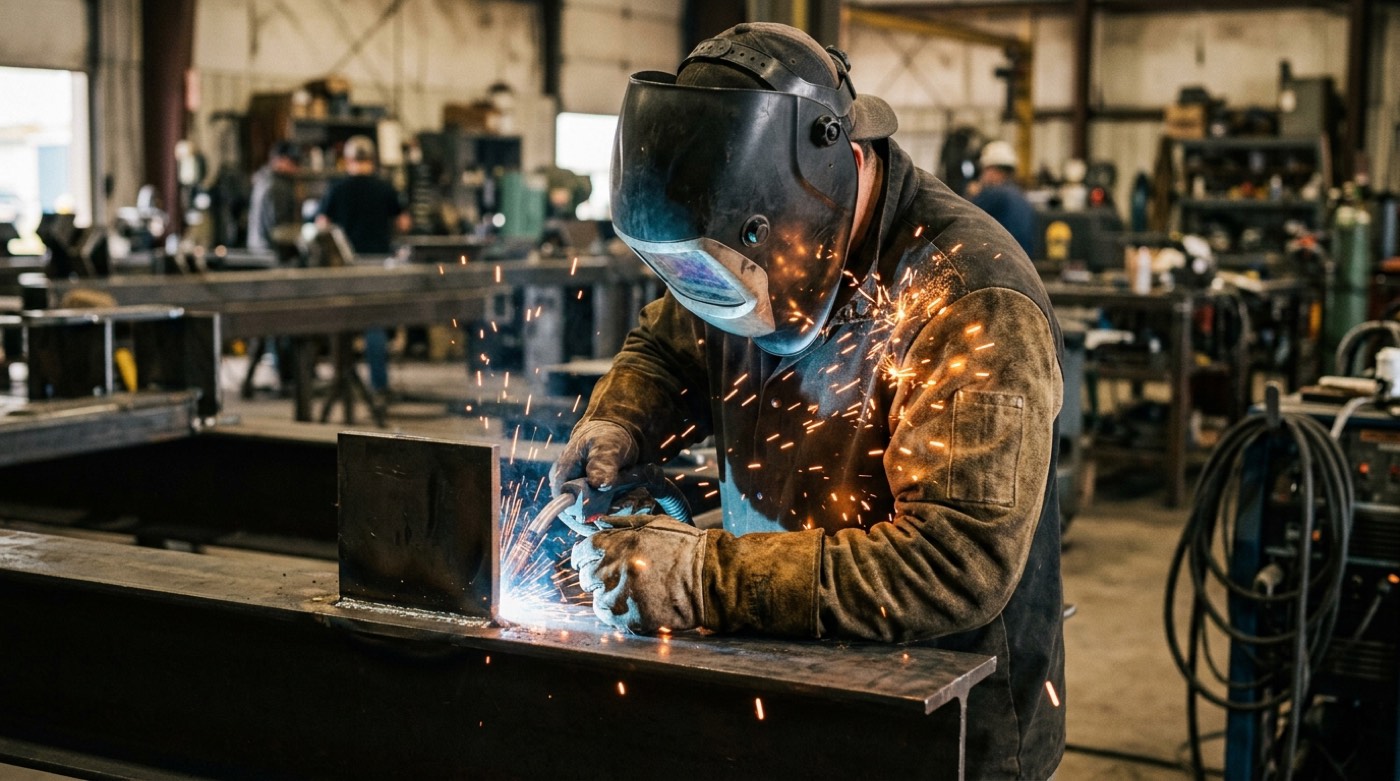
Flame-Resistant Clothing for Welders: Selection & Standards
"Flame-resistant" is a tested property, not a marketing word — and the standard behind the label tells you what the garment will actually do when spatter lands. Here is how to read FR and arc-rated claims, and how OSHA's hazard assessment drives the choice.
Hot-Work Permits & Fire Watch: The 35-Foot Rule and How Long the Watch Really Lasts
Sparks travel, slag rolls, and the fire often starts after the torch is off. Hot-work permits and a trained fire watch exist because of that delay. Here is what OSHA and NFPA 51B actually require — including the post-work watch that grew from 30 minutes to an hour.
Welding Fume Extraction & Respiratory Protection
Welding fume isn't smoke — it's a plume of metal oxides, and on stainless and mild steel it carries hexavalent chromium and manganese into the breathing zone. Here is how source-capture ventilation, exposure limits, and respiratory protection stack up, ventilation first.
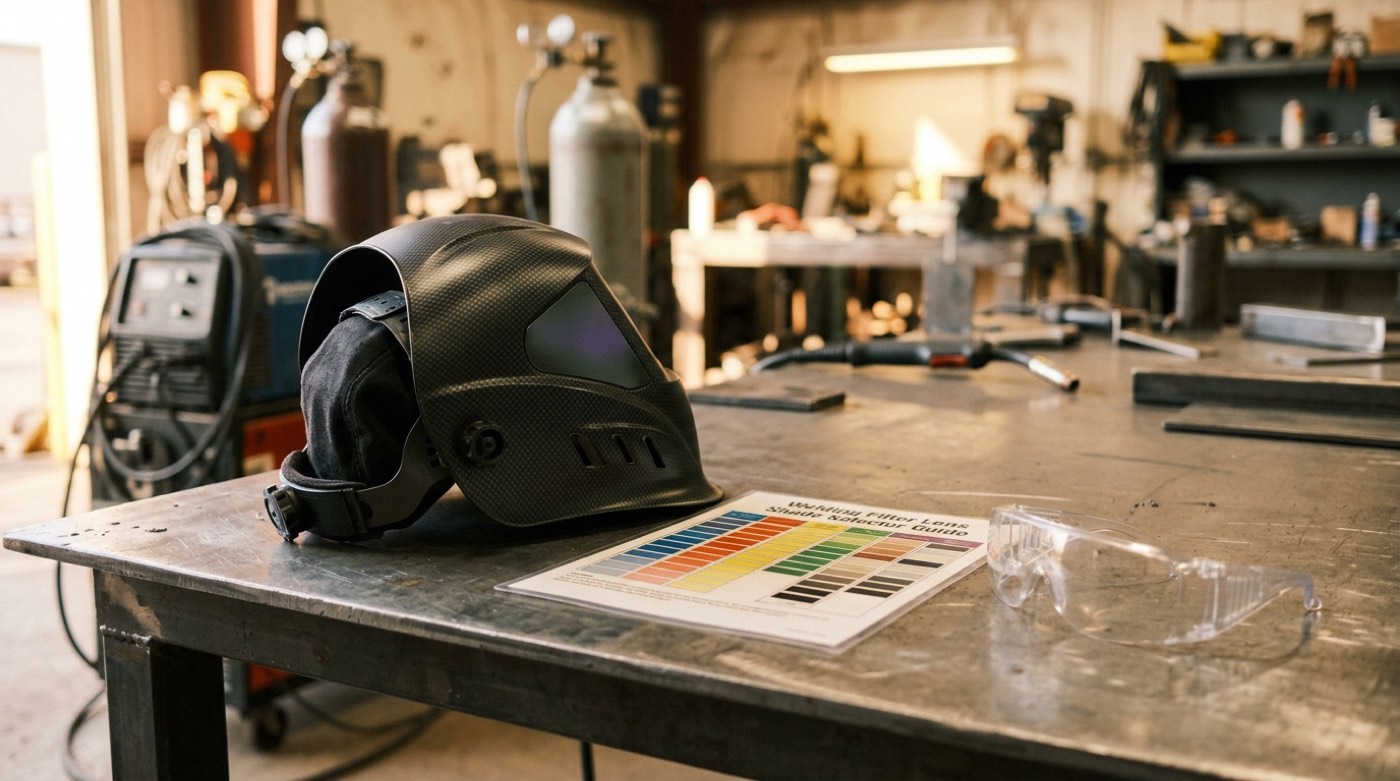
Arc Radiation, Eye Protection & Welding Shade Selection
The arc is bright enough to injure the eyes of someone walking past — and "arc eye" shows up hours after the exposure. Here is how to pick the right filter shade for the process and current, protect bystanders, and choose an auto-darkening helmet.
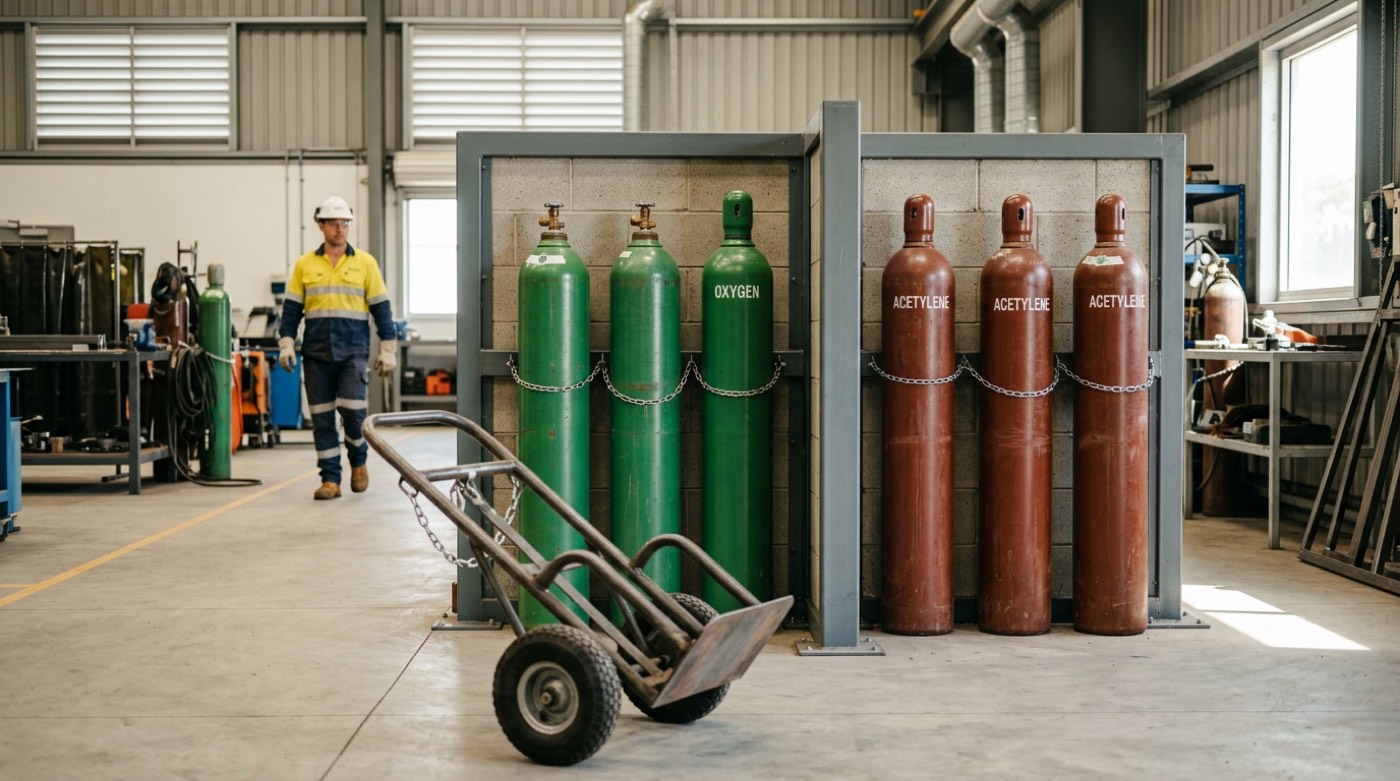
Compressed-Gas Cylinder Handling & Storage
A compressed-gas cylinder stores energy as pressure and, for fuel gases, as flammability. Knock off a valve or store oxygen next to acetylene, and it becomes a projectile or a fire. Here are the OSHA storage, separation, and handling rules — with the numbers that matter.
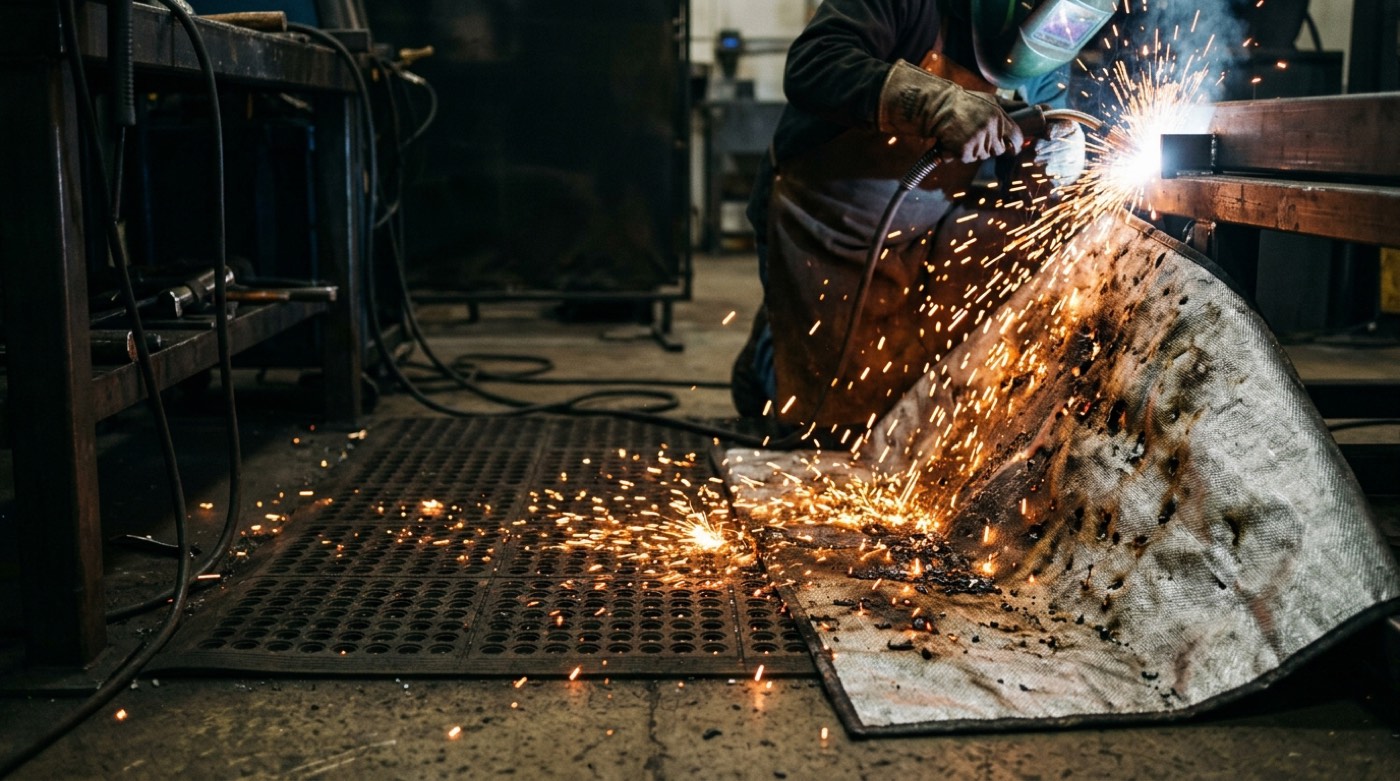
Flame-Resistant Matting for Weld Cells: What Spark & Slag Do to Standard Rubber
Welding spatter is molten metal near 1,650 °C — it melts, pits, and ignites ordinary foam and rubber mats. But there is no dedicated "FR welding mat" standard, so here is what actually governs floor protection in a weld cell, and how to read a mat's fire claims honestly.
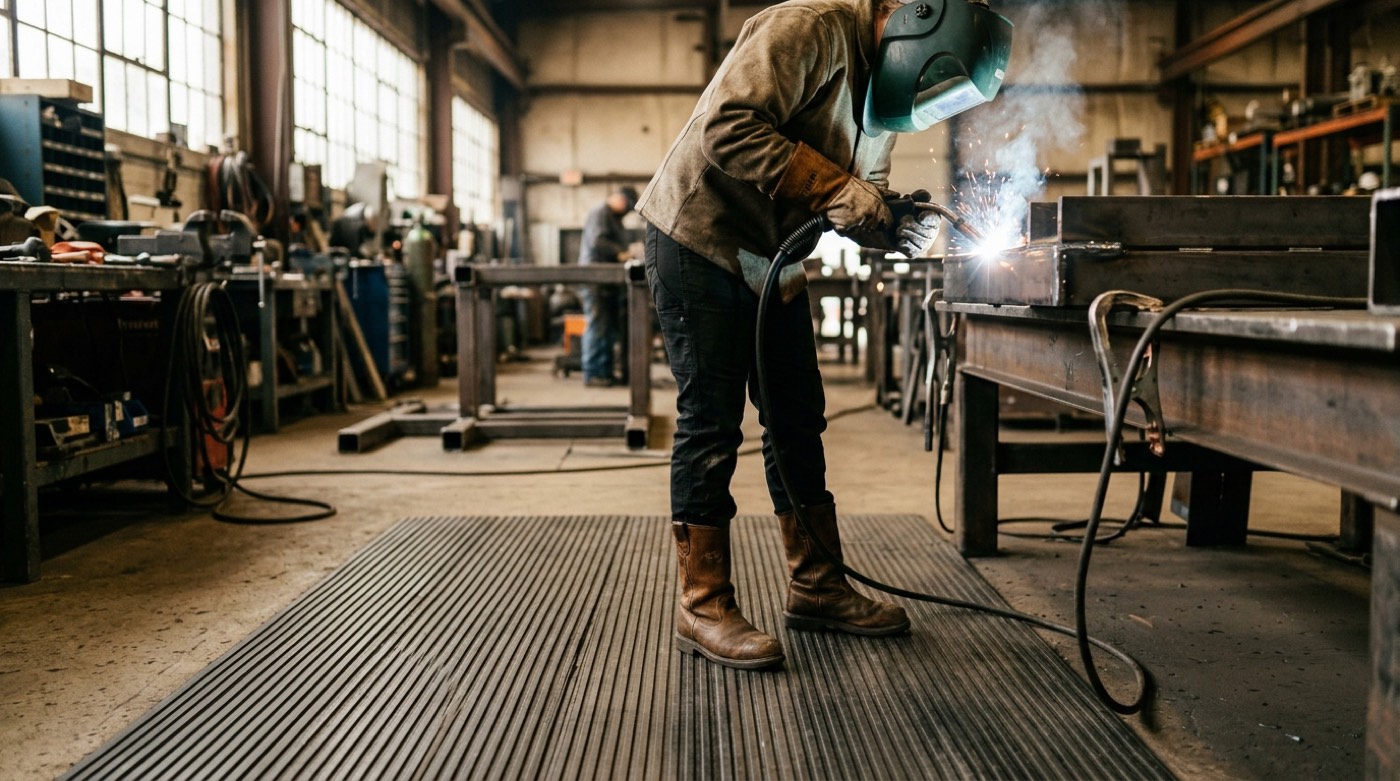
Insulating Matting for Electric-Shock Protection in Arc Welding
In arc welding the operator is part of a live circuit — and the shock risk climbs sharply on damp floors, against grounded steel, or in cramped positions. Insulating matting is one barrier in that defense. Here is the class-voltage system and where the mat fits.
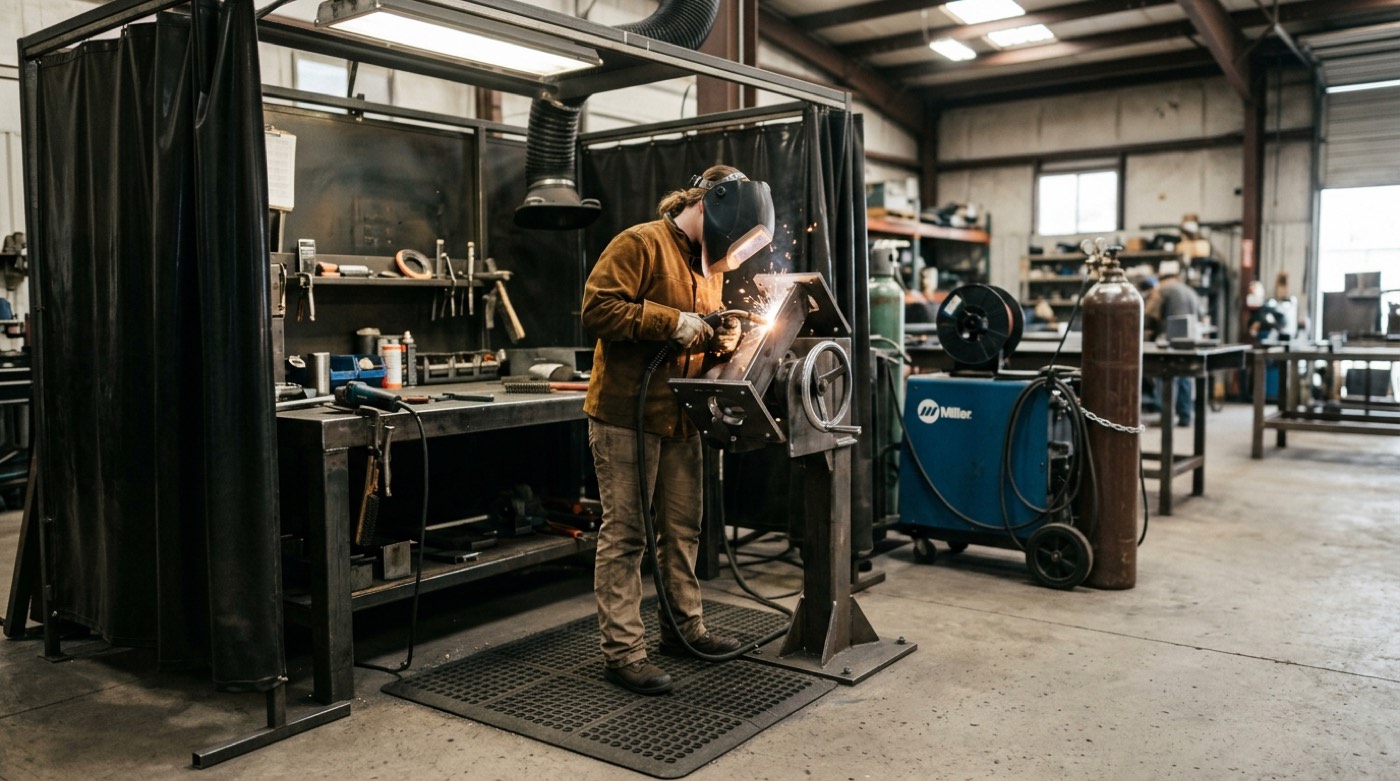
Anti-Fatigue Matting for Welders at the Bench or Booth
Welders hold static postures on hard floors for long stretches, and an anti-fatigue mat can ease that load. But in a weld cell the comfort mat collides with the fire and shock hazards around it — and no single standard resolves the conflict. Here is how to think it through.
FR clothing selection guide
How to read FR claims against real test standards, and how the hazard assessment drives the choice.
Read the guide →Hot-work permit walkthrough
The permit elements, the 35-foot rule, and how long the fire watch really has to stay.
Read the guide →Welding shade selector
Matching filter shade to process and current, plus where auto-darkening helmets fit.
Read the guide →
Stay ahead of safety.
New articles, free templates, and regulatory updates in your inbox. No spam — unsubscribe anytime.