The short answer: Anti-fatigue matting can reduce the lower-limb fatigue of prolonged standing at a bench or booth, and CCOHS lists it among the controls for standing work — but only as one layer, combined with good work design and footwear, never as a fix on its own. In a weld cell it also collides with two other requirements: it must not be a fire hazard in the spatter zone, and it is not a substitute for a tested insulating mat. No single standard reconciles these; it is a risk-management judgment.
The fatigue problem at the bench
Bench and booth welding means long periods of near-static standing. CCOHS explains the mechanism plainly: standing still reduces blood supply to the loaded muscles, accelerating fatigue, and temporarily immobilizes the joints of the spine, hips, knees, and feet. Over time prolonged standing is associated with sore feet, leg swelling, varicose veins, general muscular fatigue, and low-back pain. Notably, there is no CCOHS-defined limit on standing minutes — the guidance is simply to change working position frequently so no one posture lasts too long. Don't invent a number the standard doesn't set.
What an anti-fatigue mat does — and doesn't
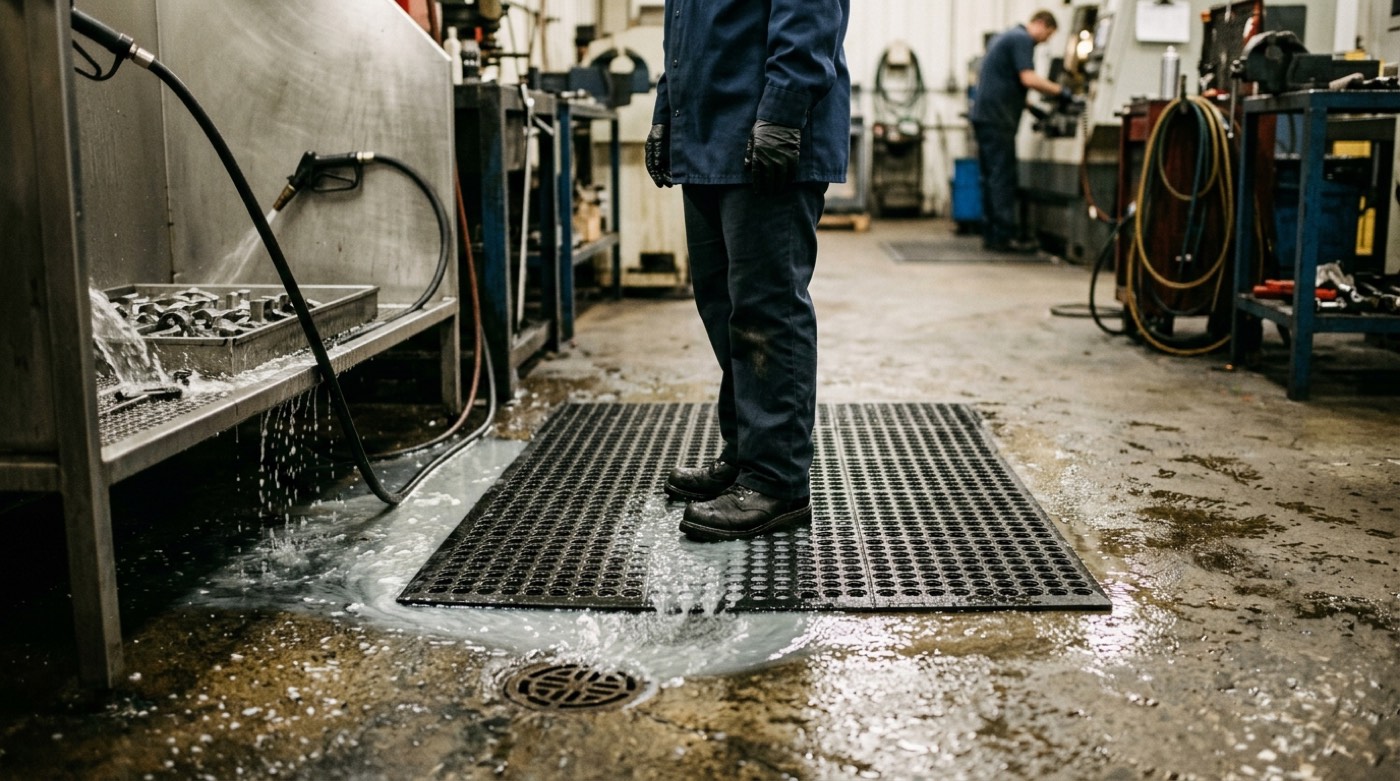
According to CCOHS, anti-fatigue mats "absorb the shock due to walking and this cushioning effect reduces foot fatigue" by encouraging the small postural movements that keep blood moving. But CCOHS is equally clear that a mat "does not eliminate sore feet by itself" — it improves conditions only "when combined with proper work design and quality footwear." That places matting where it belongs: an administrative/ergonomic layer beneath the engineering controls (height-adjustable benches, sit-stand options, positioners that bring the joint to a neutral posture) and work-organization controls (rotation, rest breaks).
Selection matters, too. CCOHS cautions against mats that are too thick or soft — excessive cushioning can increase fatigue and the trip hazard — and recommends sloped edges to keep the mat from becoming its own hazard.
The weld-cell conflict no standard resolves
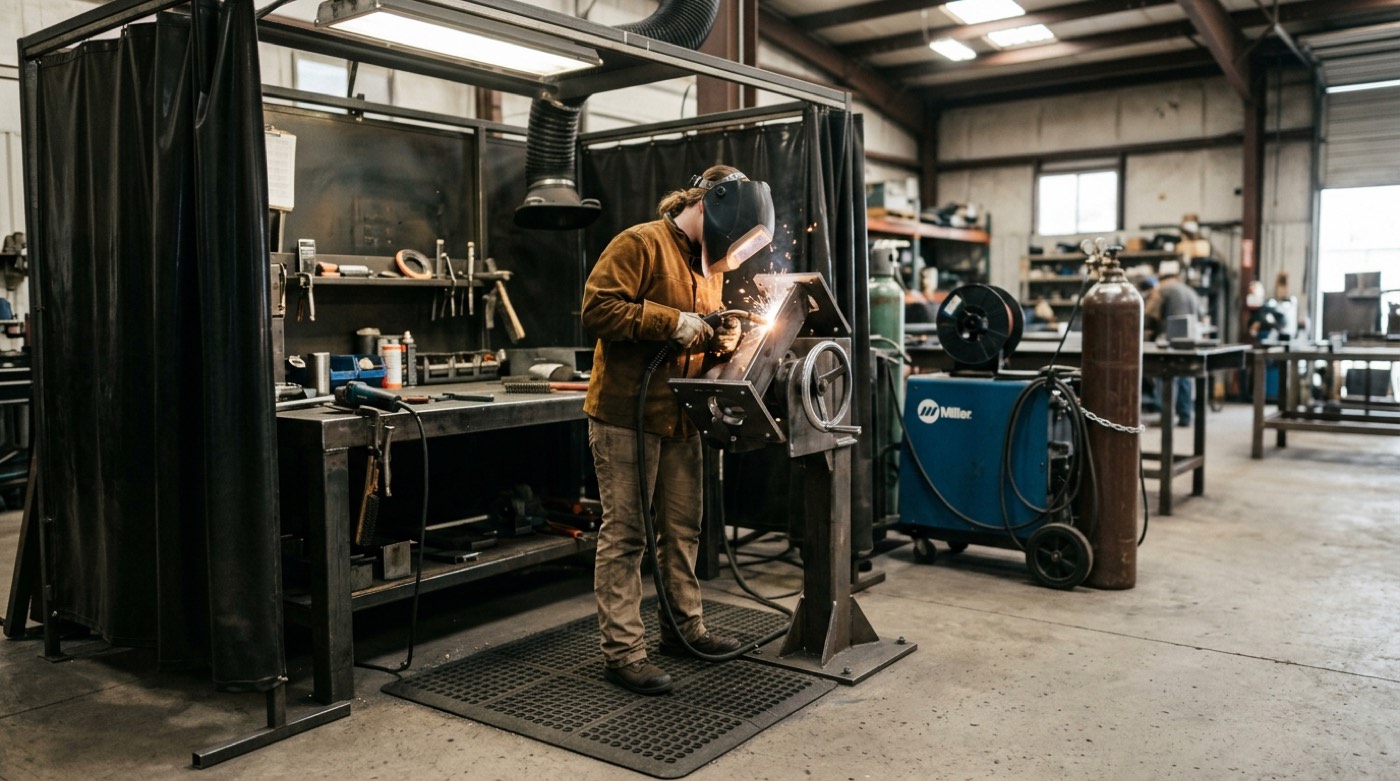
Here is the tension unique to fabrication: most anti-fatigue mats are foam, PVC, or rubber — combustible — which is exactly what the weld cell's fire controls (NFPA 51B, AWS Z49.1 hot-work practice) tell you to keep out of the spatter zone. And a comfort mat is not a tested electrical insulator, so it can't stand in for the dielectric matting that shock protection may require. No single standard reconciles "cushioned and ergonomic" with "spark-resistant and non-conductive."
The practical resolution is to separate the jobs by zone: place an anti-fatigue mat where the welder stands but outside the direct spatter path, or specify a fire-resistant/welding-rated anti-fatigue mat for the cell; and where electric-shock protection is needed, use a rated insulating mat for that purpose rather than expecting the comfort mat to do it. State those as deliberate choices — because the codes don't make them for you.