The short answer: A garment is genuinely flame-resistant only if its fabric passes a defined flammability test — it self-extinguishes and resists melting once the ignition source is gone. The recognized standards are NFPA 2112 (flash-fire) and ASTM F1506 (flame-resistant, arc-rated), both built on the ASTM D6413 vertical flame test. OSHA's rule (1910.132) requires a written hazard assessment to select the PPE; AWS Z49.1 requires welders to wear FR clothing and gloves. Untreated cotton ignites and keeps burning — FR fabric does not.
What "flame-resistant" actually means
Flame resistance is a measured performance property, not a claim you can print on a tag. The core bench test is the ASTM D6413 vertical flame test, which exposes a fabric sample to a flame and measures whether it self-extinguishes, how far it chars, how long it keeps burning (afterflame), and whether it melts or drips. NFPA 2112 and ASTM F1506 both rely on it. If a garment's fabric can't pass a test like D6413 after laundering, "FR" is just a word.
Two standards, two different hazards
- NFPA 2112 certifies clothing against a short-duration flash fire, using an instrumented thermal-manikin test (ASTM F1930) that predicts total body burn. It is the flash-fire standard.
- ASTM F1506 is the performance spec for flame-resistant, arc-rated textiles worn where an electric arc is a hazard. Its garments carry an arc rating — the ATPV or EBT value in cal/cm², determined by ASTM F1959.
The practical rule to remember: all arc-rated (AR) clothing is flame-resistant, but not all FR clothing is arc-rated. A garment meeting one standard does not automatically meet the other — match the standard to the hazard the welder actually faces.
Why untreated cotton is the wrong instinct
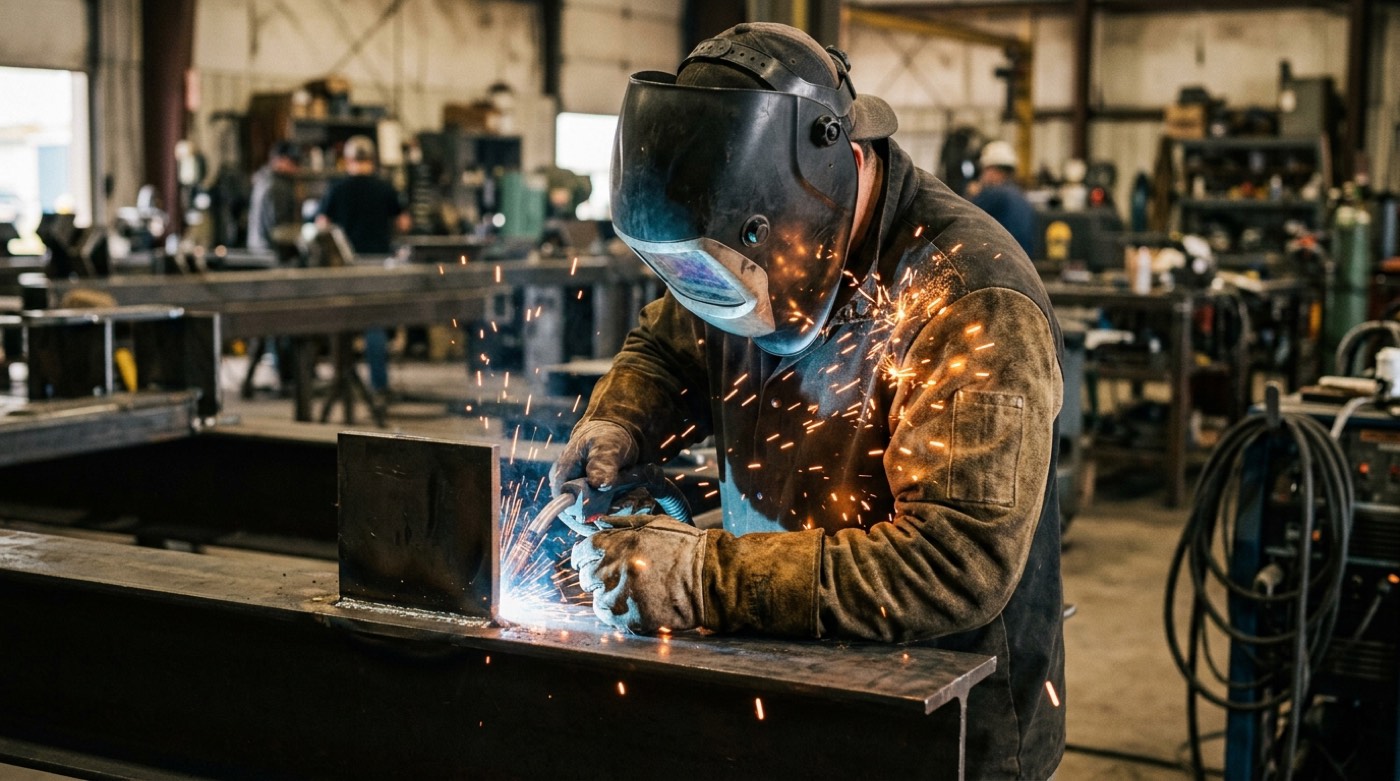
Ordinary cotton feels natural for hot work, but untreated fabrics ignite and continue to burn against the skin once a spark catches — exactly the failure the D6413 afterflame and char criteria are designed to catch. Synthetics are worse: polyester and nylon melt and adhere to skin, which is why AWS Z49.1 and OSHA prohibit them for welding. FR fabric is engineered to self-extinguish and resist melting, buying the seconds that separate a startle from a burn.
OSHA ties selection to a written assessment
The legal hook is 29 CFR 1910.132(d): the employer must assess the workplace for hazards and certify the assessment in writing before selecting PPE — identifying the workplace, the person certifying, and the date. For welding specifically, 1910.252(b) requires protective clothing suited to the size, nature, and location of the work, and AWS Z49.1 requires flame-resistant clothing and gloves plus eye and face protection. Selection follows the assessment, not the catalog.
Wear it like it matters
The best FR garment fails if it is worn wrong. Keep it free of oil and grease (which are themselves flammable), close cuffs and cover open pockets that trap sparks, layer so no skin is exposed to the arc's UV, and inspect, launder per the manufacturer's instructions, and retire garments on a schedule. FR is a system — fabric, fit, and upkeep — not a single purchase.