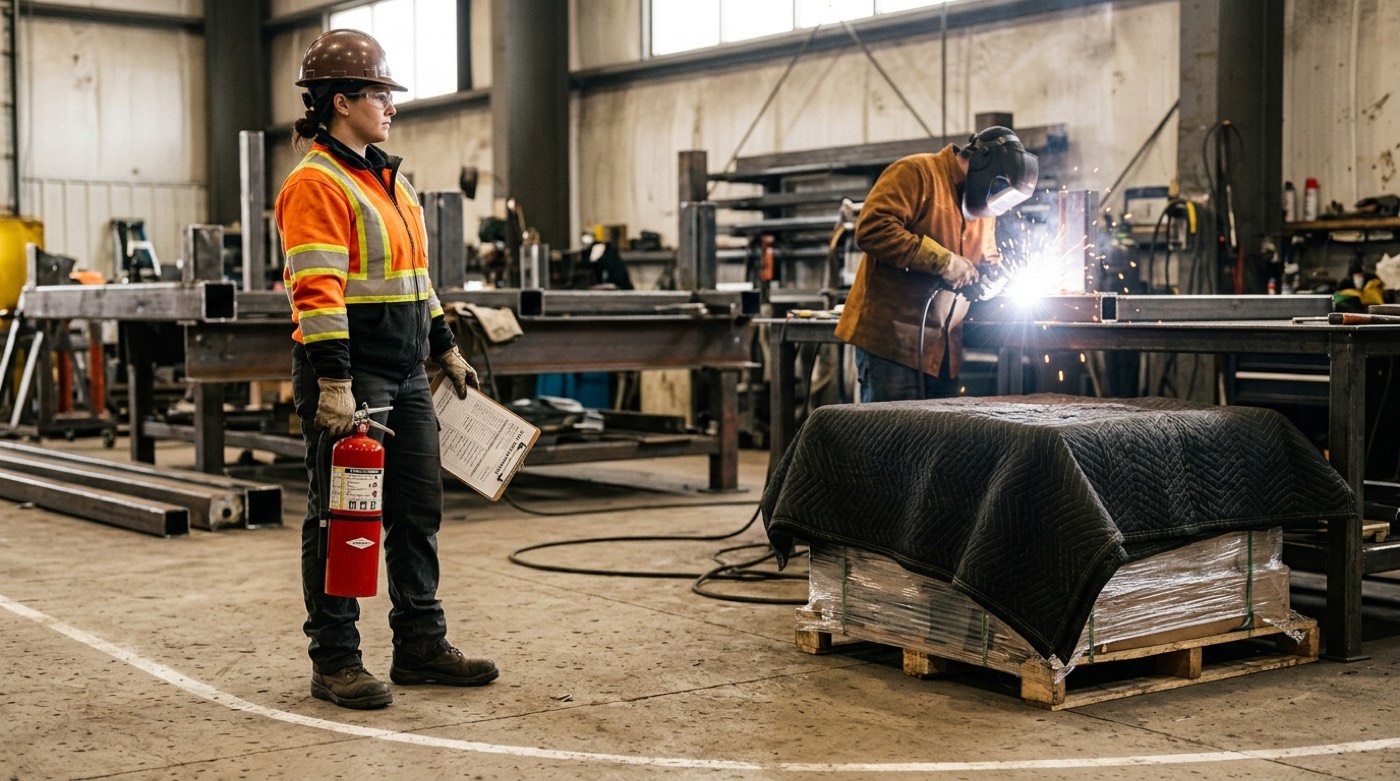
The short answer: Before hot work in a non-designated area, combustibles within 35 feet must be moved or protected, a fire extinguisher must be on hand, and a trained fire watch must be posted. OSHA (1910.252(a)) requires the fire watch to continue at least 30 minutes after the work stops; NFPA 51B, in its 2019 edition, raised that to 60 minutes. Hot work is a leading cause of industrial fires precisely because the ignition often shows up late.
Why hot work needs a permit at all
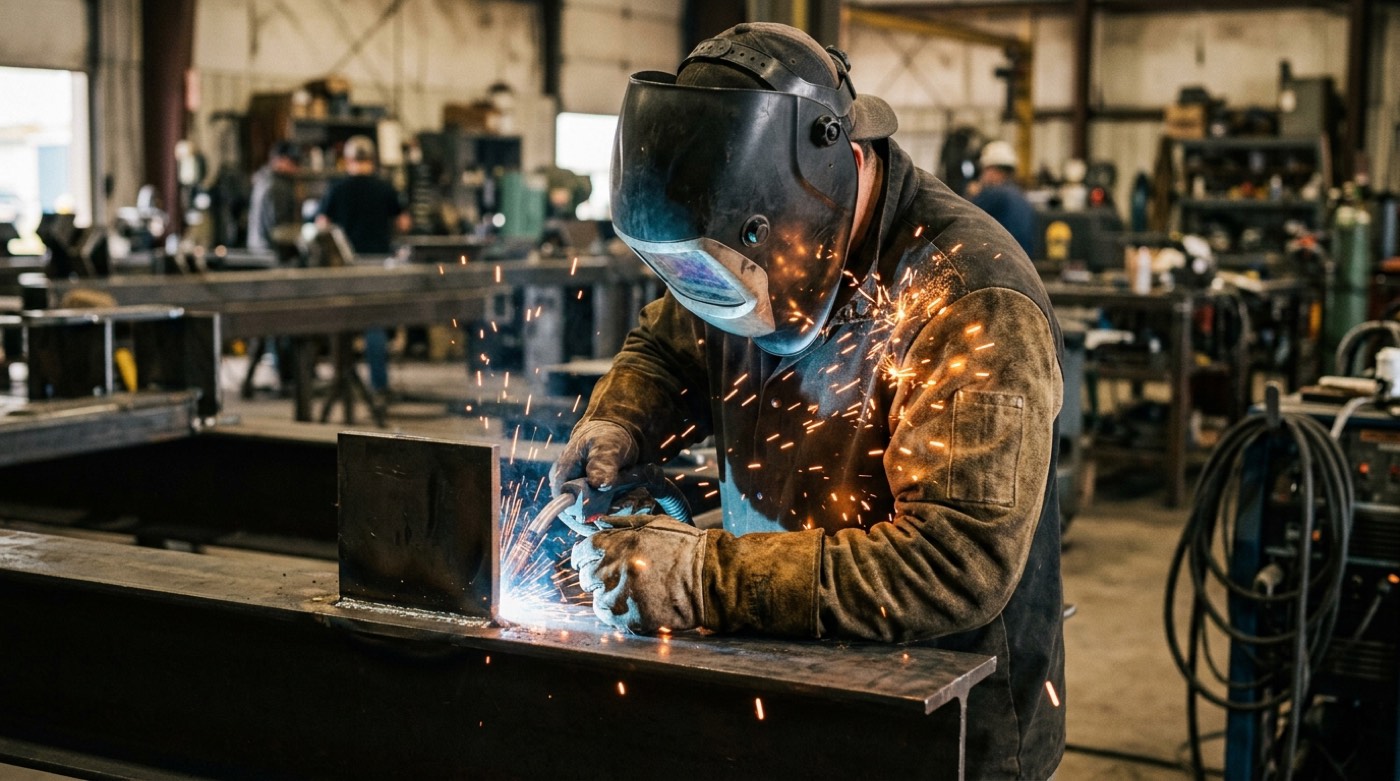
Welding, cutting, and grinding throw sparks and molten slag that can travel well beyond the operator, drop through floor openings, and lodge in hidden combustibles where they smoulder for a long time before flaming up. NFPA's research on structure fires started by hot work found an annual average of roughly 4,580 fires, 19 civilian deaths, 120 injuries, and $292 million in direct property damage — with "too close to combustibles" the leading factor. The permit exists to force the checks that prevent exactly that.
The 35-foot rule
Under OSHA 1910.252(a), when hot work is done near combustibles the basic precautions are, in order: move the work to a safe location; if it can't move, move the combustibles at least 35 feet away; if neither is possible, use guards to confine the heat, sparks, and slag. Where welding is performed, the floor must be swept clean for a 35-foot radius, and combustible floors must be kept wet, covered with damp sand, or protected by fire-resistant shields. Cracks, holes, and openings within that radius that could pass sparks to adjacent areas must be covered.
When a fire watch is required — and for how long
A fire watch is required whenever appreciable combustibles are within 35 feet, when combustibles are hard to move, or when wall or floor openings could expose combustibles in adjacent areas. The duration is where the standards have tightened:
- OSHA 1910.252(a)(2)(iii)(B): maintain the fire watch for at least a half hour (30 minutes) after the work is complete, to detect and extinguish smouldering fires.
- NFPA 51B (2019 edition): increased the post-work fire watch to at least 60 minutes, with provision for additional monitoring afterward. The 2024 edition retains the 60-minute baseline but lets the permit-authorizing individual reduce it to no less than 30 minutes in defined circumstances.
Where your jurisdiction or insurer adopts NFPA 51B, the 60-minute watch is the number to plan around — the 30-minute OSHA minimum is the floor, not the target.
What a hot-work permit documents
A compliant permit ties the whole system together: the location and description of the work, verification that the area was inspected and combustibles removed or protected, confirmation that fire-extinguishing equipment is present, the fire-watch assignment and duration, the permit's time window, and the authorizing individual's signature. The permit isn't paperwork for its own sake — it is the checklist that makes someone confirm the 35-foot zone and the fire watch before the torch strikes.